Overview
When an empress or any rank of consort (imperial wife) was chosen to enter the palace, she pledged total allegiance to the imperial family and severed ties to her natal family. In effect, she became imperial property. At the same time, she was also highly regarded and could help shape the history of the Qing dynasty court.
Explored here are the myriad experiences of empresses, from marriage, state duty, physical activity, and motherhood to festivities, fashionable living, and religious devotion. Empresses were surrounded by sumptuous objects that befitted their esteemed status at court, their responsibilities, and their pleasures. Supplied by the imperial household, these objects were considered to be court property, not personal belongings. When an empress died, palace staff returned many of the objects to the storehouse for possible reassignment to another woman of similar status. Ultimately, this practice helped preserve a rich variety of material that today provides valuable insight into the lives of Qing empresses.
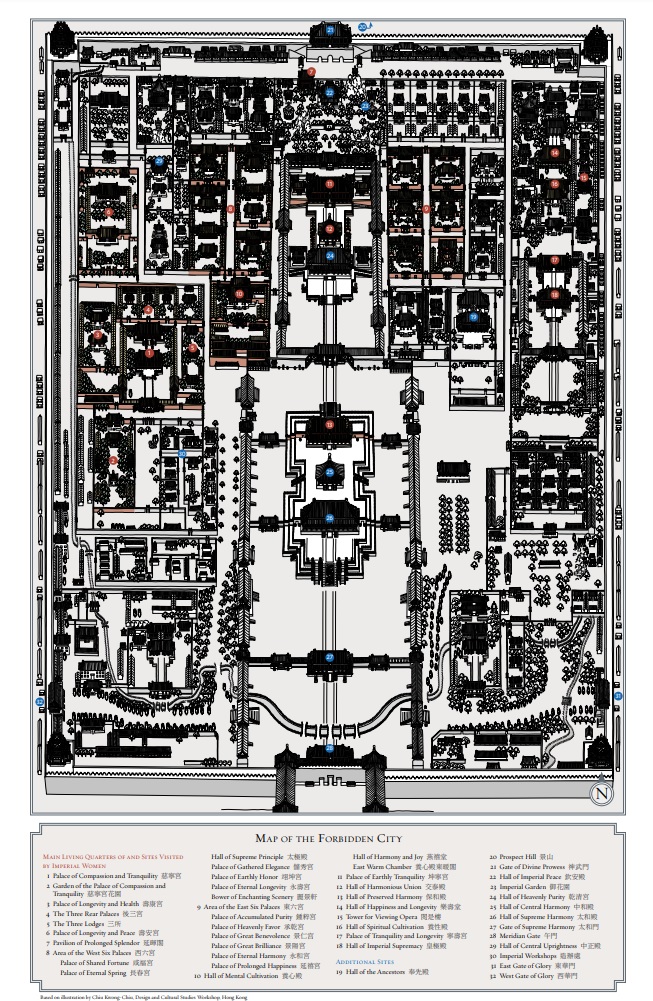
Path into the Qing Palace
The emperor and imperial princes had multiple consorts simultaneously, but there could be only one empress at a time: the emperor’s primary wife. Every three years the Qing court required families of the conquering elite—descendants of the Manchus and allies who subjugated China in 1644—to present their daughters, at about the age of thirteen, as candidates for the imperial harem. Girls from Han Chinese families, the empire’s largest population group, were essentially excluded. The emperor and his mother, the empress dowager, selected several consorts at a time, judging each according to her physical beauty, health, and family background as well as her potential to create strategic alliances. A chosen wife was assigned a rank from one (the empress) down to eight. This position determined her status in the palace and her allotment of goods and servants. Others were appointed to serve five-year terms as ladies-in-waiting. If they happened to catch the emperor’s eye, they might be promoted into the harem. Otherwise, they returned to their family after their service.
Out of more than two dozen Qing empresses, only four entered the court with the status of empress. Other empresses were first chosen as a lower-rank consort, or even as a lady-in-waiting, and later—if the position was vacant—received the title of empress, usually after giving birth to a son.
Position at Court
scroll painting of an empress in a colorful robe against a gold background
Empress Xiaoxian. Ignatius Sichelbarth (Ai Qimeng, 1708–1780) and Yi Lantai (act. ca. 1748–86) and possibly Wang Ruxue (act. 18th century). China, Qianlong period, 1777, with repainting possibly 19th century. Hanging scroll; ink and color on silk. Peabody Essex Museum (PEM), gift of Mrs. Elizabeth Sturgis Hinds, 1956, E33619
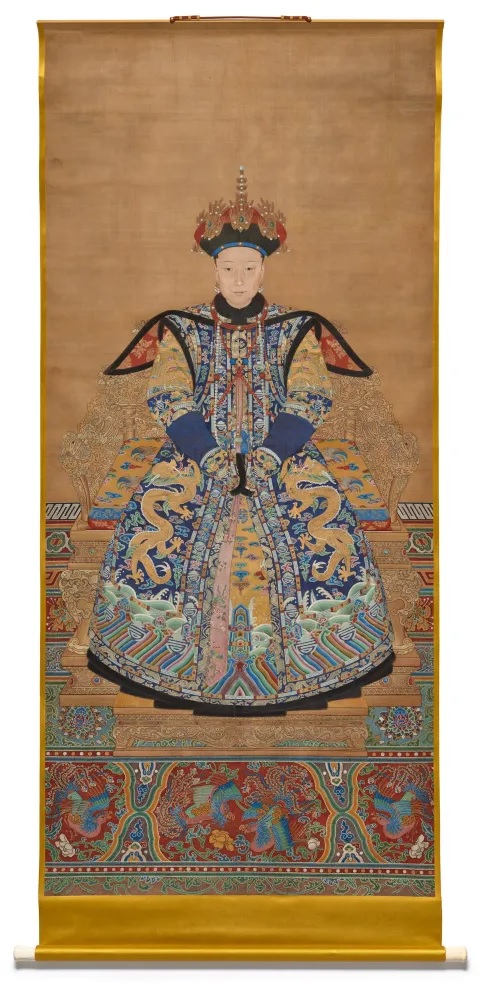
Whether as the emperor’s mother or as his wife, an empress was honored as the “mother of the state” and served as a role model for women throughout the empire. She was not allowed to rule directly—Empress Dowager Cixi is a notable exception—but she assumed ritual duties, could offer counsel to the emperor, and played a role in educating young princes. As a whole, Qing empresses did not bind their feet, which enabled them to travel. Some even rode horses. Mobility aided their understanding of the world outside the Forbidden City. Many shared the emperor’s concerns about state affairs.
Several initiated or increased the popularity of Tibetan Buddhism among the imperial family, and a few even advised underage emperors. The influence of empresses was largely indirect but nonetheless significant. Their magnificent court attire served as an outward reflection of their elevated status at court.
Motherhood as Duty
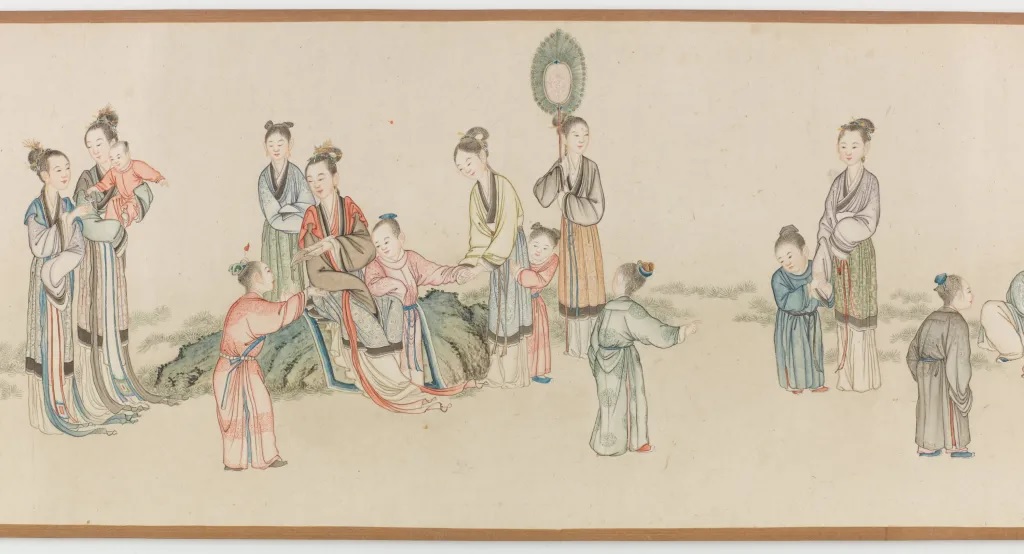
Giving birth to sons was the primary duty of an imperial consort, and she was expected to properly raise and help educate her young boys. Male offspring were also key to her upward mobility and influence in the palace. Rules for succession, established in the eighteenth century, were based on a male heir’s personal merit rather than on his birth order or his mother’s status at court. Every son born to an empress or any other imperial consort had an equal chance to reign over the Qing empire. The emperor’s choice for a successor was not revealed until after his death.
The possibility that any favored son could become the next emperor was a source of jealously and competition among many consorts. The empress’s high status at court granted her the position of being the nominal mother of all of the emperor’s children, whether or not she was the birth mother.
Celebrating Motherhood
Filial piety, a core social value in China, emphasizes devotion and care for parents and elder family members. An emperor’s dutiful attention toward his mother, the empress dowager, gave her considerable status and influence in the imperial court. Filial acts included writing Buddhist sutras, creating paintings dedicated to her, and staging elaborate birthday celebrations to honor her.
One significant role of the empress dowager was to help select wives for her son. Some imperial mothers shaped dynastic history in another way: if her son was too young to rule when he assumed the throne, she could act as his advisor. A close relationship between an imperial mother and her son was thought to reflect the harmonious society that Qing emperors credited to their rule.
A Full and Active Life
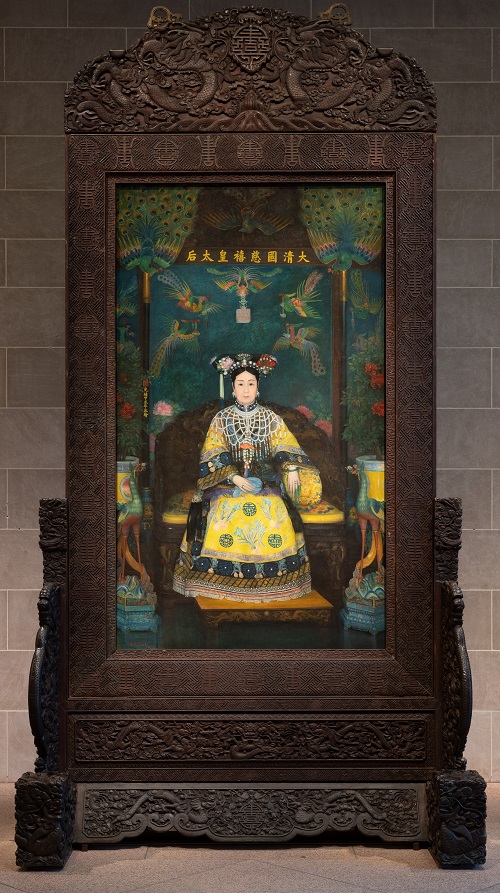
Within the strict confines of imperial court strictures, Qing empresses engaged in rewarding lives. Beyond court duties, such as raising children or presiding over state rituals to promote silk production, they indulged in the pleasurable diversions of traveling, celebrating seasonal festivals, watching and even commissioning operas, and being pampered with special beauty regimes. They also derived great satisfaction in their religious devotion. At the end of the dynasty, Empress Dowager Cixi blurred the realms of sacred and secular by theatrically presenting herself as a Buddhist deity.
Imagine attentive maids perfuming the rooms of an empress, helping her pick stunning jewelry and flowers to create an elaborate hairstyle, or finding a book or artwork to enjoy. The cosmopolitan tastes of many empresses led them to collect and, in the case of at least one, even create works of art. Their privileged lifestyle served as the subject of court paintings that the emperor and the women themselves appreciated.
Virtues of Wifely Appearance
Ancient texts from roughly the time of Confucius—some 2,500 years ago—identify four virtues for women: being faithful in marriage, practicing proper speech, projecting a “wifely appearance,” and diligently overseeing domestic work. Empresses and other consorts were expected to achieve an acceptable demeanor that balanced decorum and appeal. Their daily routines of dressing and adding accessories of jewelry were considered expressions of conjugal devotion. It was, after all, a wife’s duty to please the emperor and attract his attention in the hopes of bearing his son.
To enhance their complexions, imperial women of high status used massage tools to tone their faces and applied fine powders and rouge. They used exquisite hairdressing tools and combs to create elaborate coiffures. Women completed their look with colorful hairpins, earrings, bracelets, and rings made of luxury materials, such as jade, gold, coral, pearls, and kingfisher feathers.
Worshipping as an Empress
Qing empresses participated in, and even helped shape, many spiritual traditions practiced at the imperial court, including shamanism and Buddhism. By promoting Tibetan Buddhism, they opened an important avenue for the Manchu rulers to engage with Tibetans and to bond with their potential rivals, the Mongols. Devotional activities also provided many empresses, particularly widows, with spiritual consolation, opportunities to pray for blessings for their family and the state, and hope for a rewarding afterlife. The imperial court commissioned magnificent buildings, scriptures, sculptures, and liturgical equipment for the religious observations of empresses and to commemorate them in death.
Navigating Politics and Diplomacy
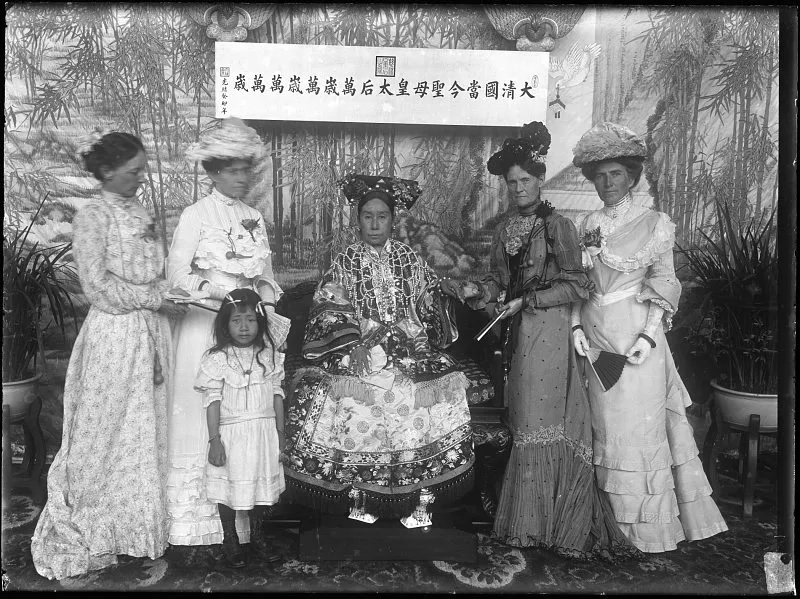
Though tradition declared “women shall not rule,” ambitious empresses found ways to exercise influence in the realm of politics. Empress Dowager Cixi even wielded direct power, including in the international arena. These exalted women gained special access to the heart of power through their relationships with certain male relatives and particularly with their husband or son, the emperor. Prominence and authority also depended on their own talent, personality, and historical circumstances. Empress Dowager Cixi took bold advantage of changing times to meet with outsiders, including the wife of the American ambassador and other foreigners. Like male rulers, she used art to proclaim her supremacy and to fashion images of herself as an erudite and benevolent leader.
Original article: Smithsonian Institution