Back-to-back monster winters (1867 and 1868) paralyzed railroad construction over Donner Pass. During the winter of 1866-67, 44 storms of varying intensity dumped nearly 45 feet of snow on the region. Central Pacific Railroad’s (CPRR) Chinese immigrant workforce pushed the railhead to Cisco at a nearly 6,000-foot elevation.
Where a roadbed could not be built, tunnels were chipped and blasted. The obdurate Sierran granite proved nearly impossible to penetrate. Nine tunnels were excavated by hand-drilling and explosives, totaling nearly 1 mile in length. It’s hard to imagine chiseling and the explosive force of black powder and nitroglycerine in small places. They made 8 inches a day.
The 88 miles over the rugged Sierra between Newcastle and Truckee took more than 12,000 Chinese contractors 38 months of backbreaking work.
Aside from the risks of injury or deadly explosions, workers endured blinding blizzards and lethal avalanches. One particularly potent low-pressure system in February 1867 dropped 10 feet of snow in 13 days, burying workers’ housing structures and equipment. One slide wiped out a Chinese work camp; when the bodies were discovered the following spring, tools were still clutched in their frozen hands. Later another slide nearby swept 20 to their death. On April 13, the Summit Valley snowpack at Donner Pass exceeded 15 feet — on June 1 it was still 6 feet deep.
Theodore Judah, CPRR’s first chief engineer who surveyed a realistic grade over the Sierra Nevada prior to construction died prematurely, but the rail line followed his blueprint for the project. Despite excellent surveying skills, Judah had no understanding of the great danger, power and frequency of Sierra snowfall and avalanches. He had made observations and interviewed early pioneers, hunters, miners and Native Americans and concluded that plows and steady train traffic would keep snow problems at a manageable level.
However, after the brutal winter of 1867, CPRR realized that they needed a solution to this problem. Despite the immense cost, CPRR eventually constructed about 37 miles of wooden snowsheds and galleries to protect trains, track, stations and work buildings.
Arthur Brown, the company’s supervisor for snowshed construction, reported: “Although every known appliance was used to keep the road clear of snow in 1867, including the largest and best snowplows then known, it was found impossible to keep it open over half the time and that mostly by means of men and shovels, which required an army of [Chinese] on hand all the time at great expense.”

For a century after the sheds were built, passengers and crew often described the dark passage over the Sierra as “railroading through a barn.” But it worked. During the 1980s, many shed sections were removed and the remaining rebuilt using concrete.
The winter of 1868 got off to a slow start with mild weather through November, a meteorological blessing that enabled track layers to reach Donner Summit on Nov. 30, 1867. There was no time to celebrate, however, as the Pacific storm door kicked open in early December. By mid-month, the snowpack was 5 feet deep on the summit.
On the first day of winter, Dec. 21, a subtropical atmospheric river swamped Northern California. For 10 days, downpours of rain and gale force winds thrashed the region. Rainfall at Nevada City that month exceeded 40 inches. In the higher elevations, rain turned to snow and destructive snow slides snapped trees 3 feet in diameter. Buildings in the Sierra were buried to their second stories; firewood cut from treetops was shoved down chimneys.
In some communities, residents visited stores, saloons and each other using tunnels dug underneath the snow. Cross-country skiing or snowshoeing was the only means of travel in the snowbound regions. To remove the snow, Chinese laborers shoveled it into empty boxcars; it was then shipped to Sacramento and dumped into the river. Since the invention of the rotary snowplow was still 20 years in the future, track clearing before 1888 relied on wedge-shaped bucker plows and strenuous hand-shoveling.
A cold wave in January 1868 froze the deep, water-saturated snowpack into a solid block of ice. Temperatures were frigid enough to drop several inches of snow in Sacramento. Six weeks of dry weather gave the crews hope that winter may be over, but in traditional fashion March came in like a lion in the first week with 10 feet of snow.
On March 6, another eight Chinese workers were killed when a section of newly built railroad shed collapsed under the weight of snow. Another 15 were buried the following day; their bodies were not recovered until May.
The storms stalled track laying, but tunnel excavations progressed despite deadly weather conditions outside. No doubt the Chinese took the brunt of the severe conditions, but they never ran or quit.
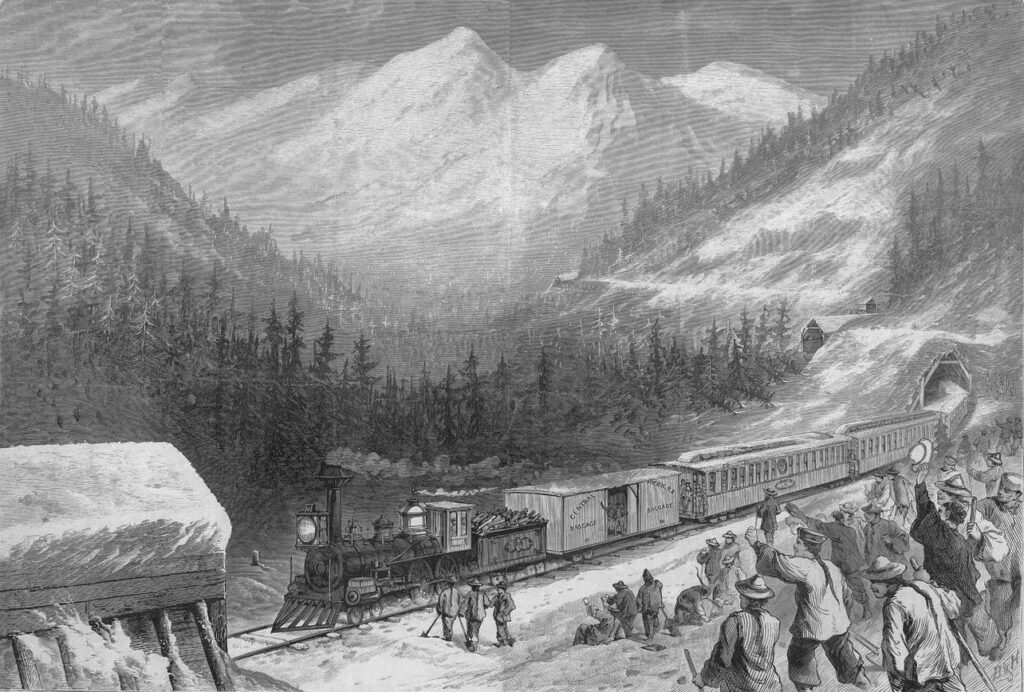
When April finally arrived, workers discovered that some of the road cuts were filled with as much as 60 feet of drifted snow compacted into a solid mass. These frozen blockades were blasted with explosives. By June 1868, ice and snow remained 12 feet deep in along the tracks, but trains were running from Sacramento all the way to Lake’s Crossing (now Reno, Nev.).
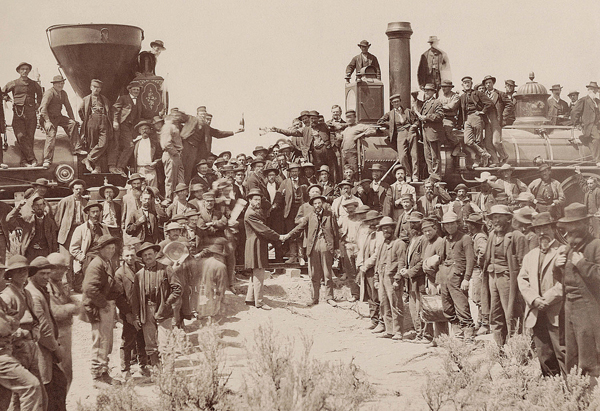
This winter is the 155th anniversary of the Transcontinental Railroad connecting Reno and Truckee with Sacramento. The 88 miles over the rugged Sierra between Newcastle and Truckee took more than 12,000 Chinese contractors 38 months of backbreaking work. In comparison, to complete the line from Truckee 571 miles east to Promontory, Utah, took 5,000 men just one year and 27 days.
There is no doubt that America’s greatest feat of 19th Century engineering could not have been completed without the incredibly impressive Chinese workforce, which brought stoic determination and skill to an overwhelmingly difficult and dangerous task. Truly, the work of giants.
Source: yourtahoeguide.com