Small old villages in United Kingdom are known for their historic charm, compact design, and close connection to the surrounding countryside. Many of these villages developed centuries ago, long before modern urban planning or automobiles, and their appearance still reflects medieval and early rural life.
One of the most recognizable features of British villages is their traditional architecture. Houses are commonly built from local materials such as limestone, granite, brick, or slate, giving each region a distinct appearance. In areas like the Cotswolds, cottages are famous for their warm honey-colored stone, while villages in Cornwall often use rugged granite. Roofs may be covered with slate or traditional thatch, adding to the historic atmosphere.
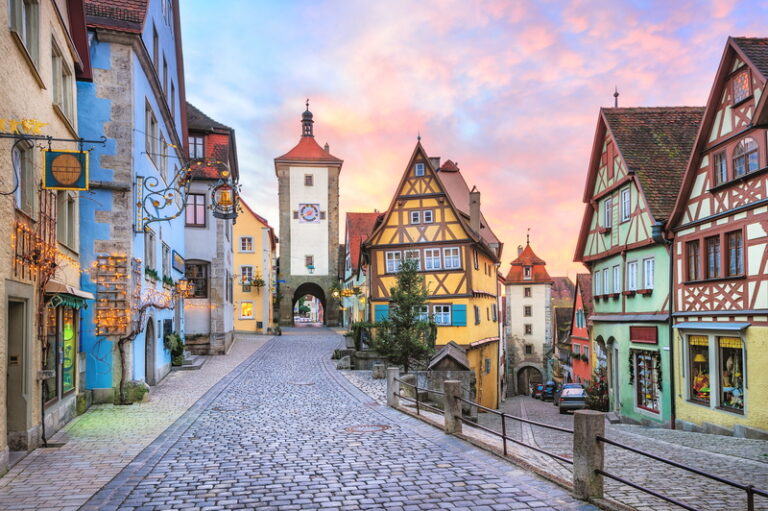
The layout of these villages is usually irregular and compact. Narrow winding lanes, small bridges, and clustered cottages reflect a time when roads were made for walking, horses, and carts rather than cars. At the center of many villages there is a church, village green, or small market square that historically served as the heart of community life. Local pubs, often hundreds of years old themselves, remain important gathering places and symbols of village culture.
Nature is also closely woven into village life. Gardens filled with flowers, ivy-covered walls, ancient hedgerows, and surrounding farmland create a strong sense of connection between the built environment and the landscape. Whether located among rolling hills, coastal cliffs, river valleys, or moorlands, British villages are usually shaped by the geography around them.
Another important characteristic is the sense of continuity and tradition. Many villages preserve buildings, customs, and festivals that have existed for generations. Historic churches, stone cottages, cobbled streets, and old inns contribute to an atmosphere that feels timeless. Although modern life has changed many rural communities, small British villages continue to represent an enduring image of the country’s history, culture, and countryside heritage.