Expansion of the California Gold Fields
The easily worked alluvial deposits of gold extracted by the early miners made mining look simple, and this fact added to the many stories of fabulous wealth lured thousands of men to the gold fields of California. Nevertheless the discovery of new placers did not await their coming. Not long after Marshall’s discovery, John Bidwell, grantee of Rancho Chico, visited the Coloma site. Returning home to his rancho, he found gold at what became known as Bidwell’s Bar on the Feather River.
P. B. Reading also visited the discovery site, became convinced that there were similar indications on his land, and on his return to his home found some deposits on Clear Creek, which he worked with Indian labor. Success on Clear Creek led Reading to further finds on Trinity River, just as success on the Feather River stimulated discoveries on the Yuba. Before the end of 1848, finds of gold had become numerous and the gold area extended from the Tuolumne on the south to the Trinity on the north.
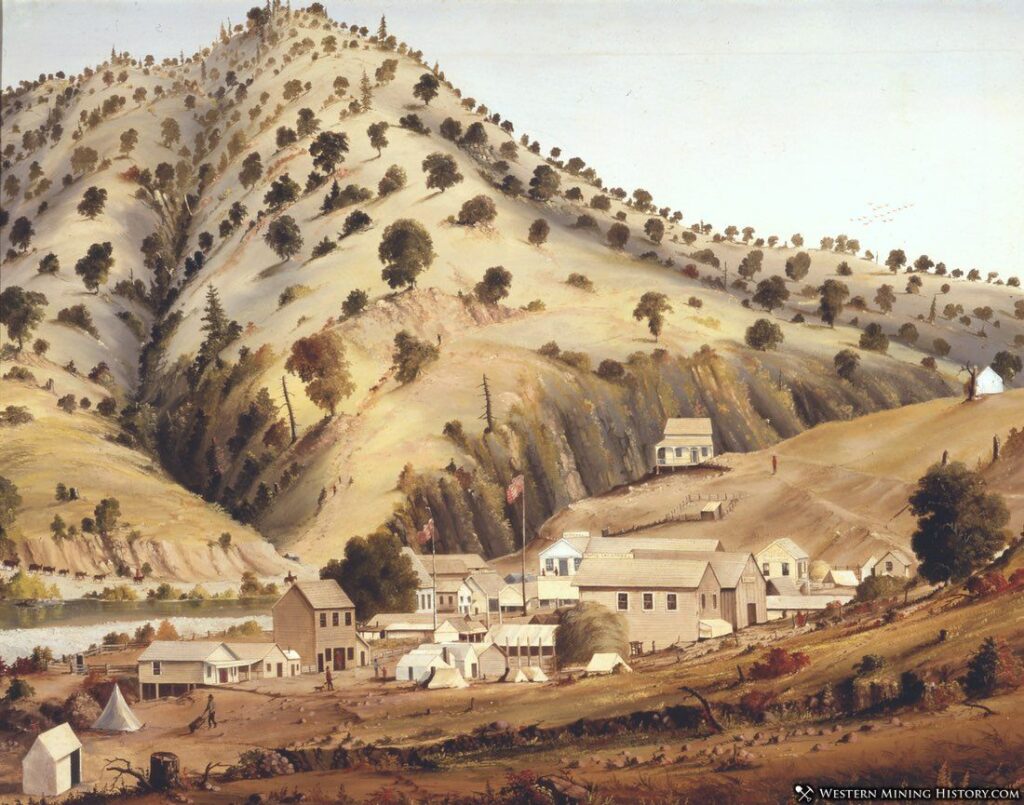
Men of mining experience sought the source vein or veins from which the alluvial deposits originated. The first such vein, which was of gold quartz, was discovered on Colonel John C. Frémont’s Mariposa grant in August 1849. It was probably not until 1850 or 1851, that the term Mother Lode was first applied. At that time it was used to designate a vein worked at Nashville, twelve miles south of Placerville.
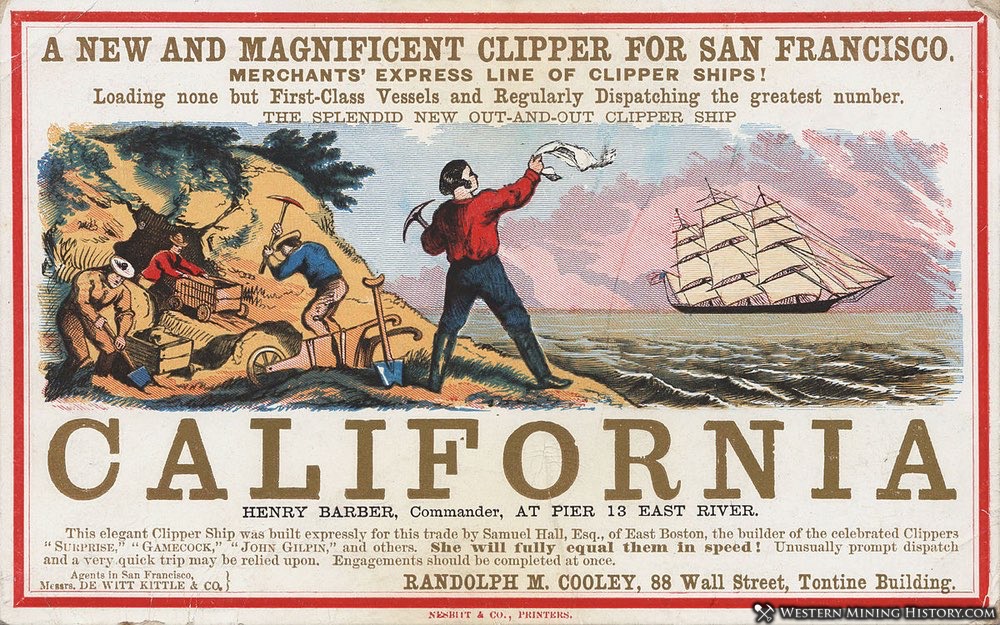
In the years following ’48 and ’49, more and more areas were opened and worked, and the gold production of California was immense. The significance of these discoveries, of the resulting rushes, and of the partial abandonment of the area is enormous. Thousands of men came by wagon, by ship and even by foot to become rich in the Golden State. Most of them desired to return home after striking it rich. Some did, but many remained in California to populate the new American acquisition.
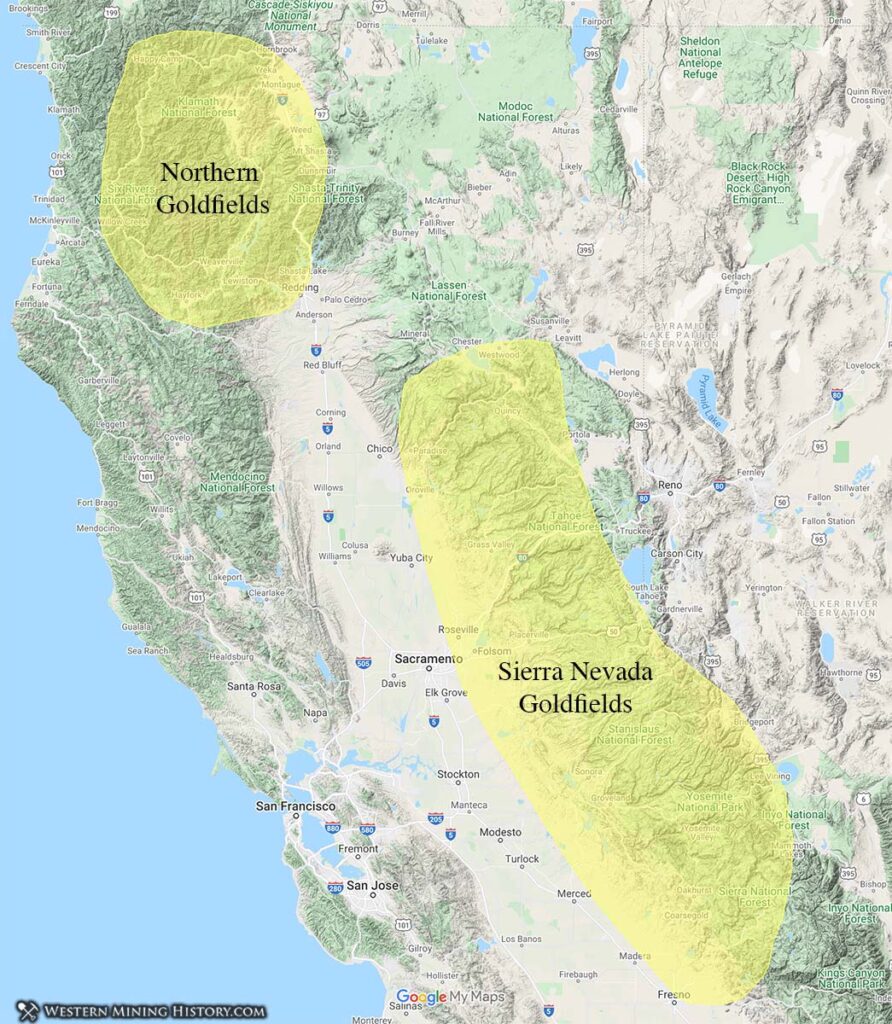
The Northern Gold Region
With tens of thousands of miners pouring into California, existing goldfields became overrun, and many were quickly mined out. New arrivals were forced to expand their search for gold deep into California’s wilderness.
In the spring of 1849, gold was discovered north of the Sierra Nevada Goldfields near what would become the town of Shasta. Shasta was so remote that it was accessed by 180 miles of trail from Sacramento. Nonetheless, many men traveled beyond Shasta, deep into the Klamath Mountains region of Northern California, one of America’s most rugged regions.
The push into the northern wilderness was a reckless and dangerous affair in 1849. Miners quickly outpaced the available food supply, and there was much suffering and starvation during the winter of 1849-50. Many were forced to return to the more established areas to the south that first year.
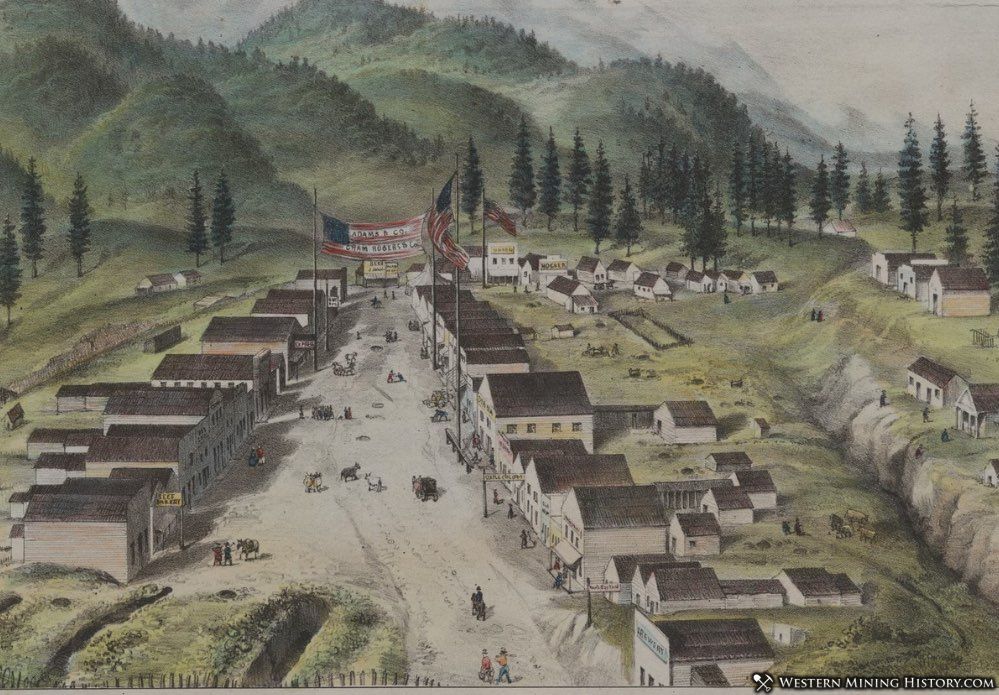
In 1850 the town of Weaverville was settled in the Trinity River area of northern California. Weaverville became the most important settlement in the northern goldfields, with thousands of people, including over 1,000 Chinese. The town was so remote that it could only be accessed by trails for nearly a decade – a road finally linked Weaverville to the outside world in 1858.
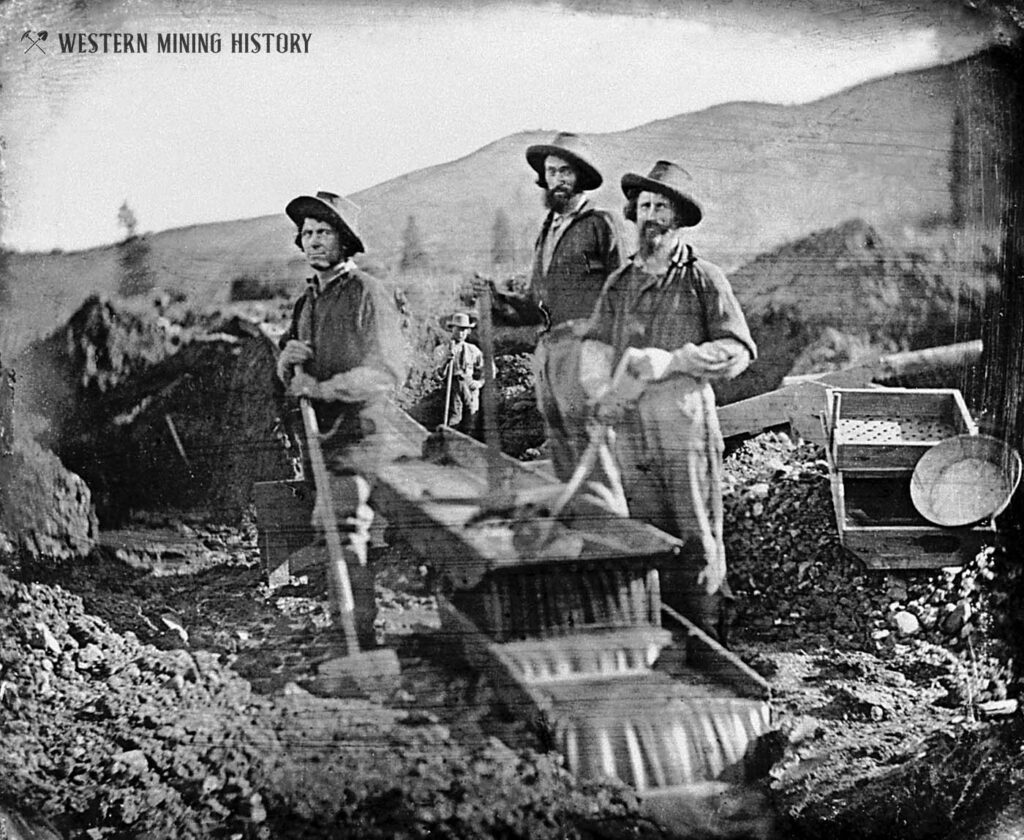
In 1851 a party of prospectors led by Abraham Thompson discovered gold at the location that would become the settlement of Yreka. Both Yreka and Weaverville were important centers of mining, commerce, and government, and both towns still serve as seats of county government.
The northern goldfields region was the state’s second most important mining area, after the Sierra Nevada region, where gold was initially discovered.
Early Advancements of Mining Techniques
While in San Francisco, Sutter’s agent, Charles Bennett, sought the advice of an ex-Georgia miner, Isaac Humphrey, and showed him the gold. The miner lost very little time in getting to the location of the discovery and became the first of many professional miners in the gold fields.
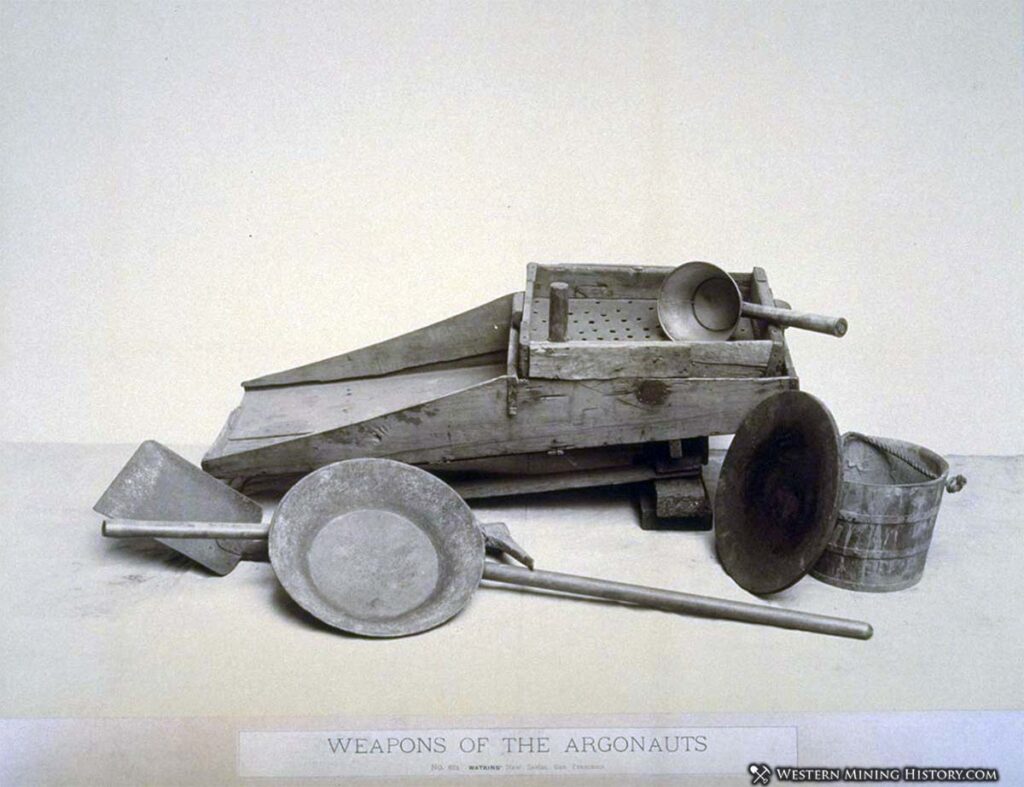
Among other things he is credited with having introduced machinery when, on March 9, 1848, two days after his arrival, he made use of the rocker for the first time in California. He had the distinction of being the first professional only by the space of a few days, for a French Canadian backwoodsman soon arrived who had had previous mining experience in Sonora. He was Jean Baptiste Ruelle, called by all simply Baptiste.
He and Humphrey were a great help to the many greenhorns, who were arriving in increasing numbers. These mining men, augmented by the arrival of some Sonorans from the Los Angeles placers, were the authorities on gold mining, the Sonoran miners being the vanguard of thousands of foreigners to be lured by California’s wealth.
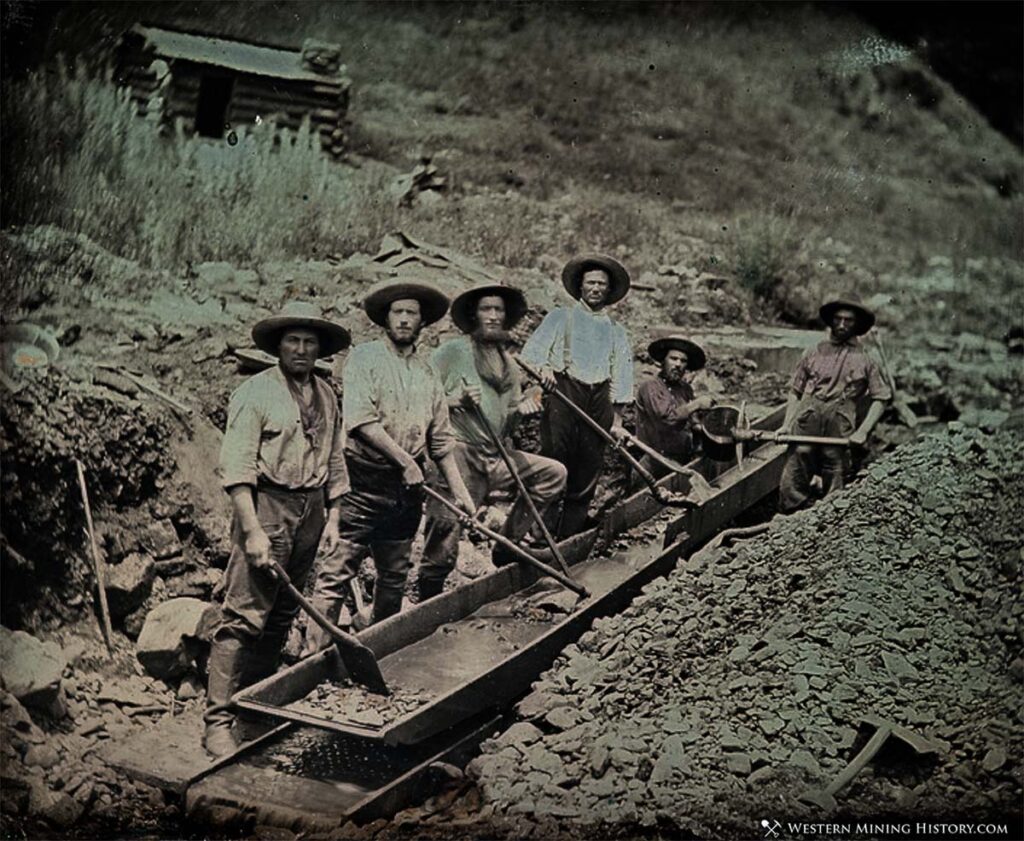
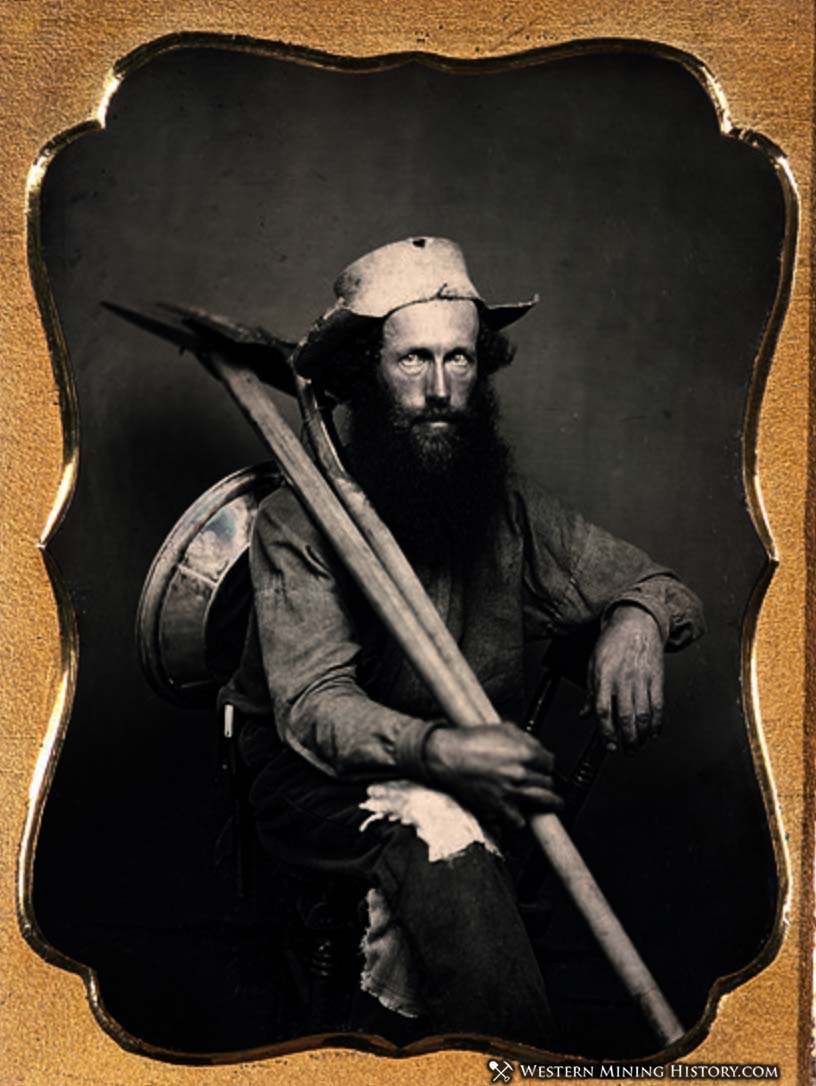
The crude method of pen-knife and butcher-knife mining soon gave way to more adequate methods of placer mining. The batea, or dish shaped Indian basket, the iron gold pan, and the cradle, which were used to expedite the process of separation of gold and sediment, were soon in evidence. The cradle (or rocker as it was often called) proved to be inefficient because of the loss of many of the small particles, and was soon improved.
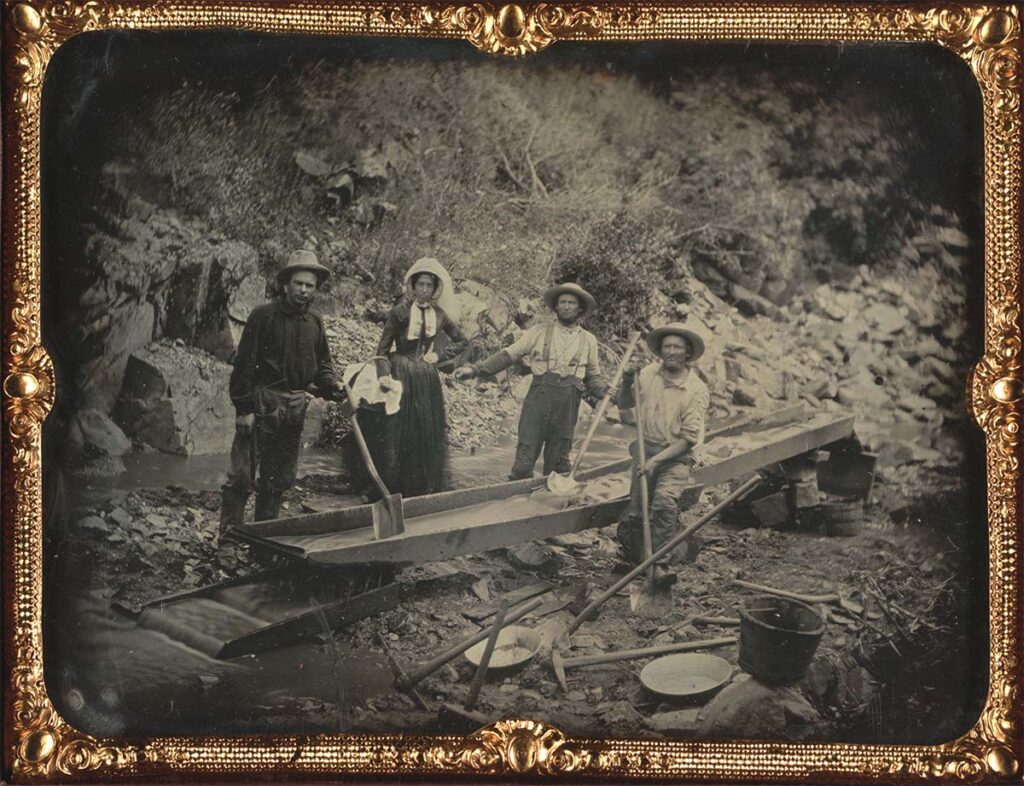
The new development was the Long Tom, an elongated cradle in which transverse cleats arrested these small gold particles. Soon, however, the Long Tom was superseded by sluices of various types.
Booming or gouging was the next innovation in mining technique. This consisted of merely letting water do the work of clearing away the sediment. A dam was built, and the water diverted through the area which was being mined; the water carried the lighter elements downstream, leaving the gold-bearing ore easily accessible to be worked by one of the other methods of placer mining.
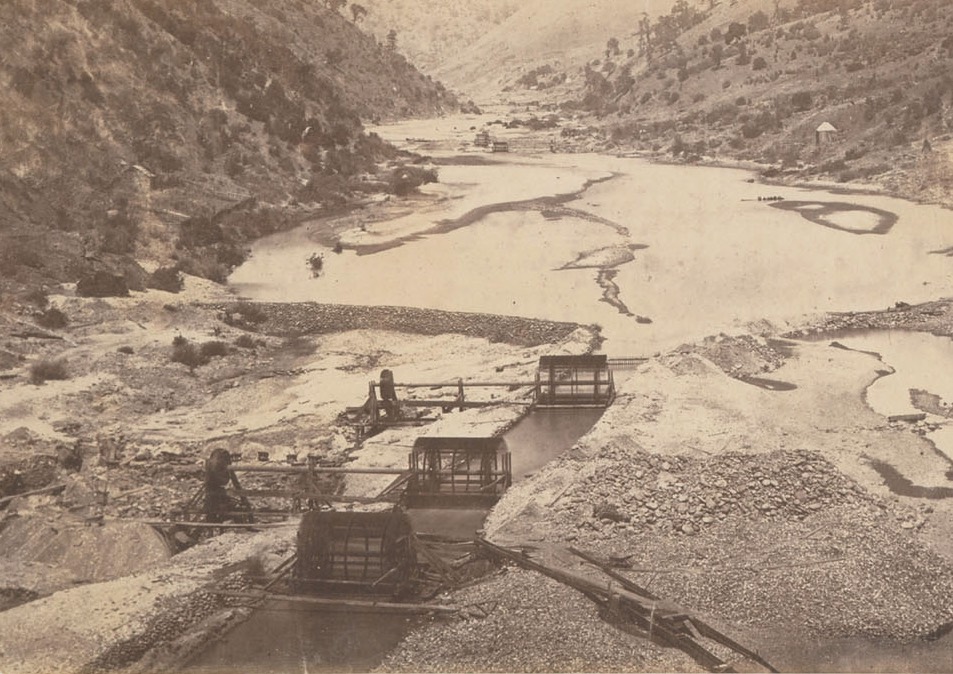
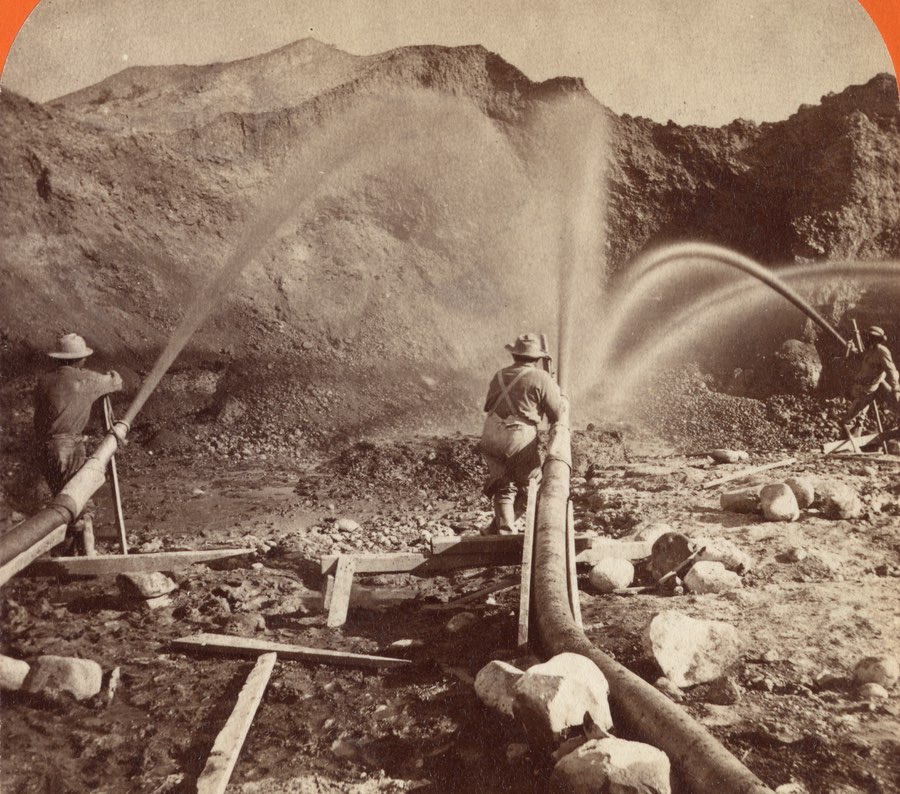
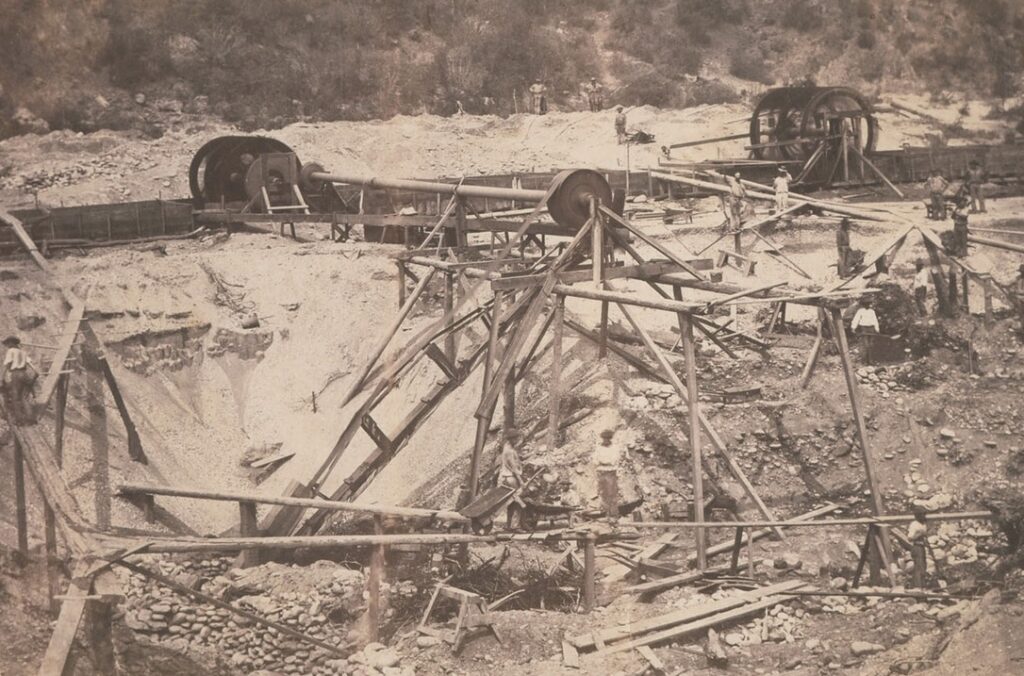
The success of this procedure soon brought about the introduction of hydraulic mining—the use of water under pressure. It is claimed that water was used in this manner at Yankee Jim’s in 1852. Perhaps more definite is the assertion that in the same year Anthony Chabot used the hydraulic method without a nozzle at Buckeye Hill, near Nevada City. Hydraulic mining seems to have been a California innovation, and was first employed, complete with the nozzle which is generally associated with this type of mining, in 1853.
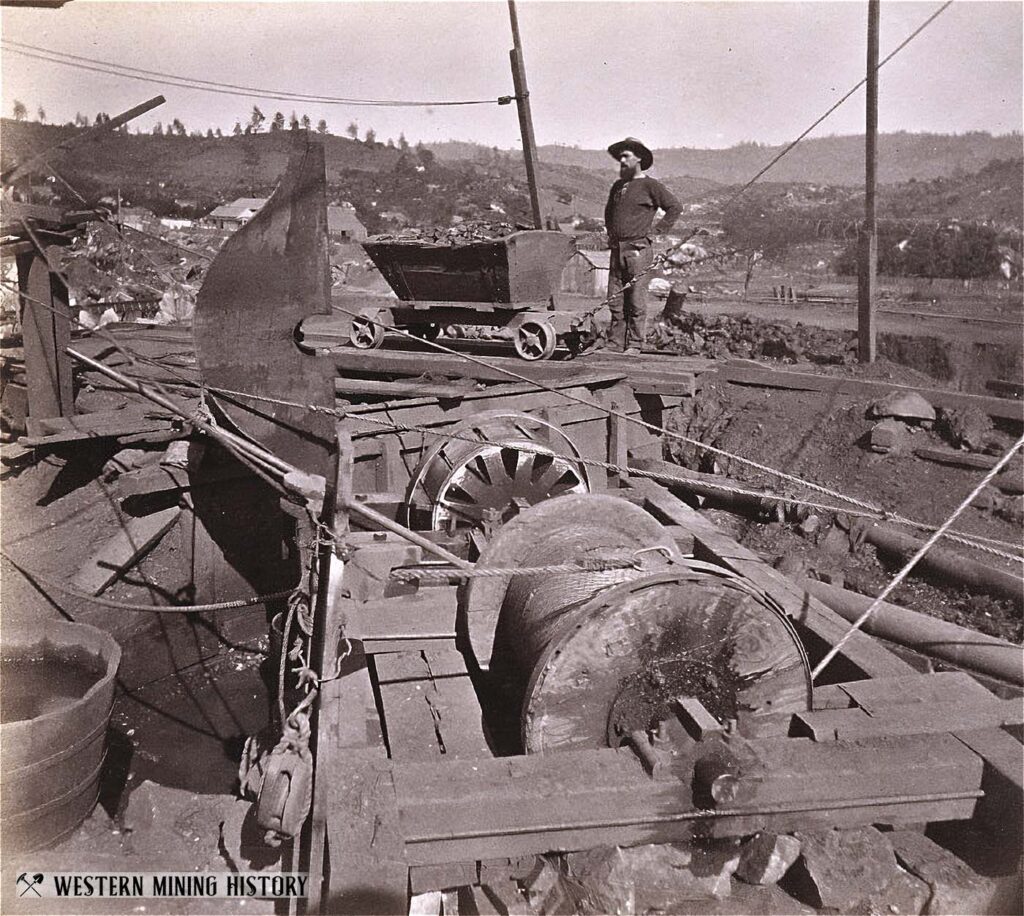
The idea of dredging gold was common, but early attempts resulted in failure. Characteristic is the example of an operation on the Yuba River in 1853 in which the dredge sank almost immediately. Despite many subsequent dredging endeavors, it was not until 1898 that the first real success was achieved. This was accomplished with a bucket elevator dredge used on the Feather River near Oroville.
Letters From the Forty-Niners
While many perceive the lives of the Gold Rush pioneers as romantic and adventurous, the reality for most was one of back-breaking labor, hunger, exposure to the elements, and disease. Many accounts of the experiences of these pioneers were captured in letters sent back home, or in journals. The following excerpts give a first-hand account of what life was like for these men.
William Swain’s Letter Home
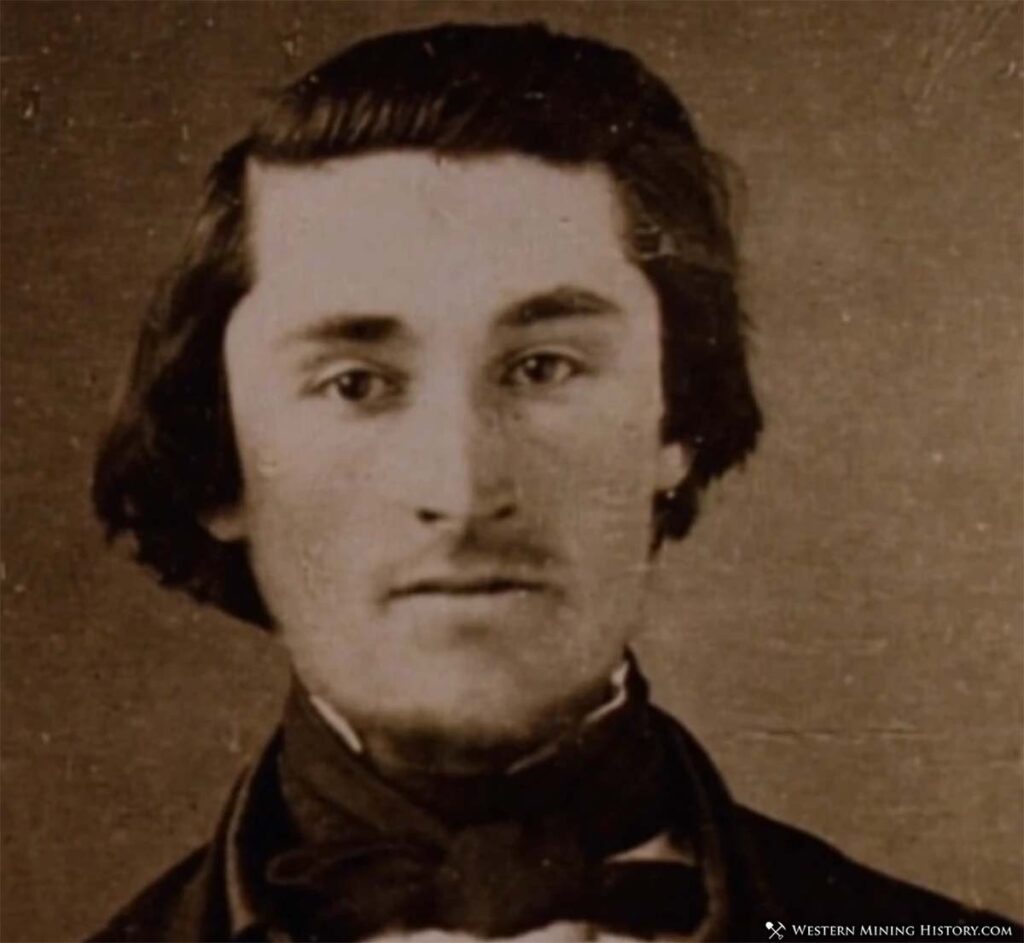
William Swain traveled to the California gold fields from Youngstown, New York in late 1848. In a letter home written in December of that year he describes the conditions in California and some of the hardships he has endured. The following are selected passages from that letter:
“Gold is found in the most rocky and rough places, and the streams and bars that are rich are formed of huge rocks and stones. In such places, you will see, it requires robust labor and hard tugging and lifting to separate the gold from the rock. But this is nothing to the risk of life run in traveling to this country. Therefore, if I was at home and knew all the circumstances, I think I should stay at home; but having passed those dangers in safety, I thank God that I am here in so favorable circumstances.”
“George, I tell you this mining among the mountains is a dog’s life. A man has to make a jackass of himself packing loads over mountains that God never designed man to climb, a barbarian by foregoing all the comforts of civilized life, and a heathen by depriving himself of all communication with men away from his immediate circle.”
“There was some talk between us of your coming to this country. For God’s sake think not of it. Stay at home. Tell all whom you know that are thinking of coming that they have to sacrifice everything and face danger in all its forms, for George, thousands have laid and will lay their bones along the routes to and in this country. Tell all that “death is in the pot” if they attempt to cross the plains and hellish mountains.”
“Say to Mr. Burge that this climate in the mines requires a constitution like iron. Often for weeks during the rainy season it is damp, cold, and sunless, and the labor of getting gold is of the most laborious kind. Exposure causes sickness to a great extent, for in most of the mines tents are all the habitation miners have. But with care I think health can be preserved.”
Hardships of the Gold Rush
An unattributed letter from November, 1849 that was published in a New York newspaper describes the difficult conditions found in San Francisco:
“Of course there is a great deal of suffering; a large number die every day, whose deaths are not published; several bodies are found every morning on the beach, and under carts where they have crawled for shelter. The principal disease is Dysentery, although dissipation and exposure kills a great many. Indeed, I never have seen so much dissipation in my life as prevails here. Every one drinks, and gambling is going on in almost every house, from eight in the morning until two and three at night, Sundays not excepted, and thousands change hands every day.”
“It is astonishing to what menial offices man have to resort here, who have left good and even lucrative situations at home. I will give you a few cases that have come under my observation. A gentleman who left a Professorship in Yale College, has been attending bar in a grog shop, and driving an ox team; another, a clerk who had a situation in Wall street, with $2,000 a year, is now driving a cart through the mud; at any time you can see dozens who were well off, digging ditches in the streets for $7 a day; a great many get discouraged, gamble and dissipate, until all their money is gone, and their health ruined, and then they either commit suicide, or crawl away under some budding and are found dead.”
“I must own that I have been grievously disappointed with regard to this place. Do not advise any person to come here unless they can bring plenty of capital, and if they can do that they are much better off where they are.”
Impact of the California Gold Rush
The economic consequences and significance of the discovery of gold are equally great but harder to determine. Increased production in the United States, followed by increased foreign production resulting from the California gold rush, caused an increase of money in circulation.
Reports on how much gold was recovered during the Gold Rush vary widely, but it is safe to assume it was many billions of dollars worth at modern prices. In spite of the heavy increase of circulating gold, the much-feared serious inflation, which was predicted by economists, failed to materialize.
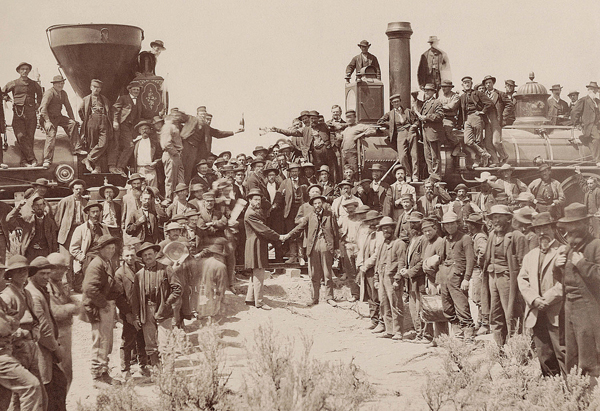
Other important results of the gold rush were that it opened the era of modern mining; hastened the colonization of the West and the suppression and partial elimination of the Native American population; accelerated the expansion of the agricultural frontier by the need for a food supply in the gold area; and hastened the linking of the East and West.
Source: Western Mining History