Throughout the history of Western art, angels playing musical instruments have been a powerful symbol of the divine, frequently appearing in religious paintings from the Medieval, Renaissance, and Baroque periods. These celestial beings, often portrayed with serene expressions and graceful postures, embody the concept of heavenly harmony. Their presence in artworks was not only decorative but deeply symbolic—representing the purest form of praise, spiritual beauty, and the idea of an eternal choir glorifying God in heaven.
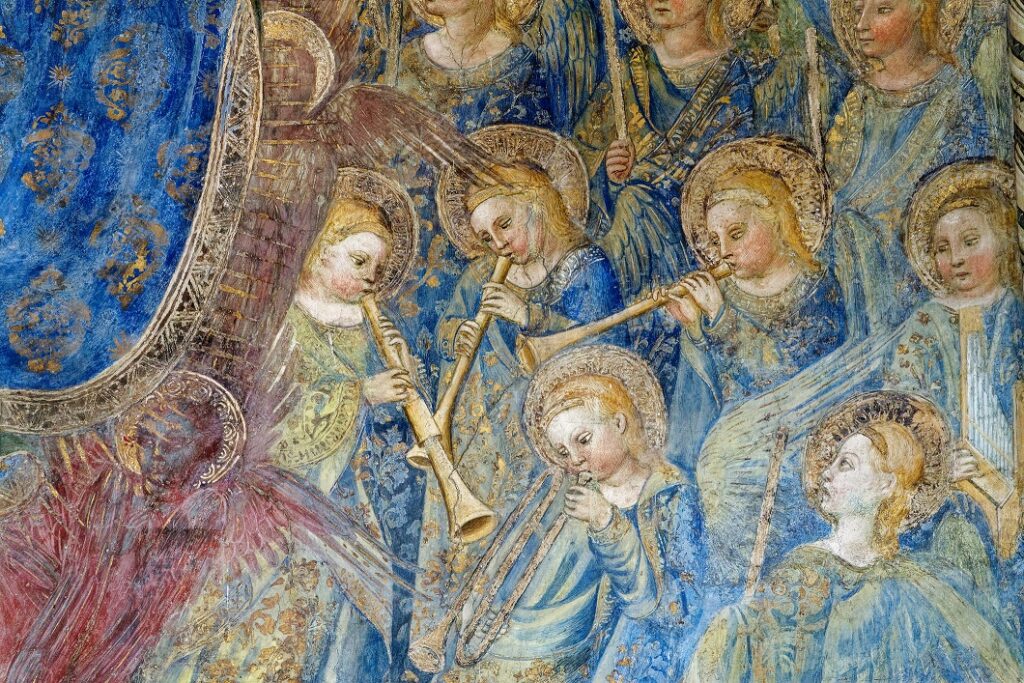
During the Medieval era, angel musicians appeared in illuminated manuscripts, altarpieces, and church frescoes. These early depictions were often stylized and symbolic rather than realistic, with golden backgrounds and flattened perspectives that emphasized their divine nature. Instruments such as harps, psalteries, and small organs were commonly shown. Their presence served to remind worshippers of the music of paradise—a realm far removed from earthly concerns.

Christ flanked by seraphim and cherubim. Attributed to Andrea Tafi and Apollonio, and to Fra Jacopo. (Photo: Sailko)
The Renaissance period brought a shift toward realism and human emotion, and this transformation extended to angelic imagery. Artists like Fra Angelico, Hans Memling, and Melozzo da Forlì painted angels with lifelike features, delicate expressions, and carefully rendered musical instruments. Fra Angelico’s angel musicians, for example, appear in soft, harmonious arrangements that mirror the balanced compositions of Renaissance art. Lutes, viols, and portative organs became more common in these depictions, reflecting both the music of the time and its integration into religious settings. These images not only celebrated divine beauty but also bridged the sacred and the human through the universal language of music.

In the Baroque period, angel musicians took on a more dramatic and dynamic presence. With swirling fabrics, intense lighting, and expressive gestures, Baroque artists like Rubens and Murillo infused their angels with emotional energy and movement. The musical instruments also became more varied and realistic, including trumpets, violins, and tambourines, which emphasized the theatrical and celebratory aspects of heavenly praise. These artworks were designed to evoke awe and emotional response, aligning with the Baroque era’s emphasis on grandeur and spiritual ecstasy.
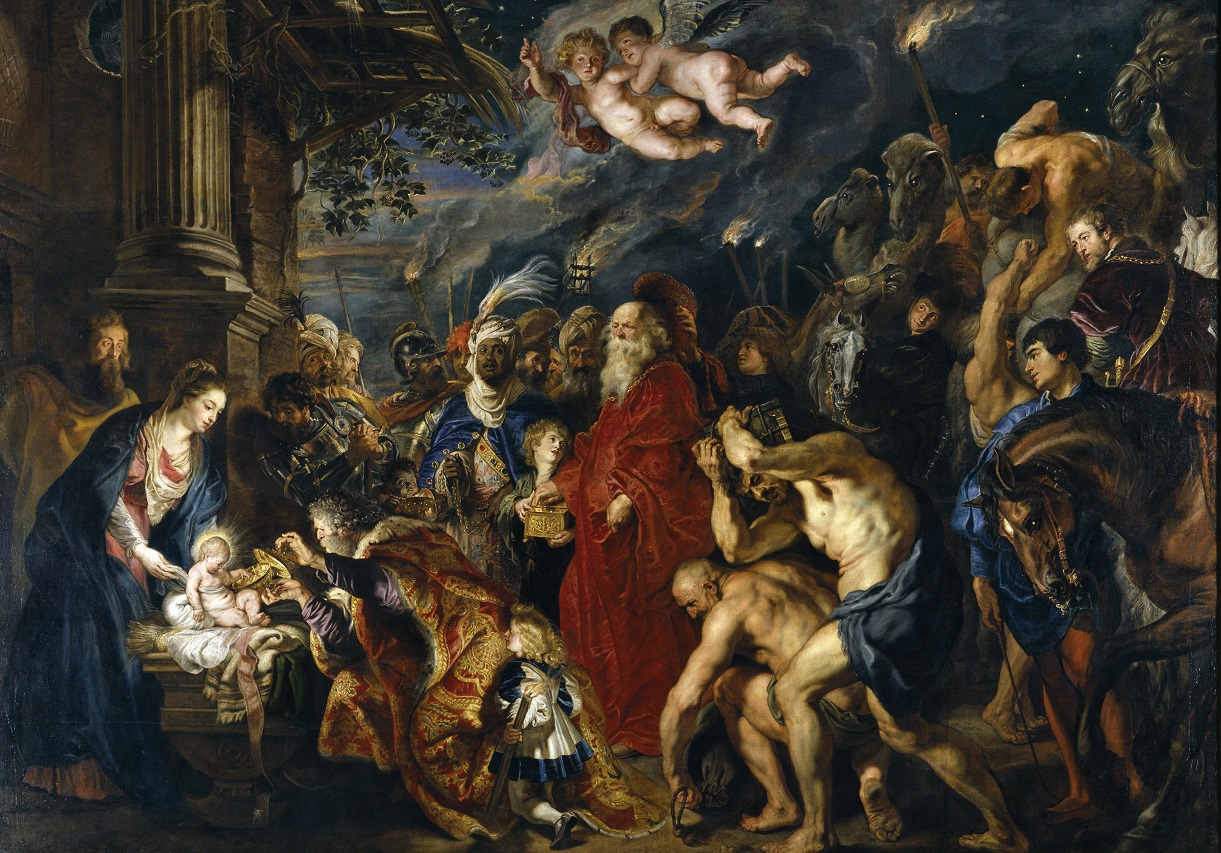
Across all periods, the inclusion of musical instruments served both artistic and theological purposes. Music was considered a form of divine expression, and angelic musicians illustrated the connection between heaven and earth, the material and the spiritual. Whether solemn or joyous, harmonious or triumphant, these classic paintings captured the enduring belief in music as a bridge to the divine—a visual echo of a heavenly choir that continues to resonate through centuries of sacred art.