The Middle Land

Invasion of Manchuria

The Origins of America's China Policy

21 Views

By Truman Library Institute

Add Your Heading Text Here

Background
World War II was fought by millions of people in all corners of the world. There were battles and military posts in surprising places. The Caribbean and Central America, Greenland, Alaska and the Aleutian Islands, Iraq, Syria, Burma and the Arctic are a few of the little known places that were involved. Every major country of the time was involved in the war.

Conflict in Asia began well before the official start of World War II. Seeking raw materials to fuel its growing industries, Japan invaded the Chinese province of Manchuria in 1931. By 1937 Japan controlled large sections of China, and war crimes against the Chinese became commonplace. In 1939, the armies of Japan and the Soviet Union clashed in the area of the Khalkin Gol river in Manchuria. This battle lasted four months and resulted in a significant defeat for the Japanese.

The United States, along with other countries, criticized Japanese aggression but shied away from any economic or military punishments. Relations between the U.S. and Japan worsened further when Japanese forces took aim at Indochina with the goal of capturing oil-rich areas of the East Indies. Responding to this threat, the United States placed an embargo on scrap metal, oil and aviation fuel heading to Japan and froze Japanese assets in the U.S. Furthermore, the U.S. demanded that the Japanese withdraw from conquered areas of China and Indochina. Japan, sensing conflict was inevitable, began planning for an attack on Pearl Harbor by April, 1941. The alliance systems of Japan, Germany and Italy were put into action by this time, but Russo-Japanese relations were cordial.

The Japanese bombing of Pearl Harbor on December 7, 1941 brought the United States officially into World War II. In the surprise attack, Japan sunk several ships, destroyed hundreds of planes and ended thousands of lives. The Japanese goal was to cripple the U.S. Pacific fleet, and they nearly succeeded. President Franklin Roosevelt called the attack “a day which will live in infamy,” and the American people were shocked and angered.

The ensuring war was costly. Years of fighting brought the U.S. armed forces closer and closer to Japan as they “hopped” from one island to another. The Japanese were vicious fighters, however, and every victory cost more time, material and lives. The last major battle, the fight for Okinawa, lasted almost three months and took more than 100,000 Japanese and American lives.

After President Roosevelt died on April 12, 1945, it became Harry Truman’s job to decide how to end the war. The thought of invading Japan gave Truman and his advisors pause. The war had shown that the Japanese were fighting for the Emperor who convinced them that it was better to die than surrender. Women and children had been taught how to kill with basic weapons. Japanese kamikaze pilots could turn planes into guided missiles. The cost of invasion, they knew, would be high.

Upon becoming president, Truman learned of the Manhattan Project, a secret scientific effort to create an atomic bomb. After a successful test of the weapon, Truman issued the Potsdam Declaration demanding the unconditional surrender of the Japanese government, warning of “prompt and utter destruction.” While at the Potsdam Conference, President Truman conversed with Soviet Premier Joseph Stalin in regards to “a new weapon of unusual destructive force.” The United States knew of the Soviets’ planned entry into the Pacific Theater as early as August 15th.

On August 6, 1945, having received no reply to the surrender terms, an American bomber called the Enola Gay dropped “Little Boy,” an atomic bomb, on Hiroshima, Japan. On August 8th, the Soviet Union declared war on Japan and invaded Manchuria and Sakhalin Island. The next day, another American bomber was en route to Japan only this time they were heading for Nagasaki with “Fat Man,” another atomic bomb. Both cities were leveled by the bombs, and shortly after the second bomb fell, Japan surrendered to the United States. The war was finally over.

Today, historians continue to debate the decision to use atomic weapons. To what extent did the Soviet intervention into the Pacific Theater cause Truman to use atomic weapons to end the war?

Source: Truman Library Institute

Tag

SubscribeNewsletter@2x
Refreshing and Insights
at No Cost to You!

Cancel anytime

One of the most remarkable examples of medieval Chinese Buddhist art is

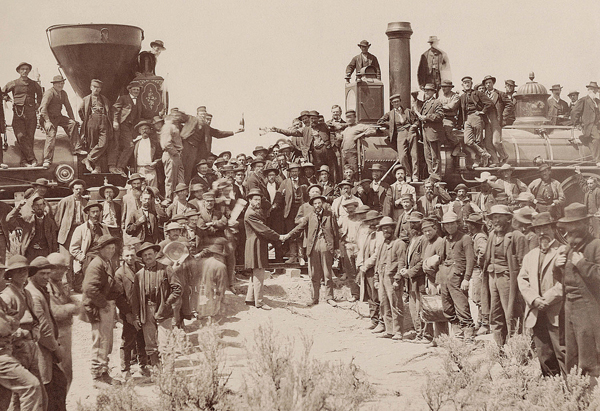
Back-to-back monster winters (1867 and 1868) paralyzed railroad construction over Donner Pass.

When a Speech Nearly Never Happened: The U.N. Session That Drew Unexpected

Margaret Thatcher (1925–2013), often remembered as the “Iron Lady,” remains one of

Art has the incredible power to evoke emotions, tell stories, and transport

“Painting has been my passion since childhood, and my parents were always

Curator Laura Llewellyn works with art handlers to arrange and hang a

A mother asks what she should say to her 9-year-old daughter who

Long before the rise of communism, photographers captured a China that few

Across the United States, some of the country’s most memorable destinations are

The Eiffel Tower in Paris. The Clock Tower of London. The Busy

Small old villages in United Kingdom are known for their historic charm,

From distant worlds at the edge of the Solar System to colossal

The Eiffel Tower in Paris. The Clock Tower of London. The Busy

The universe is far stranger — and more beautiful — than imagination

In what would have marked Queen Elizabeth II’s 100th birthday, King Charles

Did Ancient China Discover America Before Columbus?

A Former Flight Attendant Recounts Tiananmen Massacre in Beijing (Audio)

The Iron Lady’s Secret: Margaret Thatcher Leadership Advice

When Poetry Becomes a Cry of the Soul: The Meaning of “Un dì all’azzurro spazio” — and Franco Corelli’s Legendary Performance

What did a modern kitchen look like in the early 1950s? A

Let us take the three worst and most striking characteristics, patience, indifference

Psychology says the 1960s and 70s accidentally produced one of the most

I. Mellowness “CHARACTER” is a typically English word. Apart from the English,

In the dimly lit hall of the Stanton Center in Monterey, CA,

Margaret Thatcher (1925–2013), often remembered as the “Iron Lady,” remains one of

Few events of the late 20th century continue to provoke as much

[totalpoll id="62479"]
Cancel anytime

Contact us

The Middle Land

100 Wilshire Blvd., Suite 700 Santa Monica, CA 90401

Login Now

Sign in to your account

Don’t have an account? Sign Up

Don't have an account?

Sign up

Receive free monthly subscription & other benefits

Already have an account? Sign in

Already have an account?

To Editor

One of the most remarkable examples of medieval Chinese Buddhist art is

Back-to-back monster winters (1867 and 1868) paralyzed railroad construction over Donner Pass.

When a Speech Nearly Never Happened: The U.N. Session That Drew Unexpected

Margaret Thatcher (1925–2013), often remembered as the “Iron Lady,” remains one of

Art has the incredible power to evoke emotions, tell stories, and transport

“Painting has been my passion since childhood, and my parents were always

Curator Laura Llewellyn works with art handlers to arrange and hang a

A mother asks what she should say to her 9-year-old daughter who

Long before the rise of communism, photographers captured a China that few

Across the United States, some of the country’s most memorable destinations are

The Eiffel Tower in Paris. The Clock Tower of London. The Busy

Small old villages in United Kingdom are known for their historic charm,

From distant worlds at the edge of the Solar System to colossal

The Eiffel Tower in Paris. The Clock Tower of London. The Busy

The universe is far stranger — and more beautiful — than imagination

In what would have marked Queen Elizabeth II’s 100th birthday, King Charles

Did Ancient China Discover America Before Columbus?

A Former Flight Attendant Recounts Tiananmen Massacre in Beijing (Audio)

The Iron Lady’s Secret: Margaret Thatcher Leadership Advice

When Poetry Becomes a Cry of the Soul: The Meaning of “Un dì all’azzurro spazio” — and Franco Corelli’s Legendary Performance

What did a modern kitchen look like in the early 1950s? A

Let us take the three worst and most striking characteristics, patience, indifference

Psychology says the 1960s and 70s accidentally produced one of the most

I. Mellowness “CHARACTER” is a typically English word. Apart from the English,

In the dimly lit hall of the Stanton Center in Monterey, CA,

Margaret Thatcher (1925–2013), often remembered as the “Iron Lady,” remains one of

Few events of the late 20th century continue to provoke as much

Forget Password

Please enter your email id or user name to recover your password
[reset_password]

Login to Vote!

Thank you for your participation, please Log in or Sign up to Vote

Don’t have an account?

Login to Comment

Thank you for your participation, please Log in or Sign up to Comment
Forgot Password?

Don't have an account?

Thank you for your subscription!