The Middle Land

Unlock Your Divine Body: How and Why You Should Care for Your Kidneys

46 Views

By Dr. Guobin Wu , Emiko Kingswell

"If you’ve been waiting for an invitation, this calligraphy is it. Commissioned by Facebook, this is a hand-lettered design for a poster. Quote is Facebook mine "

- Massimo Vignelli

Add Your Heading Text Here

Our kidneys play many important roles in maintaining our health. They clean our bodies by removing waste and toxins as well as releasing hormones to balance blood pressure and regulate red blood cell production. The traditional Chinese viewed kidneys with great respect and awe. The traditional Chinese were those who grew up before the Communists took power in China.

The Qing Dynasty medical manual, Prolong Longevity (Shoushi Qingbian), lists guidelines to good nutrition and self-health. This manual puts special emphasis on caring for our kidneys.  In traditional Chinese medicine, kidneys are the body’s “root organ.” Describing an organ as a “root organ” means the kidneys are considered the core of a body. A root organ implies that the organ might not grow and become the attractive face, arms, and legs that is presented to others. There was a saying, “before a person’s body is formed, the kidneys must materialize first.”

Ancient Daoist texts compare a person’s two kidneys to xuanpin, which is a figurative archway symbolizing the beginning of life.  This is sometimes translated into “mysterious motherhood,” using a mother giving birth as a metaphor.  “The doorway of the xuanpi is the base from which Heaven and Earth sprang,” is written in the Tao Te Ching. It is said that water is the source of life.  Traditional Chinese medicine describes the functionality of one’s kidneys as how much “kidney fluid” one has. The less kidney fluid one has in their body, the weaker the soul is.

Human’s emotional agitation, anger, and desire are often referred to using the metaphor of “fire” in Chinese medicine. The more agitation, anger, and desire one has, the more furious the “fire” is inside of his body. Since fire and fluid counteract with each other, the intemperance of desire could cause kidney fluid to drain out faster than usual. If, on the other hand, the fluid extinguishes the fire, then one might lose motivation.

In other words, traditional Chinese medicine believes that the best way to care for the kidneys is not necessarily through finding the best combination of herbs or medication, but to first calm the temptation and unrest in one’s mind and soul.

The type of desire that traditional Chinese medicine warns about the most is sexual desire. According to Zhuangzi, another fundamental text of Daoism written by Zhuang Zhou, uninhibited sexual desires are referred to as “the most daunting ignorance one could have.”  The Yellow Emperor’s Classic of Internal MedicineHuangdi Neijing, an ancient Chinese medical manual compiled roughly during the Warring States Period, reminds us:

“… drinking beer as if drinking water, detaching one’s lifestyle from the natural rhythms, and allowing sexual intemperance are causes of a lack in energy and motivation.  Such actions must be stopped.”

Desires could be interpreted as a burden that one adds to the body. As the amount of burden accumulates, the more probable it is that the body might crash. In traditional Chinese medicine, this is not something treatable by simply using a doctor’s prescription.  Unchecked desires can quickly suck the energy dry, leaving a person tired and exhausted.  Such a state is highly harmful to the body. It has the same effect as excessively staying up late at night.  The stress, tiredness, and overly complicated thoughts can accumulate quickly into a burden, decreasing productivity instead of doing the opposite. A calm heart, a pure mind, and a simple lifestyle are the first steps to a healthy body.

——

*The traditional Chinese medicine is rooted in 5,000 years of Chinese culture, which is fundamentally contrasted from the Chinese Communist Party culture and ideology. The traditional China lasted until Qing Dynasty by 1920, when the last Emperor Pu Yi was forced out Forbidden City in Beijing.  The article reveals the traditions that Chinese people practiced before 1949 when Communist took totalitarian power in China.

Tag

SubscribeNewsletter@2x
Refreshing and Insights
at No Cost to You!

Cancel anytime

Leave a Reply

One of the most remarkable examples of medieval Chinese Buddhist art is

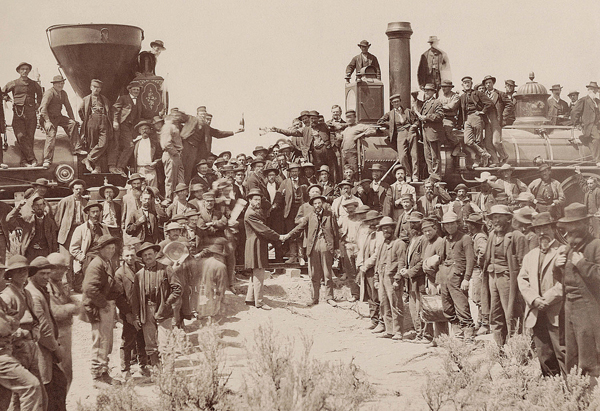
Back-to-back monster winters (1867 and 1868) paralyzed railroad construction over Donner Pass.

When a Speech Nearly Never Happened: The U.N. Session That Drew Unexpected

Margaret Thatcher (1925–2013), often remembered as the “Iron Lady,” remains one of

Art has the incredible power to evoke emotions, tell stories, and transport

“Painting has been my passion since childhood, and my parents were always

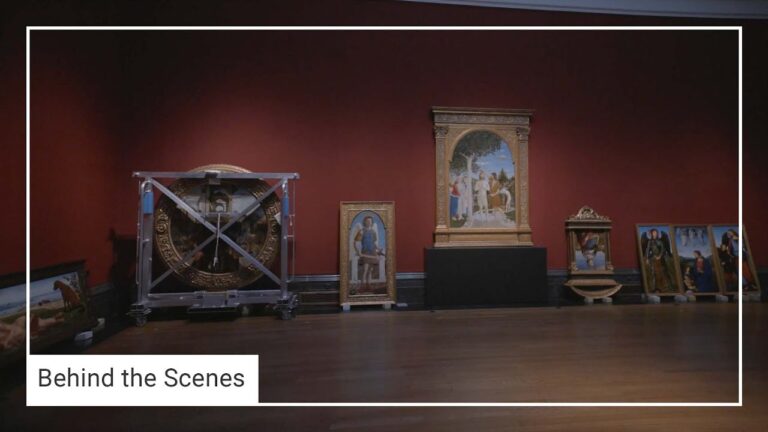
Curator Laura Llewellyn works with art handlers to arrange and hang a

A mother asks what she should say to her 9-year-old daughter who

Long before the rise of communism, photographers captured a China that few

Across the United States, some of the country’s most memorable destinations are

The Eiffel Tower in Paris. The Clock Tower of London. The Busy

Small old villages in United Kingdom are known for their historic charm,

From distant worlds at the edge of the Solar System to colossal

The Eiffel Tower in Paris. The Clock Tower of London. The Busy

The universe is far stranger — and more beautiful — than imagination

In what would have marked Queen Elizabeth II’s 100th birthday, King Charles

Did Ancient China Discover America Before Columbus?

A Former Flight Attendant Recounts Tiananmen Massacre in Beijing (Audio)

The Iron Lady’s Secret: Margaret Thatcher Leadership Advice

When Poetry Becomes a Cry of the Soul: The Meaning of “Un dì all’azzurro spazio” — and Franco Corelli’s Legendary Performance

What did a modern kitchen look like in the early 1950s? A

Let us take the three worst and most striking characteristics, patience, indifference

Psychology says the 1960s and 70s accidentally produced one of the most

I. Mellowness “CHARACTER” is a typically English word. Apart from the English,

In the dimly lit hall of the Stanton Center in Monterey, CA,

Margaret Thatcher (1925–2013), often remembered as the “Iron Lady,” remains one of

Few events of the late 20th century continue to provoke as much

[totalpoll id="62479"]
Cancel anytime

Contact us

The Middle Land

100 Wilshire Blvd., Suite 700 Santa Monica, CA 90401

Login Now

Sign in to your account

Don’t have an account? Sign Up

Don't have an account?

Sign up

Receive free monthly subscription & other benefits

Already have an account? Sign in

Already have an account?

To Editor

One of the most remarkable examples of medieval Chinese Buddhist art is

Back-to-back monster winters (1867 and 1868) paralyzed railroad construction over Donner Pass.

When a Speech Nearly Never Happened: The U.N. Session That Drew Unexpected

Margaret Thatcher (1925–2013), often remembered as the “Iron Lady,” remains one of

Art has the incredible power to evoke emotions, tell stories, and transport

“Painting has been my passion since childhood, and my parents were always

Curator Laura Llewellyn works with art handlers to arrange and hang a

A mother asks what she should say to her 9-year-old daughter who

Long before the rise of communism, photographers captured a China that few

Across the United States, some of the country’s most memorable destinations are

The Eiffel Tower in Paris. The Clock Tower of London. The Busy

Small old villages in United Kingdom are known for their historic charm,

From distant worlds at the edge of the Solar System to colossal

The Eiffel Tower in Paris. The Clock Tower of London. The Busy

The universe is far stranger — and more beautiful — than imagination

In what would have marked Queen Elizabeth II’s 100th birthday, King Charles

Did Ancient China Discover America Before Columbus?

A Former Flight Attendant Recounts Tiananmen Massacre in Beijing (Audio)

The Iron Lady’s Secret: Margaret Thatcher Leadership Advice

When Poetry Becomes a Cry of the Soul: The Meaning of “Un dì all’azzurro spazio” — and Franco Corelli’s Legendary Performance

What did a modern kitchen look like in the early 1950s? A

Let us take the three worst and most striking characteristics, patience, indifference

Psychology says the 1960s and 70s accidentally produced one of the most

I. Mellowness “CHARACTER” is a typically English word. Apart from the English,

In the dimly lit hall of the Stanton Center in Monterey, CA,

Margaret Thatcher (1925–2013), often remembered as the “Iron Lady,” remains one of

Few events of the late 20th century continue to provoke as much

Forget Password

Please enter your email id or user name to recover your password
[reset_password]

Login to Vote!

Thank you for your participation, please Log in or Sign up to Vote

Don’t have an account?

Login to Comment

Thank you for your participation, please Log in or Sign up to Comment
Forgot Password?

Don't have an account?

Leave a Reply

Thank you for your subscription!