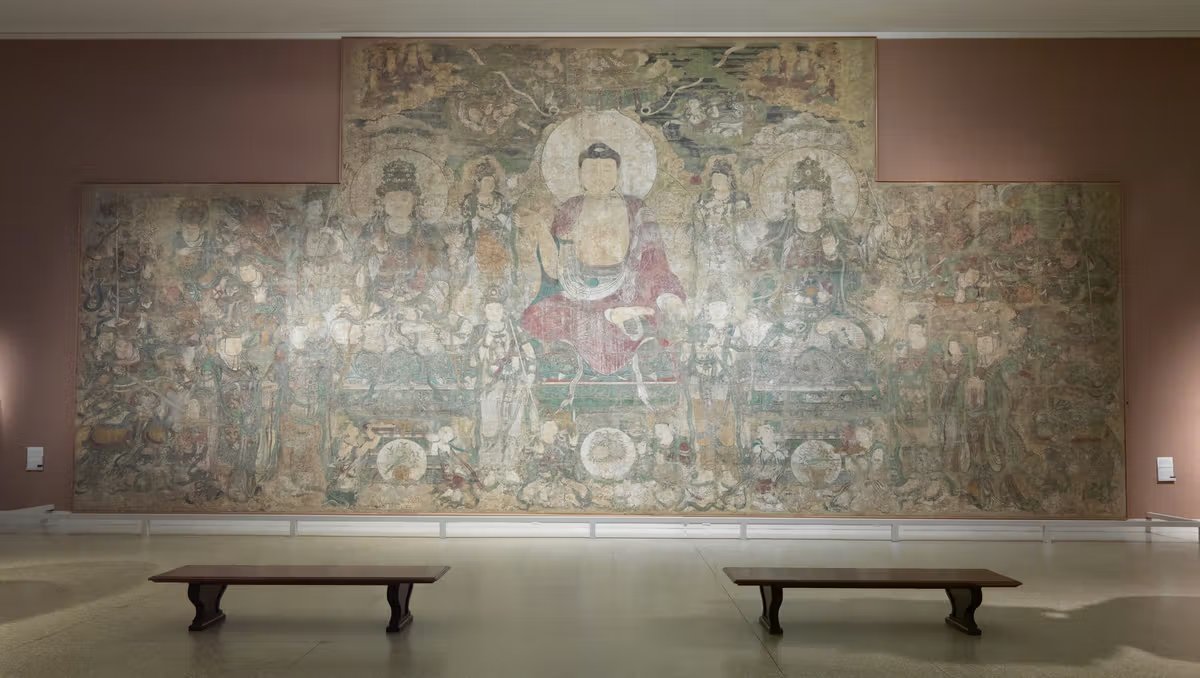
One of the most remarkable examples of medieval Chinese Buddhist art is undergoing an extensive conservation effort that is shedding new light on both its artistic brilliance and its complex history. Since 2024, specialists from The Metropolitan Museum of Art and the Chinese National Academy of Arts have been working together on a large-scale project focused on the restoration of the famous Medicine Buddha mural.
The collaboration combines art historical research with modern scientific analysis to better understand how the mural was originally created and how it has changed over the centuries. Conservators have carefully examined its pigments, plaster layers, structural composition, and previous restoration work. Their findings have revealed several issues dating back to the artwork’s installation in the 1960s, providing an opportunity to improve its presentation and preserve it for future generations.
Originally created in northern China, the mural survived a long and complicated journey before arriving at The Met. By the time it was reassembled in 1964, the painting consisted of 274 separate fragments that had to be carefully reconstructed. Although the mural remained structurally stable, decades of aging and earlier conservation treatments altered its appearance, causing sections of the surface to darken and develop a yellowish tone.
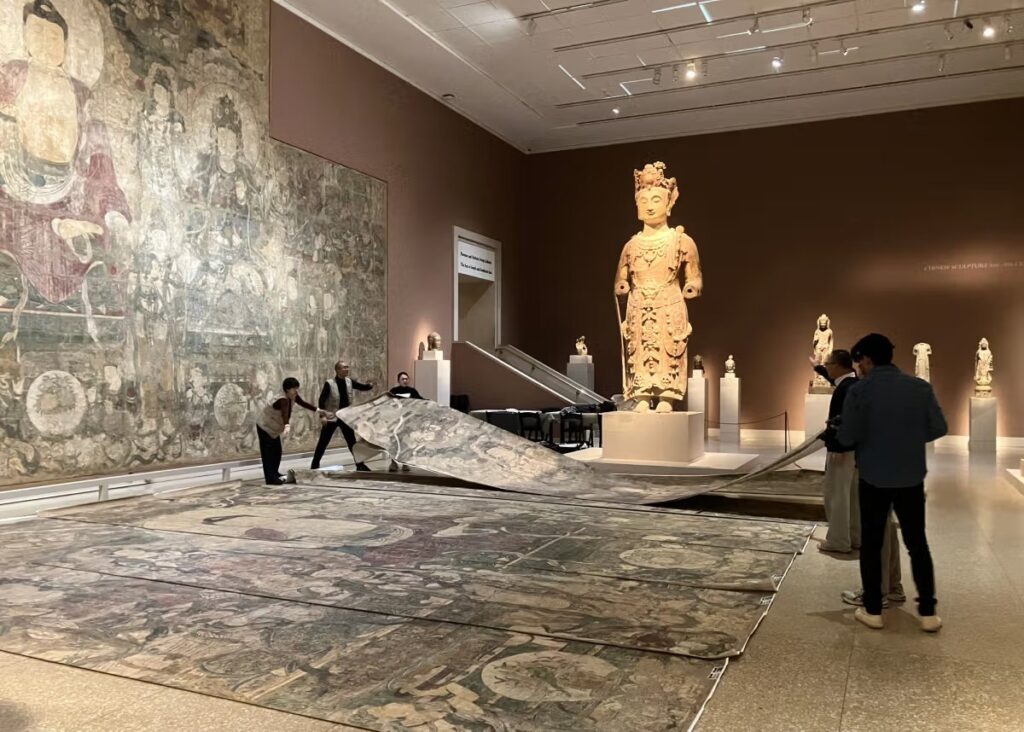
The current restoration seeks to address those issues while correcting inaccuracies introduced during the original reconstruction process. Researchers have identified areas where fragments were not perfectly aligned and where modern fills obscured parts of the original composition. Over the next two years, conservators will gradually remove discoloration and refine these sections to bring the mural closer to its historic appearance.
The artwork once decorated the main hall of Guangsheng Monastery in Shanxi Province, one of northern China’s most important religious sites. Following a devastating earthquake in 1303, the monastery underwent extensive rebuilding efforts. As part of this reconstruction, artists created a series of monumental murals intended not only to beautify the sacred space but also to invoke protection and blessings for the community. The Medicine Buddha mural, completed between approximately 1319 and 1324, became one of the most significant works in the complex.
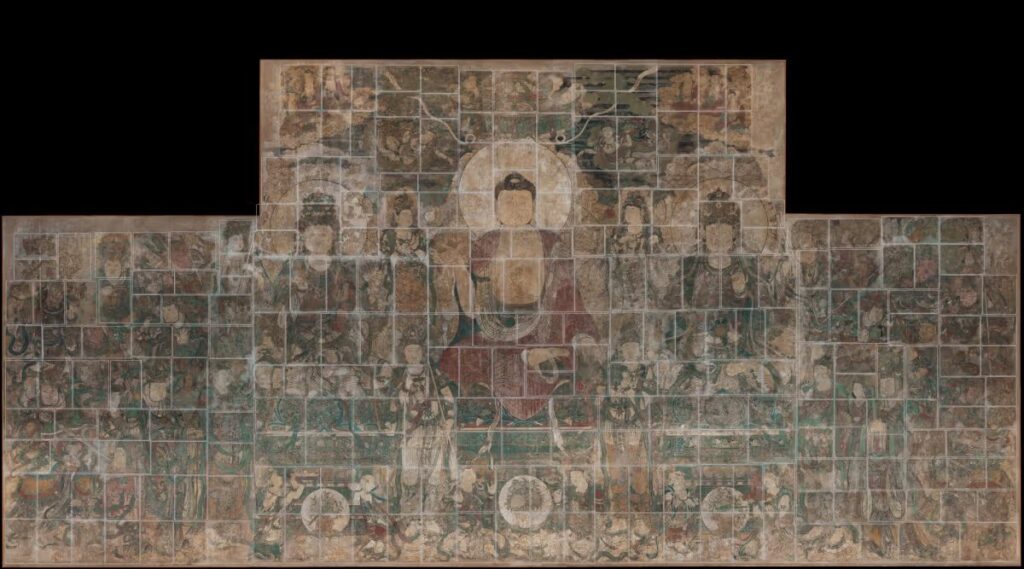
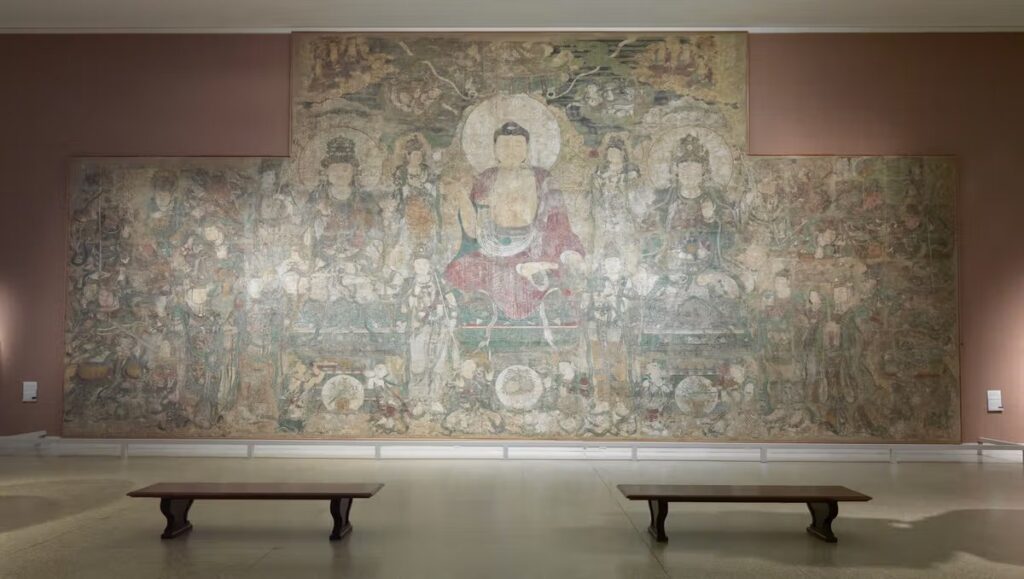
At the center of the composition sits Bhaishajyaguru, the Medicine Buddha, surrounded by bodhisattvas, guardian figures, and celestial attendants associated with healing, protection, fertility, and well-being. The painting was executed on layers of clay and straw covered with plaster, then outlined with bold black lines and filled with vivid mineral and vegetable pigments. While some organic pigments have faded over time, many of the original reds, greens, and whites remain visible today.
The mural originally formed part of a much larger decorative program that covered the walls of the monastery’s main hall. Other surviving sections are now housed in major American museums, including the Nelson-Atkins Museum of Art, the Detroit Institute of Arts, and the Cincinnati Art Museum. Together, these fragments provide a rare glimpse into one of the finest surviving examples of Yuan Dynasty religious mural painting.
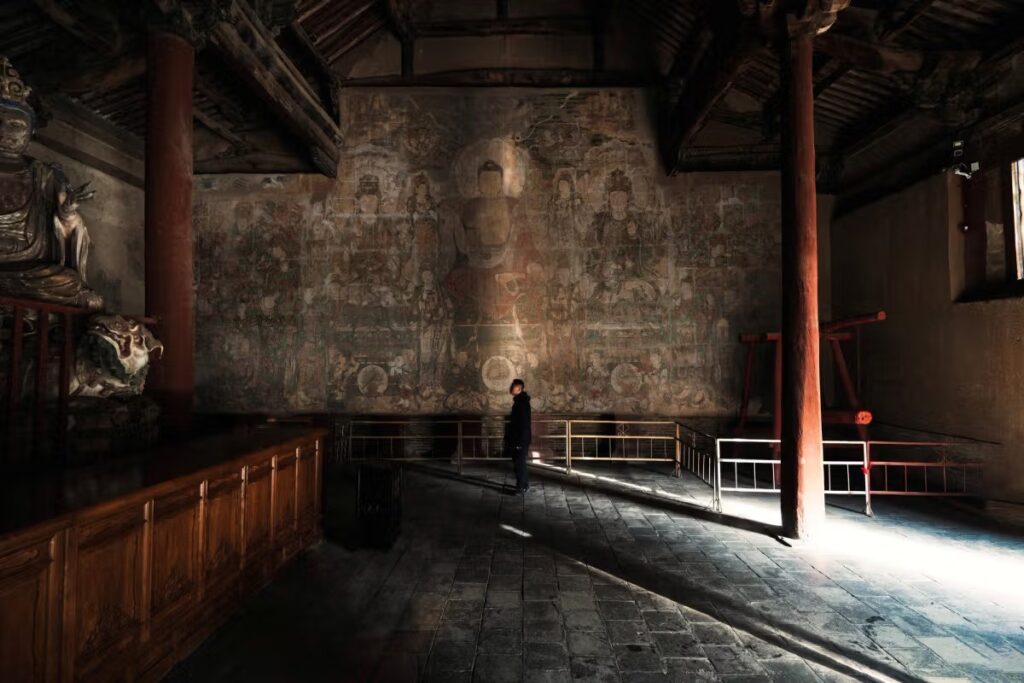
Art historians also note the mural’s unusual iconographic program. The Medicine Buddha was originally paired with an equally monumental image of Tejaprabha, the Buddha of Blazing Light, a deity associated with celestial forces, destiny, longevity, and good fortune. Scholars believe this rare pairing may reflect concerns about protection and cosmic order following the catastrophic earthquake that had previously devastated the monastery.
Today, as conservators uncover details hidden beneath decades of aging and restoration materials, the project is offering a renewed appreciation for the extraordinary craftsmanship of fourteenth-century Chinese artists. The restoration not only safeguards a priceless cultural treasure but also provides valuable insights into the religious, artistic, and historical world from which this masterpiece emerged.
Iconography:
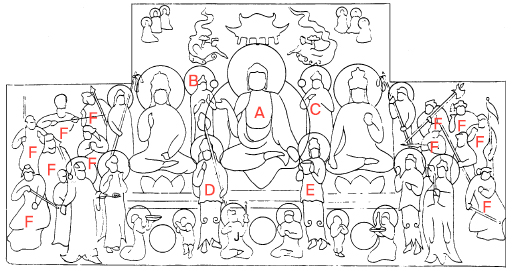
At the center of the mural, Bhaishajyaguru (A), the Medicine Buddha, sits upon a lotus throne surrounded by celestial figures. Standing beside him are his principal attendants, Candraprabha (B) and Suryaprabha (C), identified by the nearby moon and sun symbols. Additional bodhisattvas appear around the central group, while figures (D) and (E) carry the traditional staff and medicine bowl associated with the Medicine Buddha. The Twelve Guardian Generals (F) line both sides of the composition, representing his vows to relieve suffering, protect families, and assist those in need.
This mural was originally paired with a monumental image of Tejaprabha, the Buddha of Blazing Light, a deity associated with the planets, destiny, prosperity, and longevity. Scholars believe this unusual pairing may reflect spiritual concerns that emerged after the devastating earthquake and fire that struck Guangsheng Monastery in 1303.
Technique and Style:
The painting was created on layers of plaster, clay, and straw, using bold black outlines filled with mineral and vegetable pigments. Surviving reds, greens, and whites still reveal the mural’s original brilliance. Art historians associate the work with the workshop of the renowned fourteenth-century master Zhu Haogu, whose style is characterized by powerful figures, rounded faces, and the balanced compositions seen in both Buddhist and Daoist temple art.
Source: Met museum