The Middle Land

10 Fascinating Facts About Chinoiserie

148 Views

By Five Minute History

Add Your Heading Text Here

1. Chinoiserie was once the most coveted fashion of the aristocracy

During the 17th and 18th centuries, Europeans became fascinated with Asian cultures and traditions. They loved to imitate or evoke Asian motifs in Western art, architecture, landscaping, furniture, and fashion.

China seemed a mysterious, far-away place and the lack of first-hand experiences only added to the mystique.

Chinoiserie derives from the French word chinois, meaning “Chinese”, or “after the Chinese taste”. It is a Western aesthetic inspired by Eastern design.

“The fact remains that four thousand years ago, when we did not know how to read, they knew everything essentially useful of which we boast today.
Voltaire”
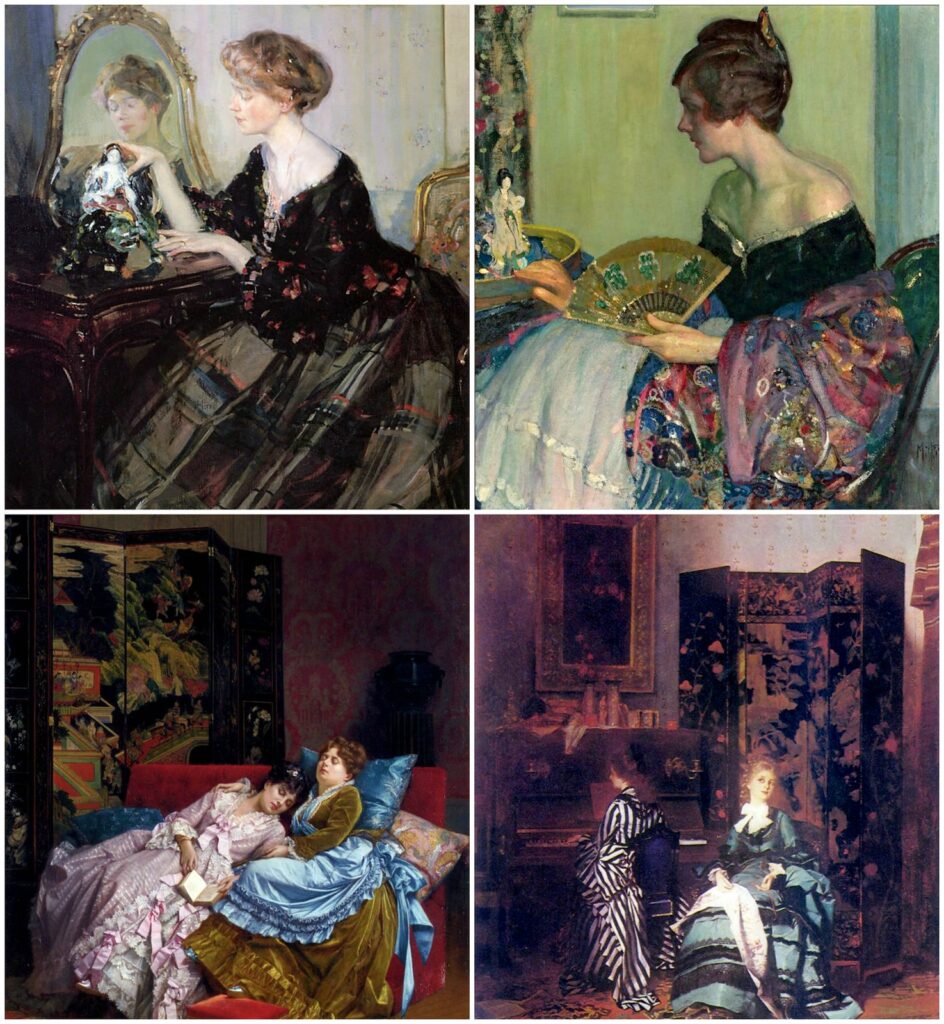
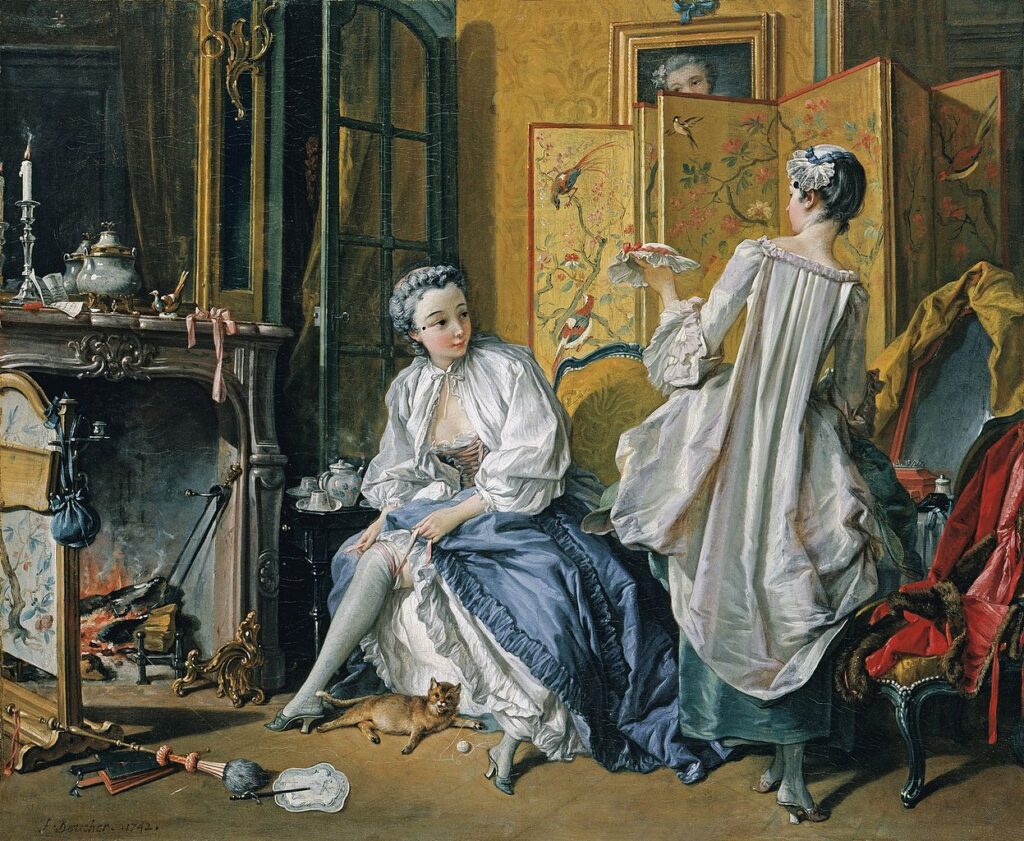
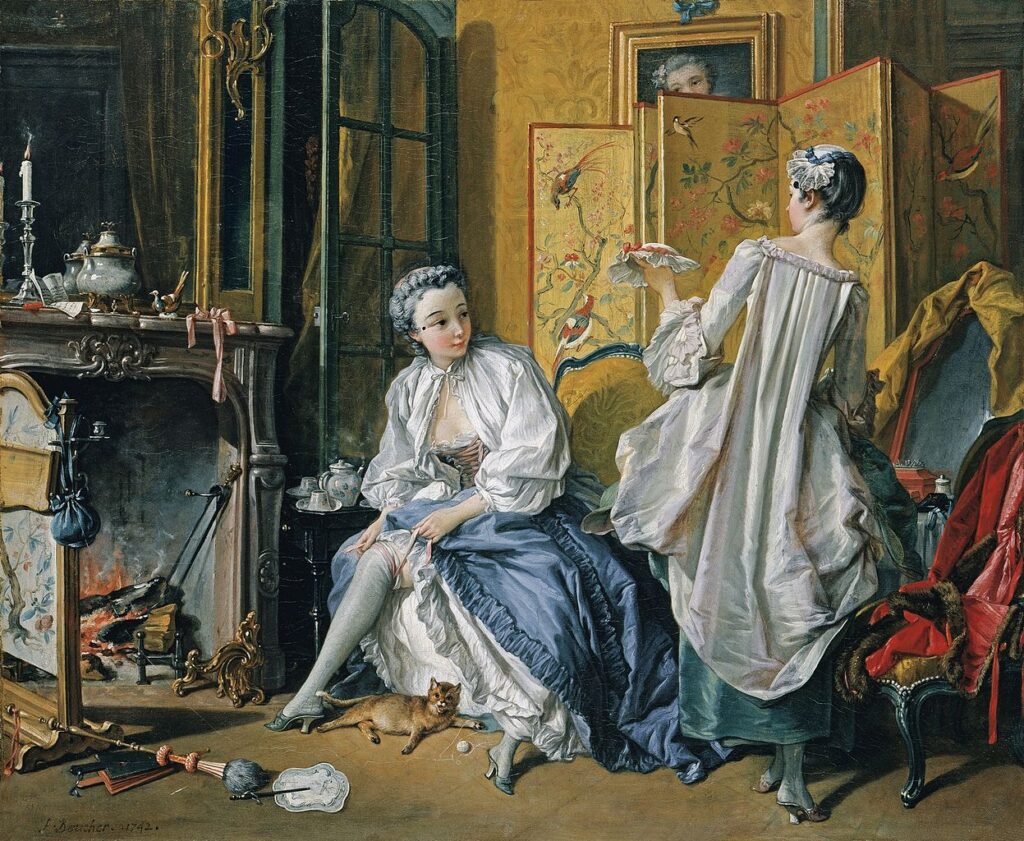
A folding screen was one of the most popular expressions of Chinoiserie, often decorated with beautiful art.

Themes included mythology, scenes of palace life, nature, and romance in Chinese literature—a young lady in love could take a curious peek hidden from behind a folding screen.
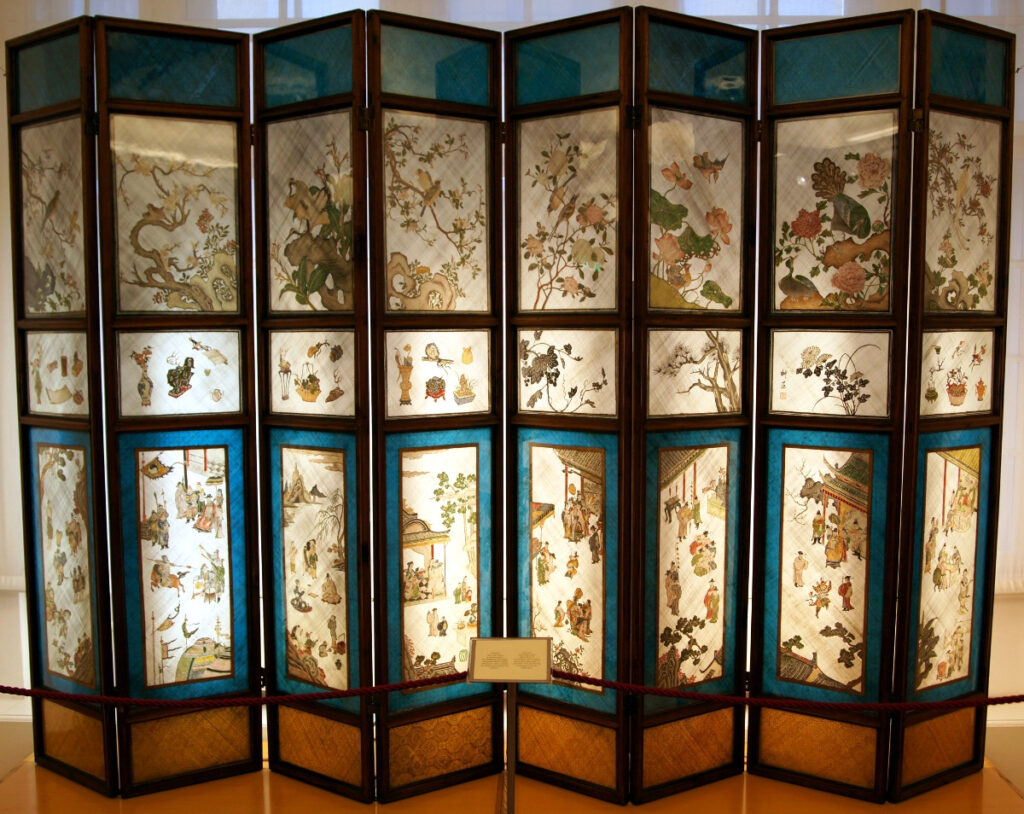
Chinese Folding Screen. 18th century. Wood, glass paper, Imperial Furniture Collection, Vienna. Credit Sandstein (Photo: fiveminutehistory.com)
The Toilette by François Boucher, 1742 (Photo: FiveMinuteHistory.com)

2. Chinoiserie’s popularity grew with rising trade in the East

Rising trade with China and East Asia during the 17th and 18th centuries brought an influx of Chinese and Indian goods into Europe aboard ships from the English, Dutch, French, and Swedish East India Companies.
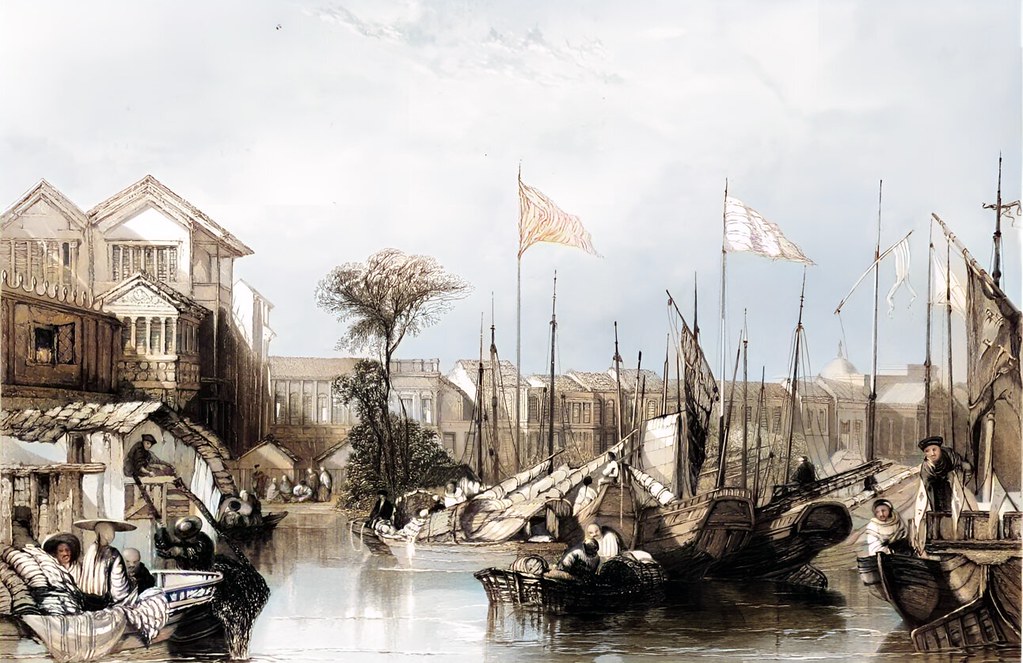
The European Factories in Canton by Thomas Allom, 1838. (Photo:FiveMinuteHistory.com)

By the middle of the 19th century, the British East India Company had become the dominant player in East Asian trading, its rule extending across most of India, Burma, Malaya, Singapore, and British Hong Kong.

A fifth of the world’s population was under the trading influence of the British East India Company.
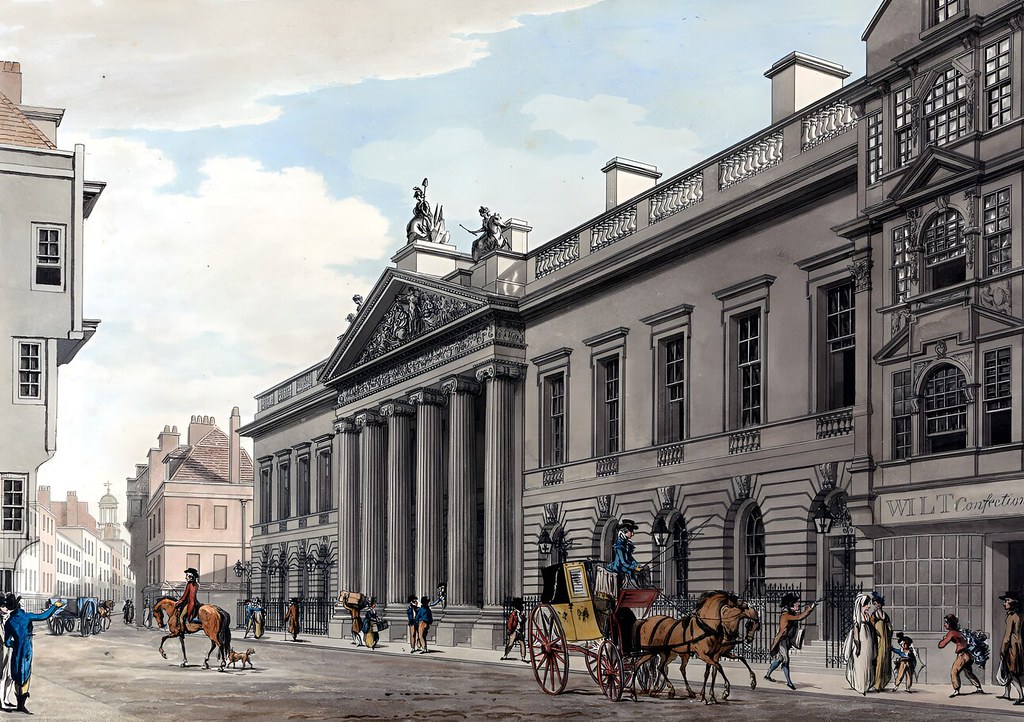
(British) East India House by Thomas Malton the Younger (1748-1804) (Photo: FiveMinuteHistory.com)


3. Chinoiserie began with tea drinking
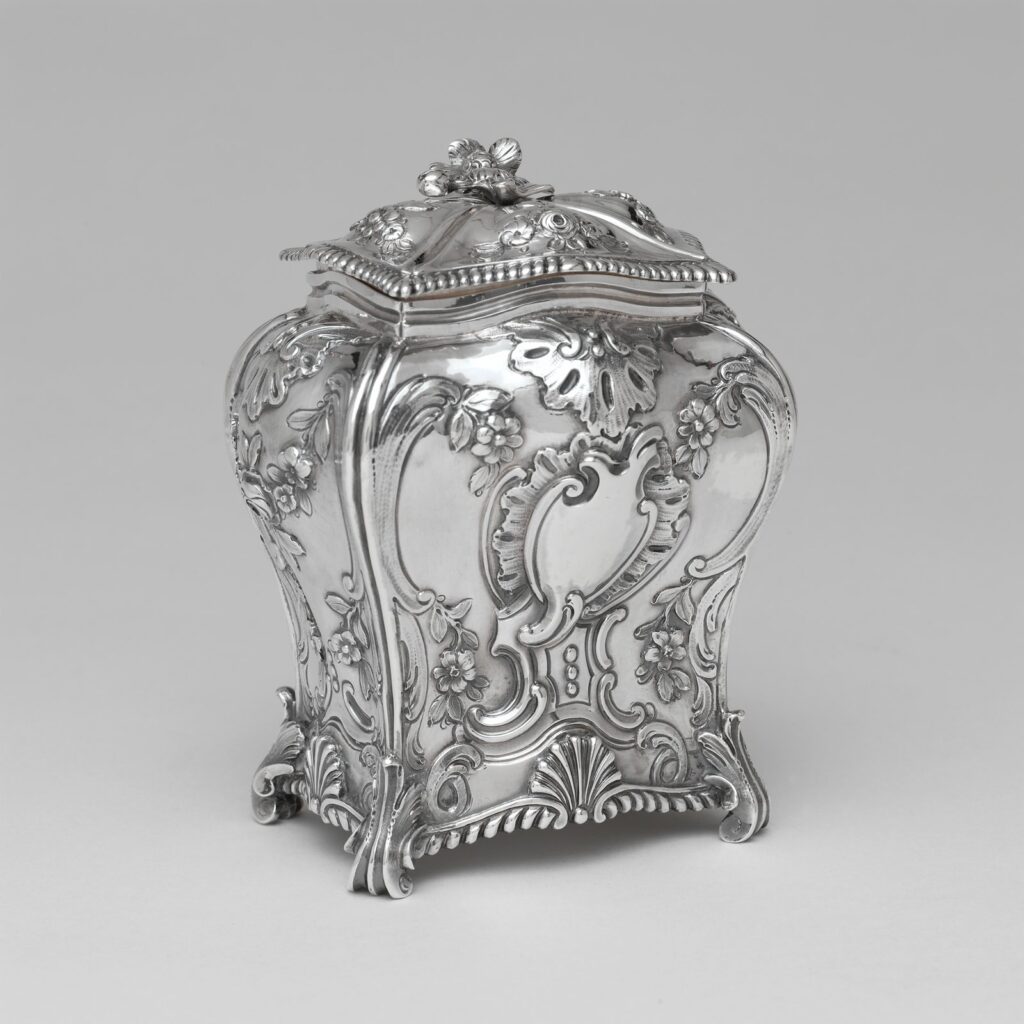
Drinking tea was the height of fashion for ladies of good taste and required an appropriate chinoiserie mise en scène.

“Tea drinking was a fundamental part of polite society; much of the interest in both Chinese export wares and chinoiserie rose from the desire to create appropriate settings for the ritual of tea drinking.
Beevers”
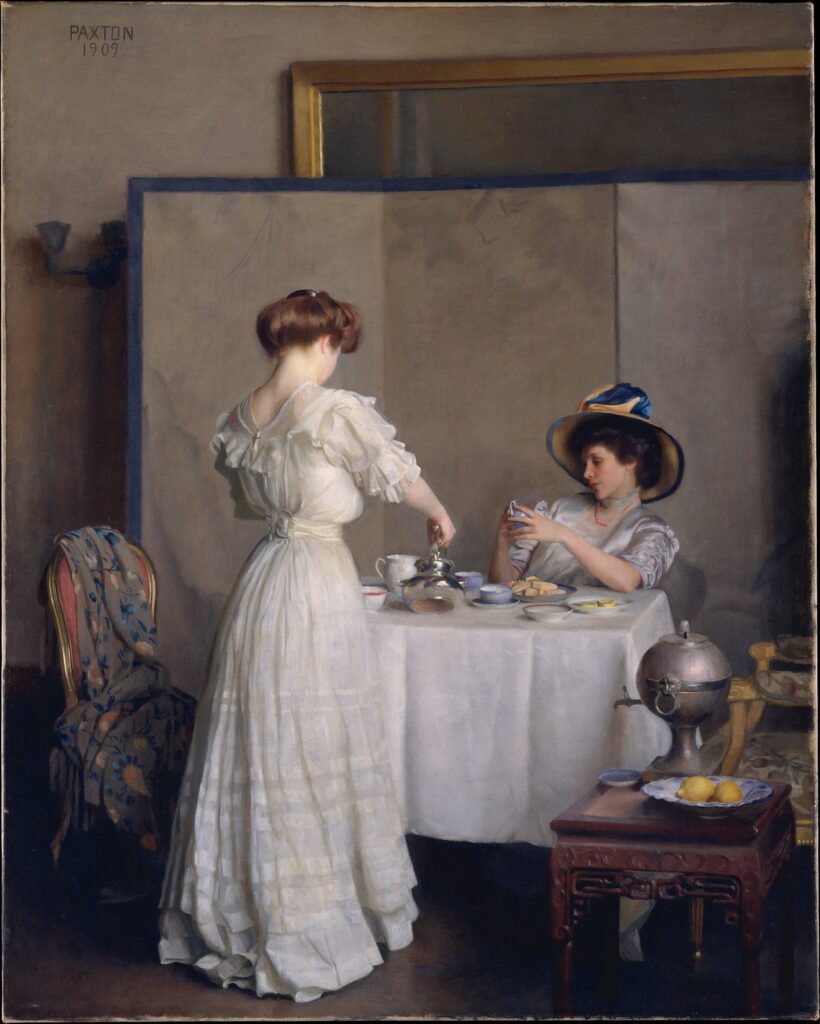
Tea Leaves by William McGregor Paxton, Boston, MA. metmuseum. (Photo: FiveMinuteHistory.com)
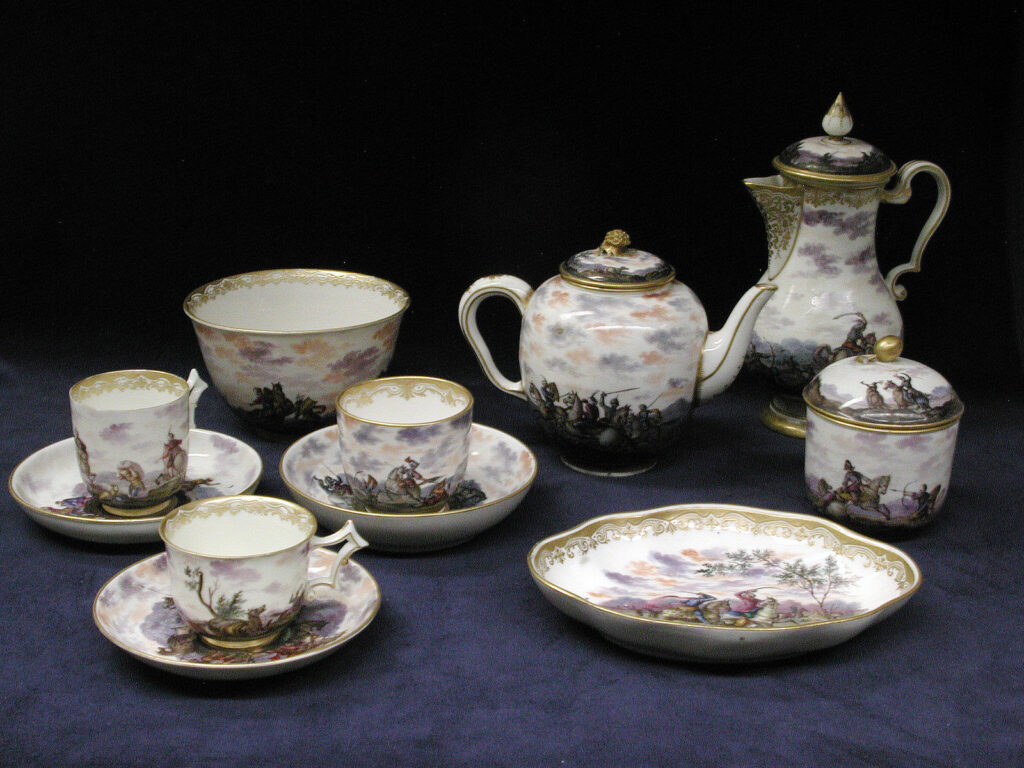
1743. Tea Service. Italian. Porcelain. metmuseum. (Photo: FiveMinuteHistory.com)
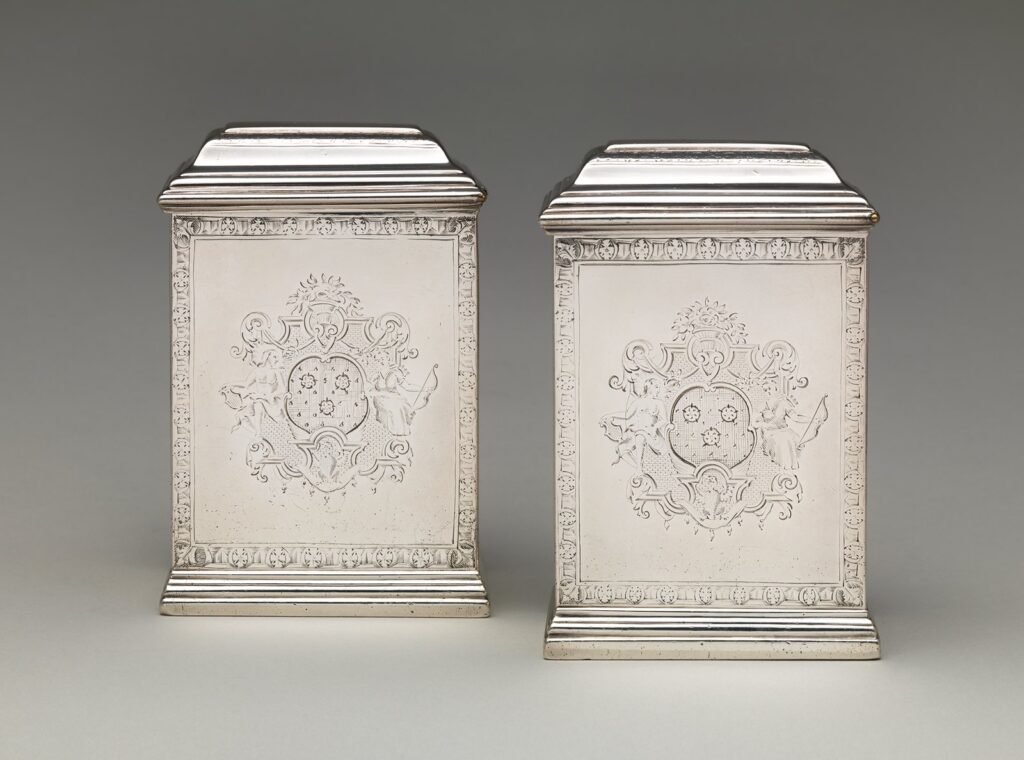
1762 Tea Caddy. British. Silver. metmuseum. (Photo: FiveMinuteHistory.com)
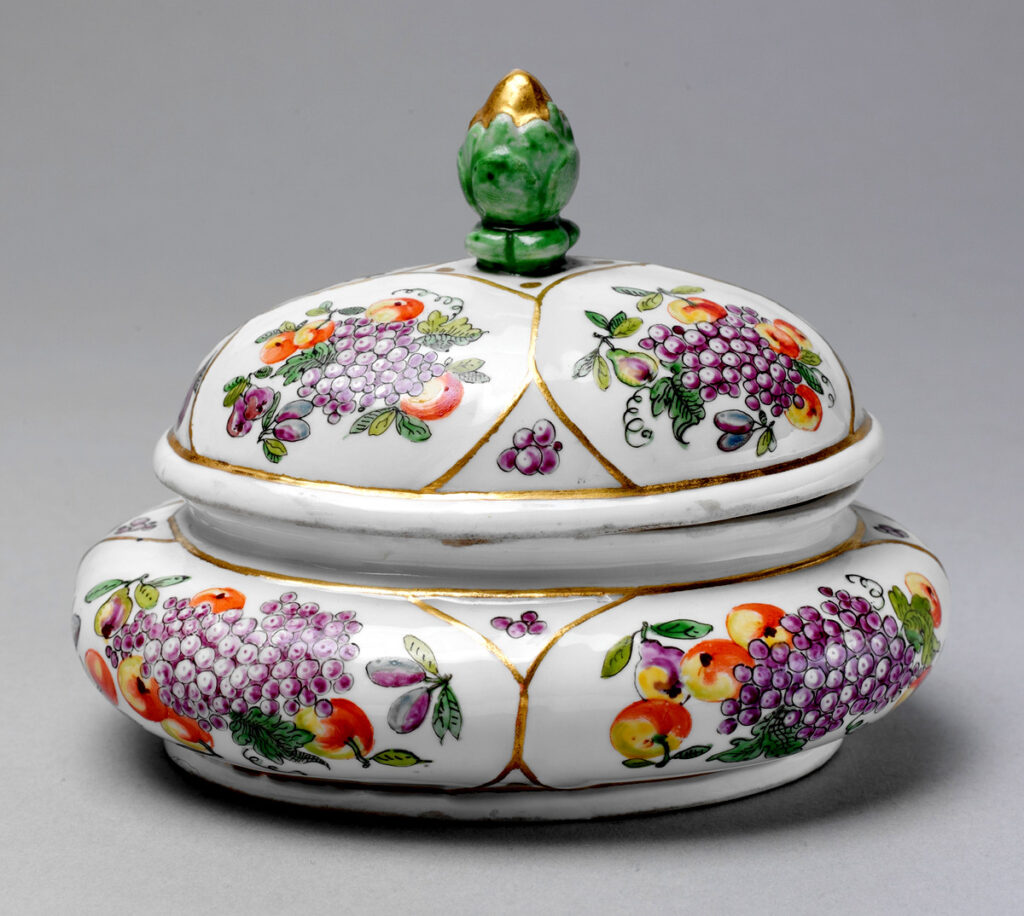
1730. Sugar Box. Austrian. Hard-paste porcelain. metmuseum. (Photo: FiveMinuteHistory.com)
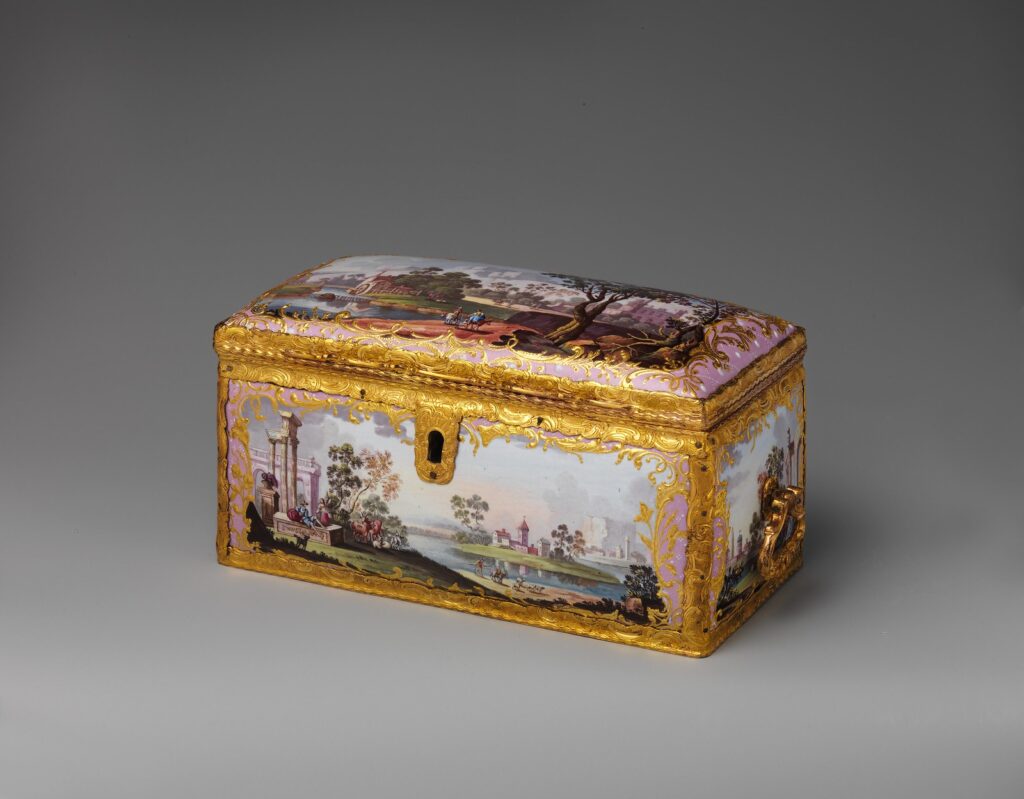
1770 Tea Casket, British, Staffordshire. White enamel on copper painted in polychrome enamels. metmuseum. (Photo: FiveMinuteHistory.com)

Tea and sugar were expensive commodities during the eighteenth century and this chest could be locked to secure its valuable contents.

Containing two canisters for tea (green and black) and a larger one for sugar, the pastoral scenes, and Italianate landscapes, combined with Rococo gilding against a pink ground, create an opulent effect.
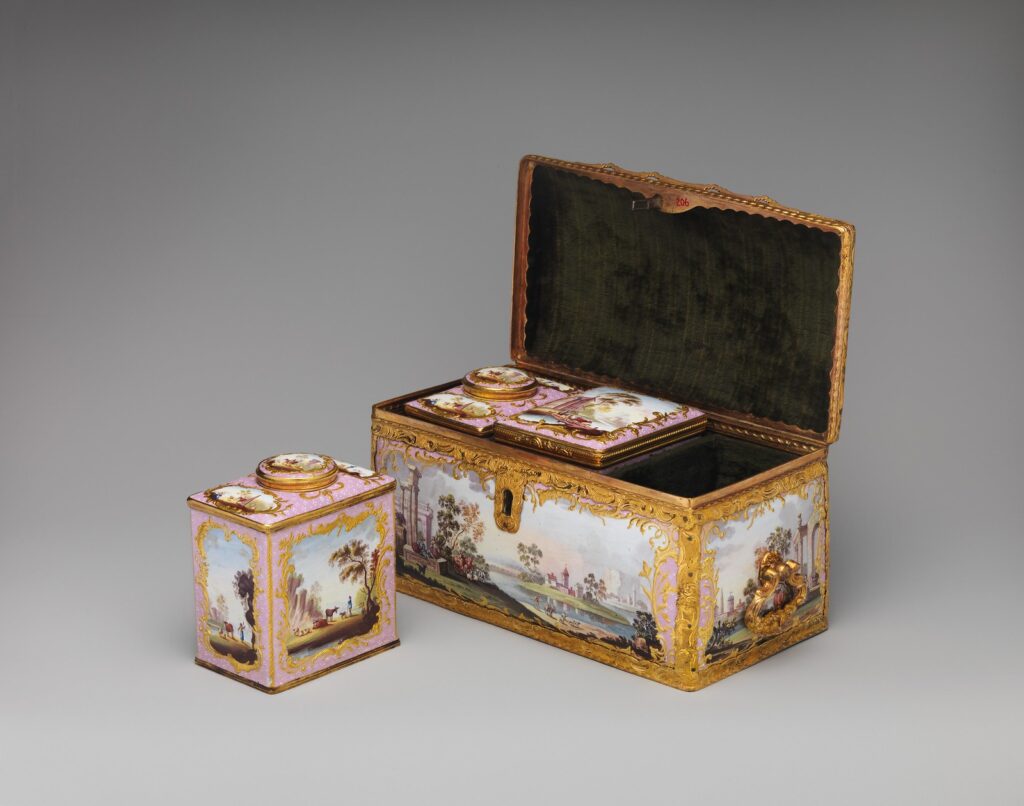
1770 Tea Casket, British, Staffordshire. White enamel on copper painted in polychrome enamels. metmuseum. (Photo: FiveMinuteHistory.com)
1726 Pair of Tea Caddies. British. Silver. metmuseum. (Photo: FiveMinuteHistory.com)

4. Aristocratic women were famous collectors of chinoiserie porcelain
Among them were Queen Mary, Queen Anne, Henrietta Howard, and the Duchess of Queensbury—all socially important women, whose homes served as examples of good taste and sociability.

Wealthy women helped define the prevailing vogue through their purchasing power. One story tells of a keen competition between Margaret, 2nd Duchess of Portland, and Elizabeth, Countess of Ilchester, for a Japanese blue and white plate.
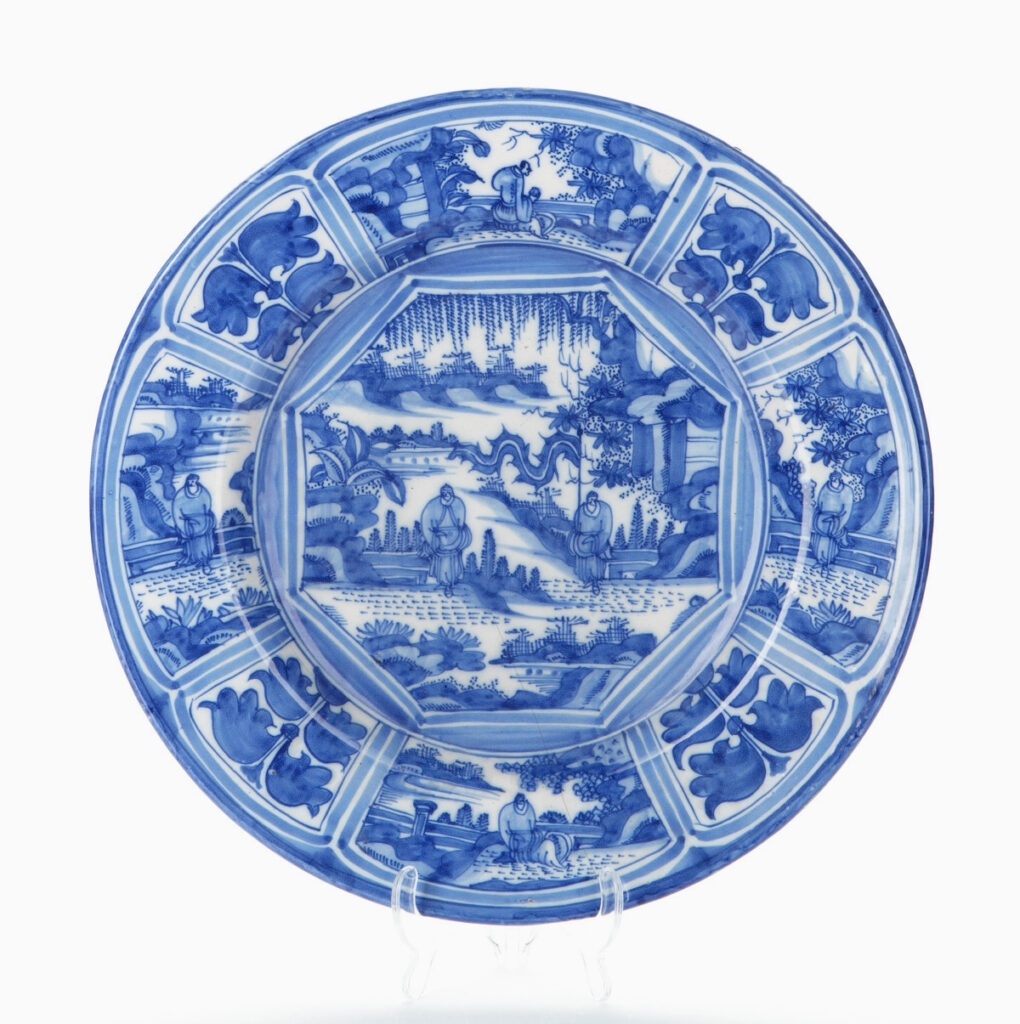
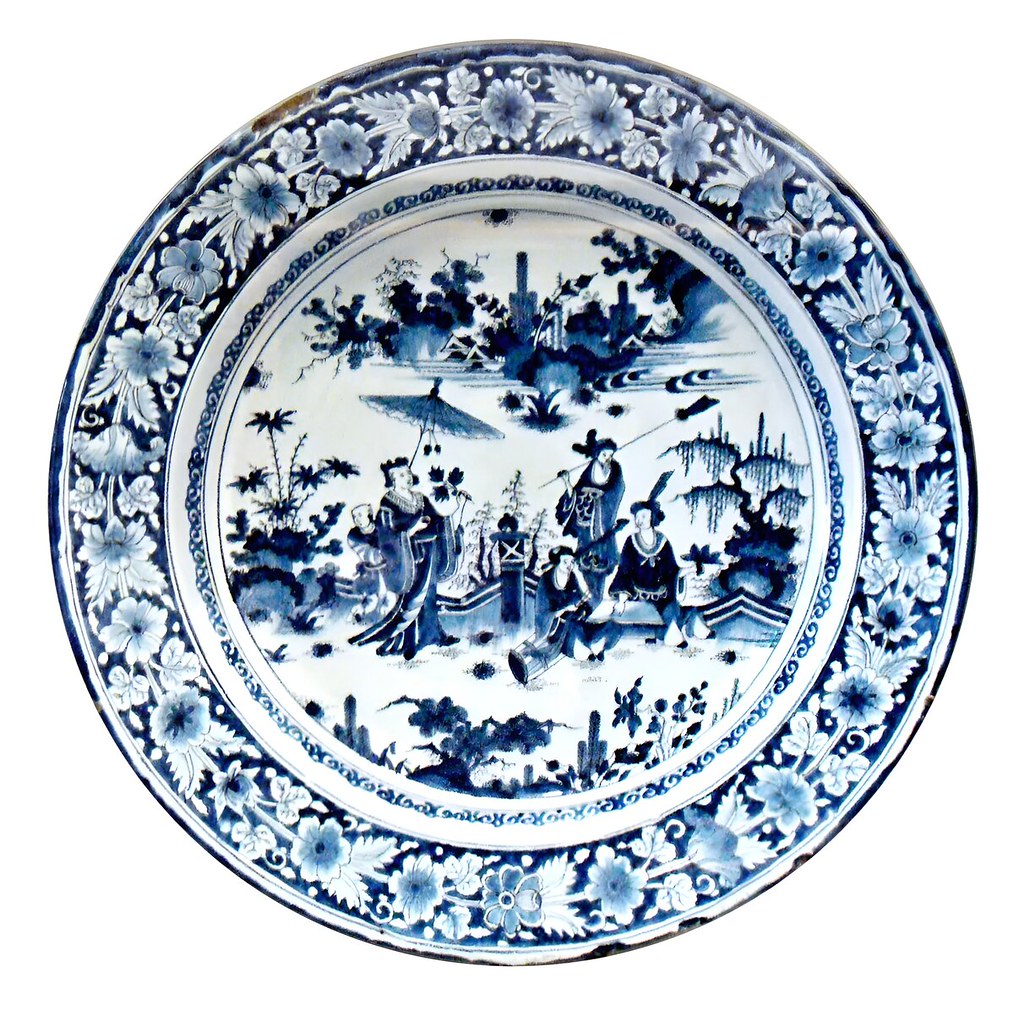
Chinoiserie porcelain from Frankfurt c. 1700. (Photo: FiveMinuteHistory.com)


Faience with Chinese scenes. Nevers Manufactory. c. 1680. (Photo: FiveMinuteHistory.com)


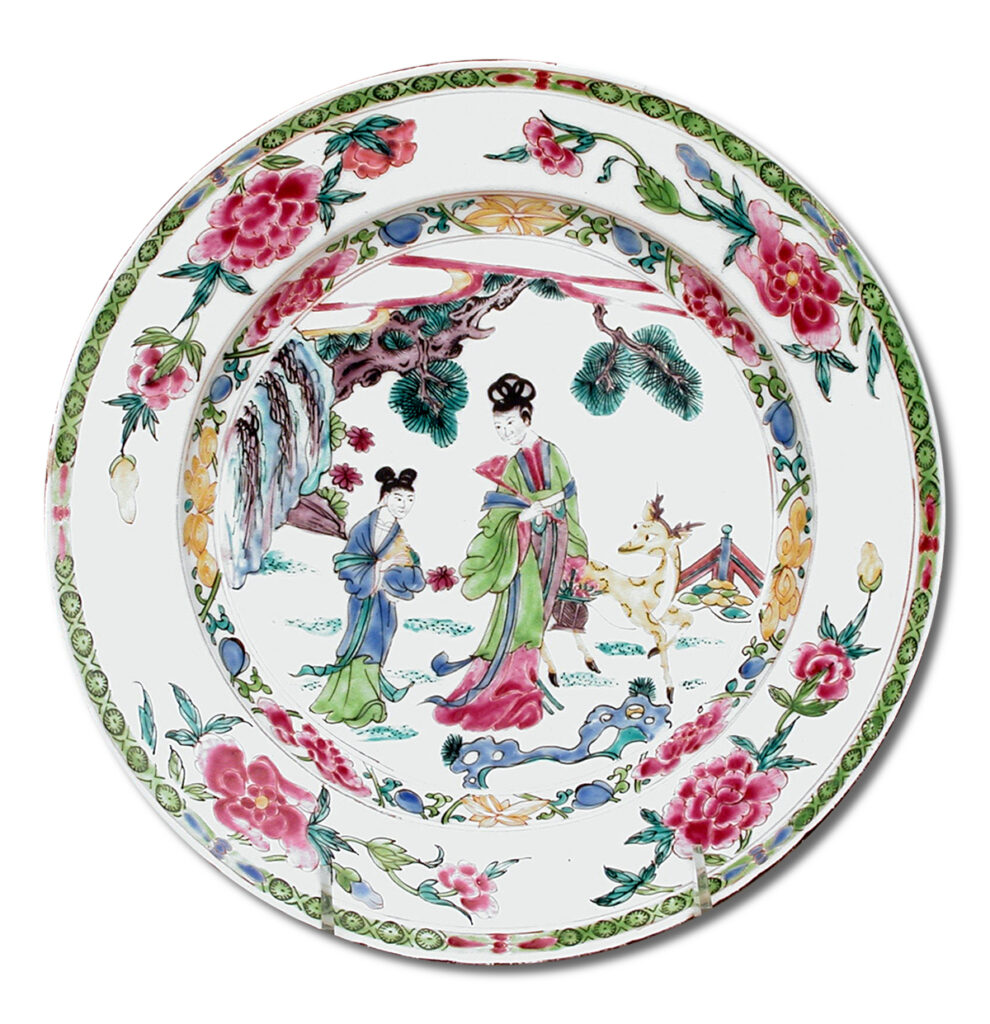
1755. Plate. British. Bow Porcelain Factory. Soft-paste porcelain. (Photo: FiveMinuteHistory.com)
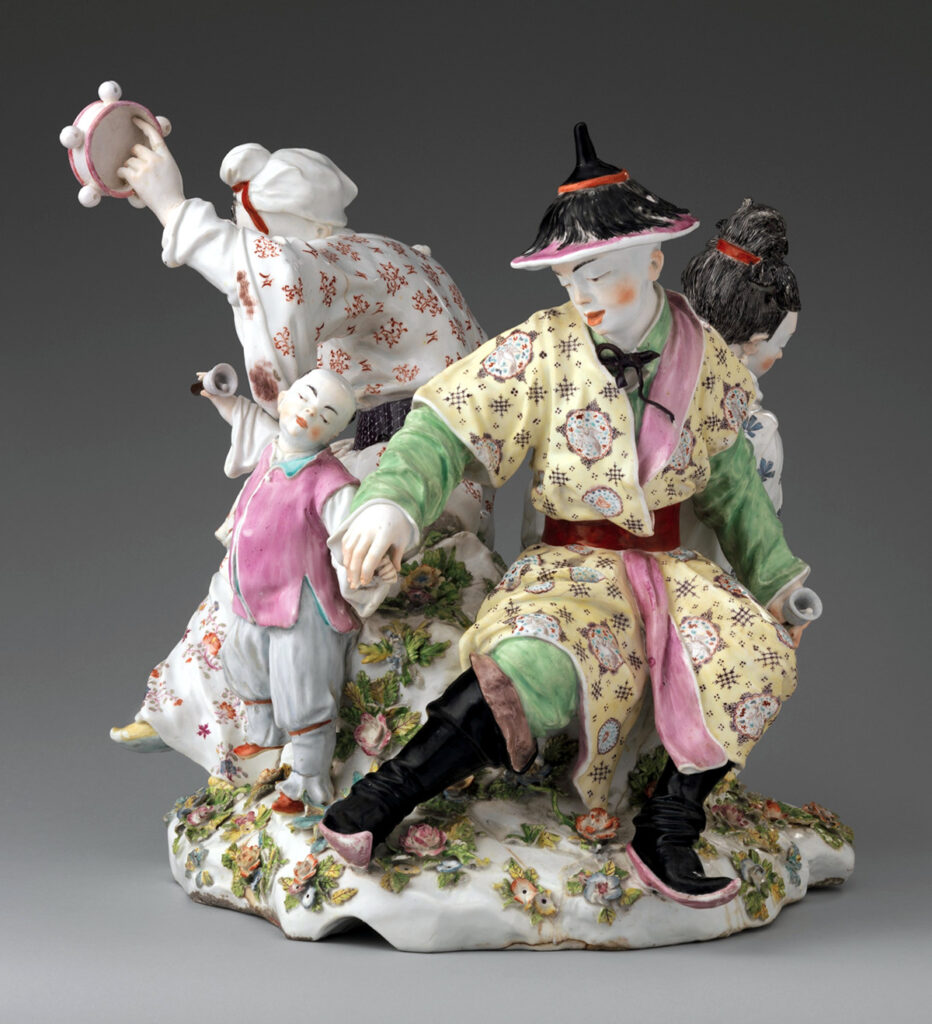
1755 Chines Musicians. Chelsea Porcelain Manufactory. Soft-past porcelain. metmuseum. (Photo: FiveMinuteHistory.com)

Reflecting the English factory’s focus on Asian porcelains as a primary source of inspiration, this plate with its skillfully composed chinoiserie decoration, is an ambitious work from the 1750s, the decade during which Bow first achieved commercially viable production.

Distinguished by the chinoiserie scenes painted by Charles-Nicolas Dodin, these elephant vases from c. 1760 are thought to have been commissioned by Mme. de Pompadour, chief mistress of Louis XV of France. They are among the rarest forms produced by the famous Sèvres manufactory in the suburbs of Paris.
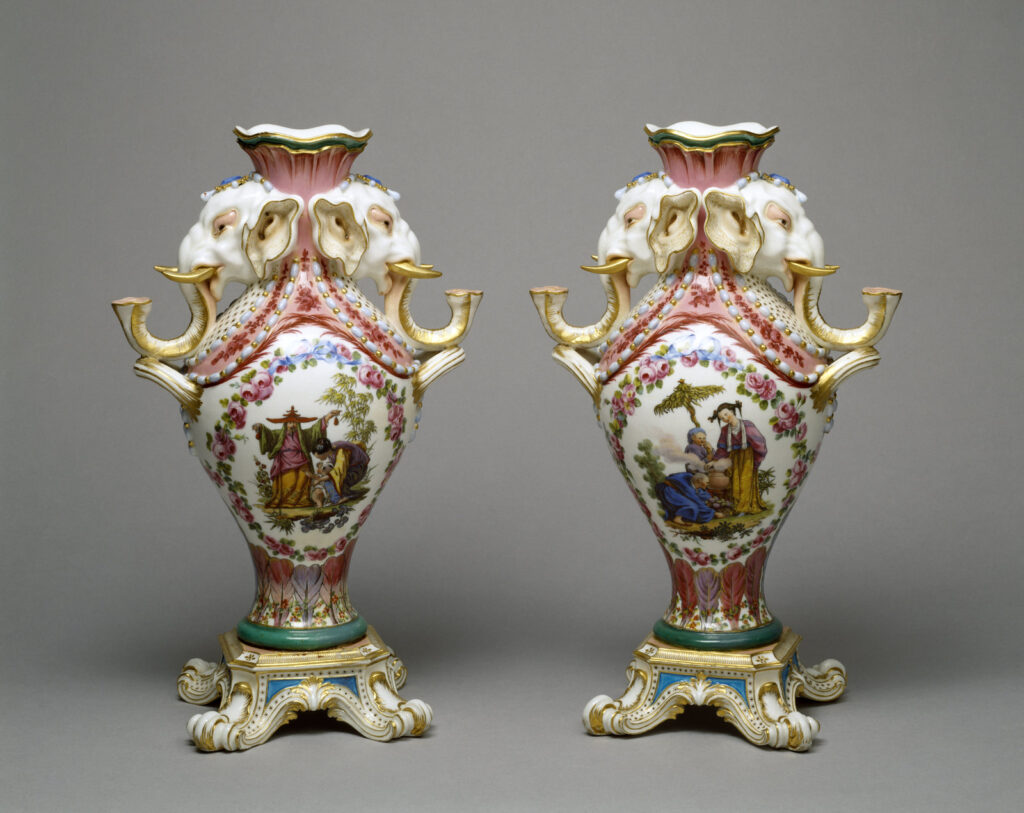
Pair of Vases. Charles Nicolas Dodin, Sèvres, France, 1760. Walters Art Museum. (Photo: FiveMinuteHistory.com)


5. Chinoiserie is related to the Rococo style

Both styles are characterized by exuberant decoration, a focus on materials, stylized nature, and subject matter depicting leisure and pleasure.
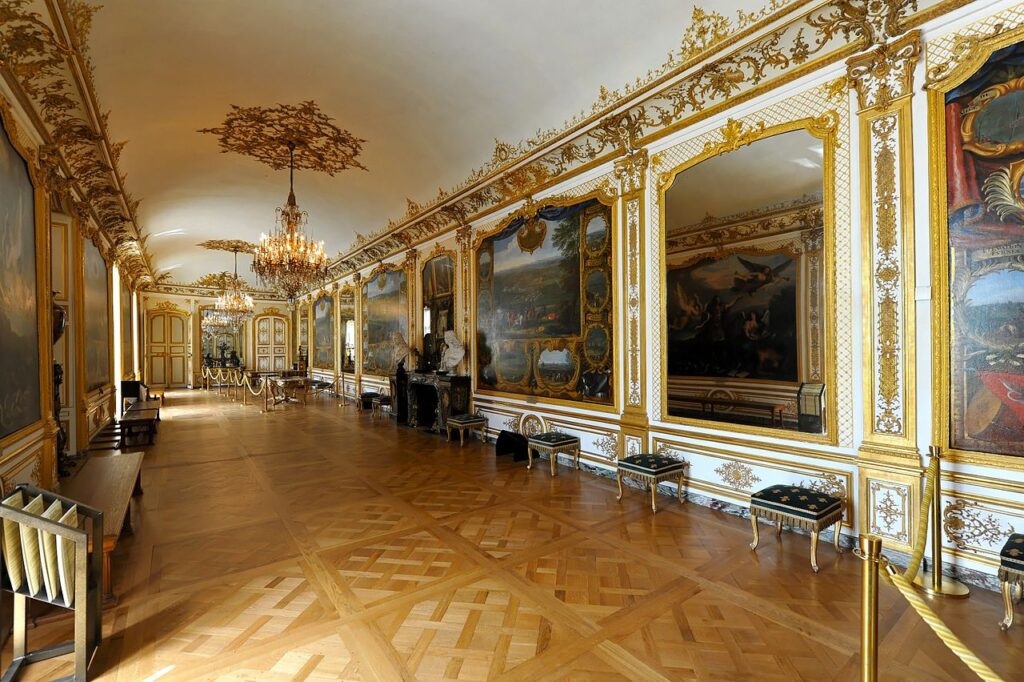
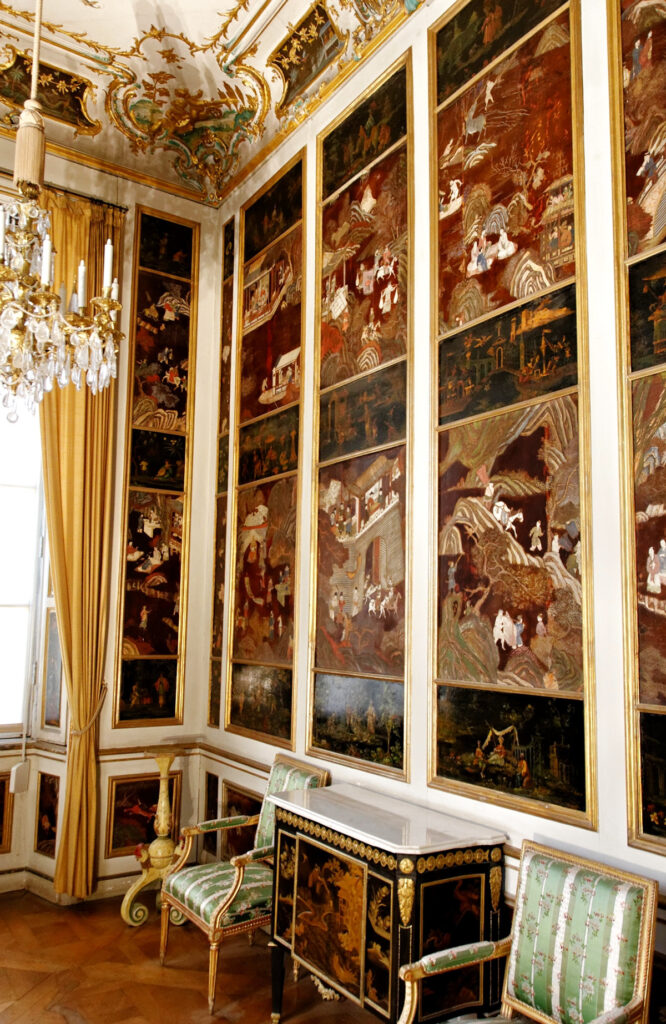
Chateau de Chantilly. The Apartments of the Princes of Condé. (Photo: FiveMinuteHistory.com)
The Cabinet of chinoiserie. Nymphenburg Palace, Munich, Germany. Credit Yelkrokoyade. (Photo: FiveMinuteHistory.com)
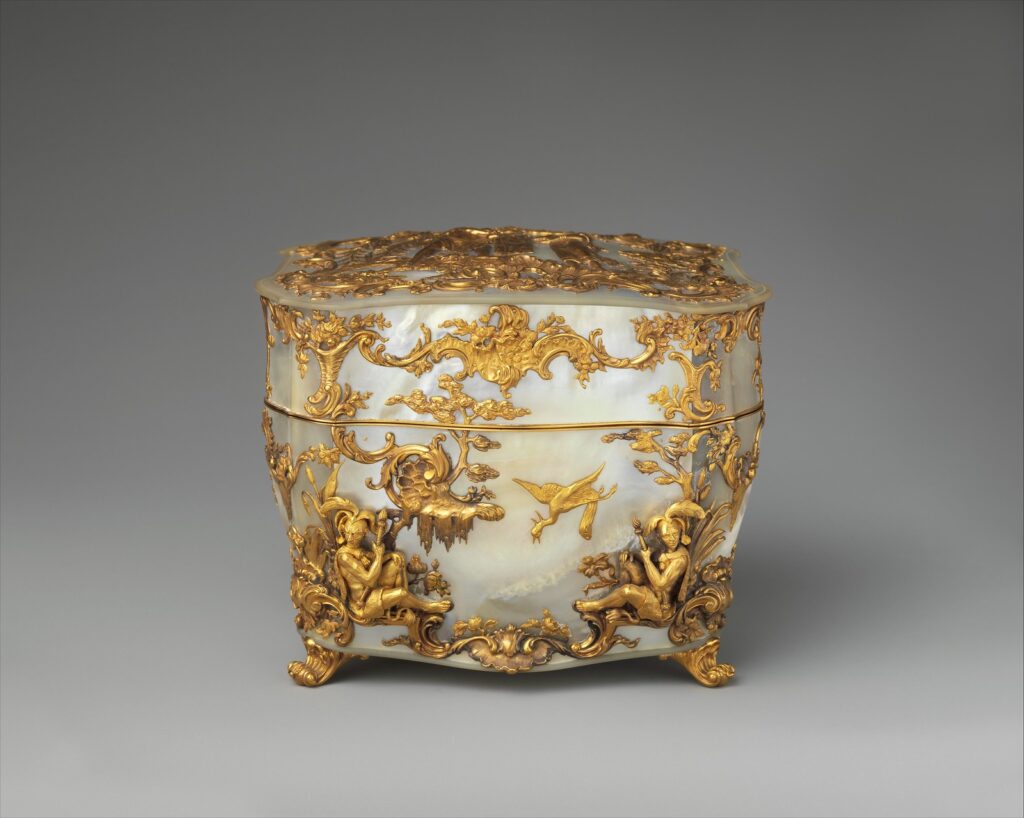
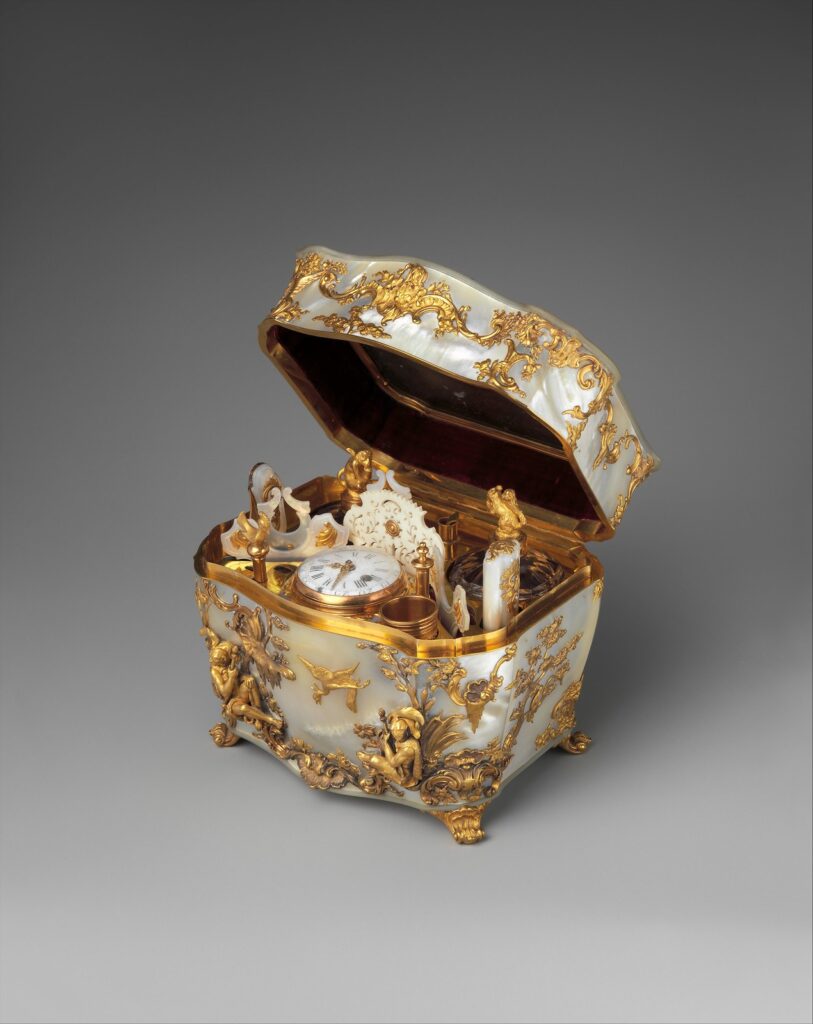
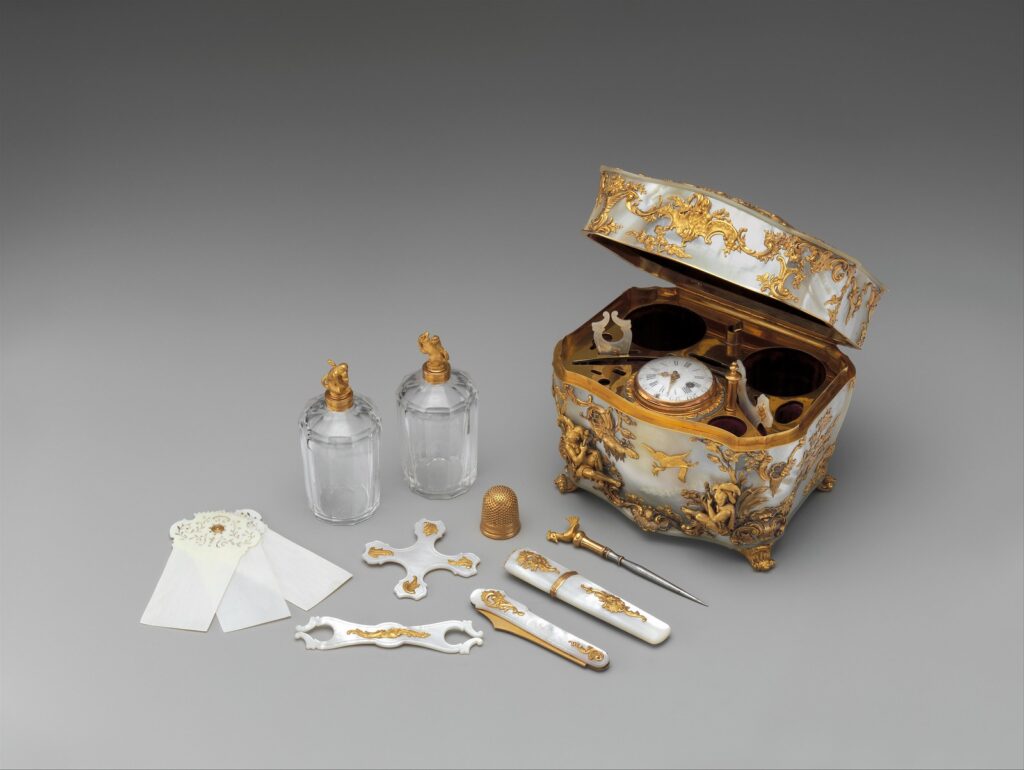
1745 Nécessaire with watch. German. Gold and mother-of-pearl, lined with dark-red velvet. metmuseum. (Photo: FiveMinuteHistory.com)


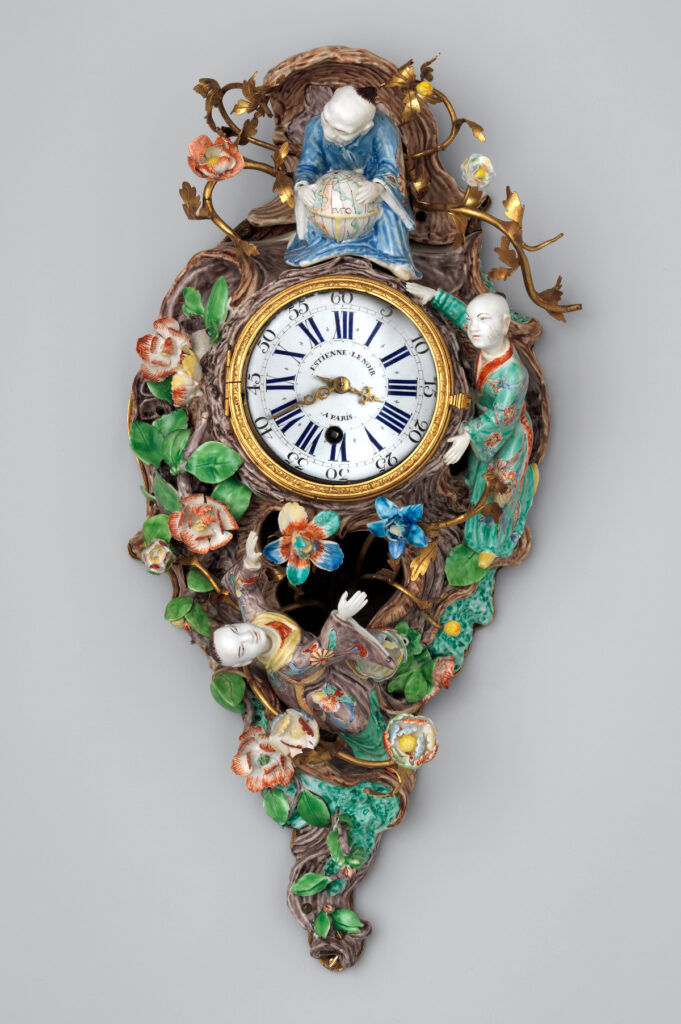
1735 Wall clock. French. Étienne LeNoir. Soft-paste porcelain and partly gilded brass. metmuseum. (Photo: FiveMinuteHistory.com))

Exotic chinoiserie accents in the pagoda-shaped outline of the tureen’s lid exemplify an interpretation popular in southern Germany.
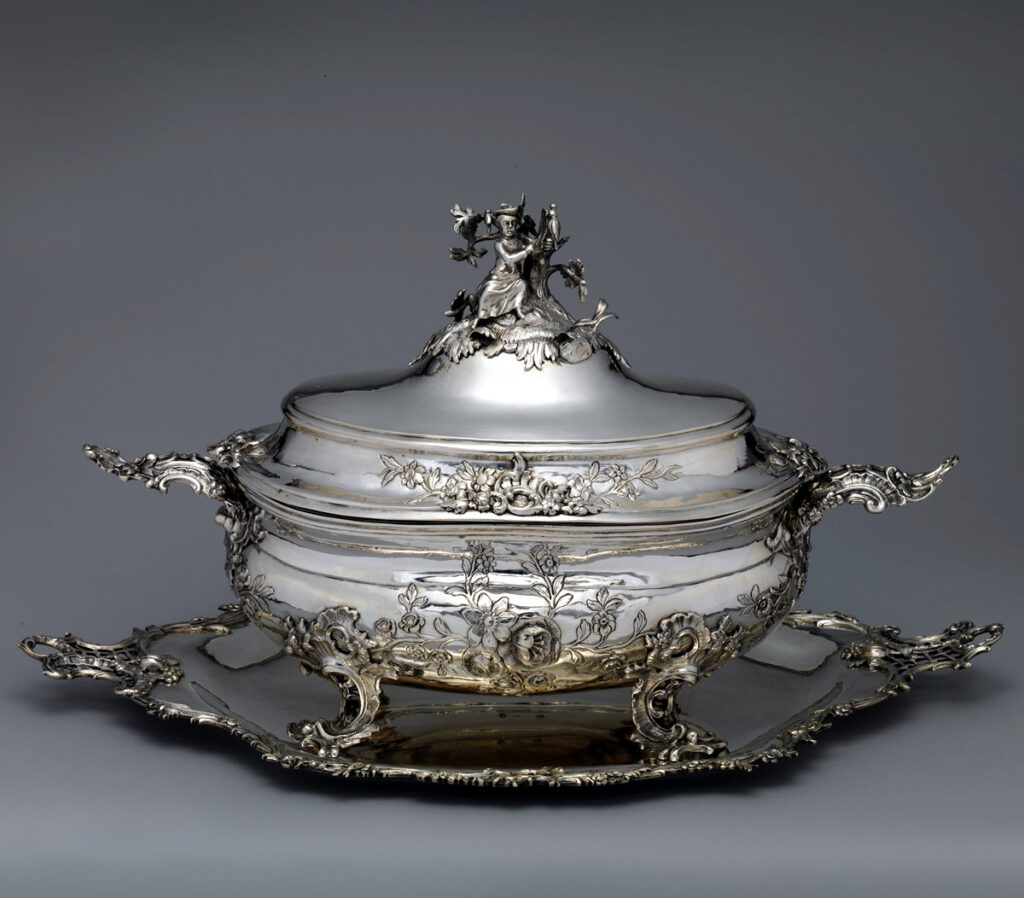
1771 Tureen and stand. Silver, silver gilt. German, Augsburg. metmuseum (Photo: FiveMinuteHistory.com)


6. European monarchs gave special favor to Chinoiserie

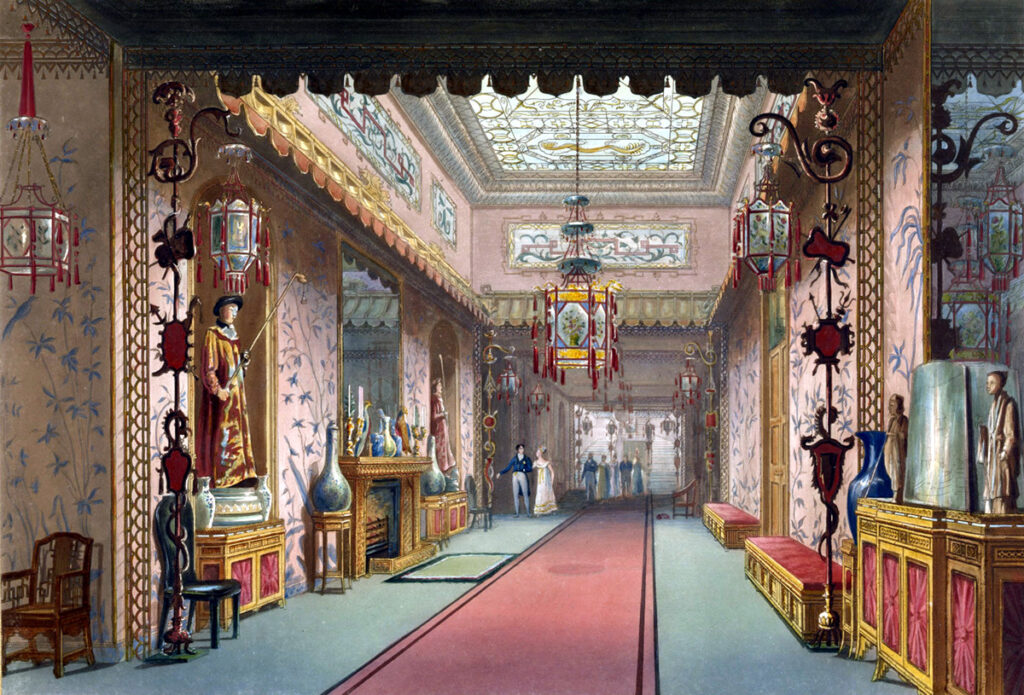
King Louis XV of France and Britain’s King George IV thought Chinoiserie blended well with the rococo style.

Entire rooms, such as those at Château de Chantilly, were painted with chinoiserie compositions, and artists such as Antoine Watteau and others brought expert craftsmanship to the style.

Highly ornamental, yet elegant, Western interpretations of Eastern themes were fanciful expressions, often with exotic woods and marbles used to further the effect.
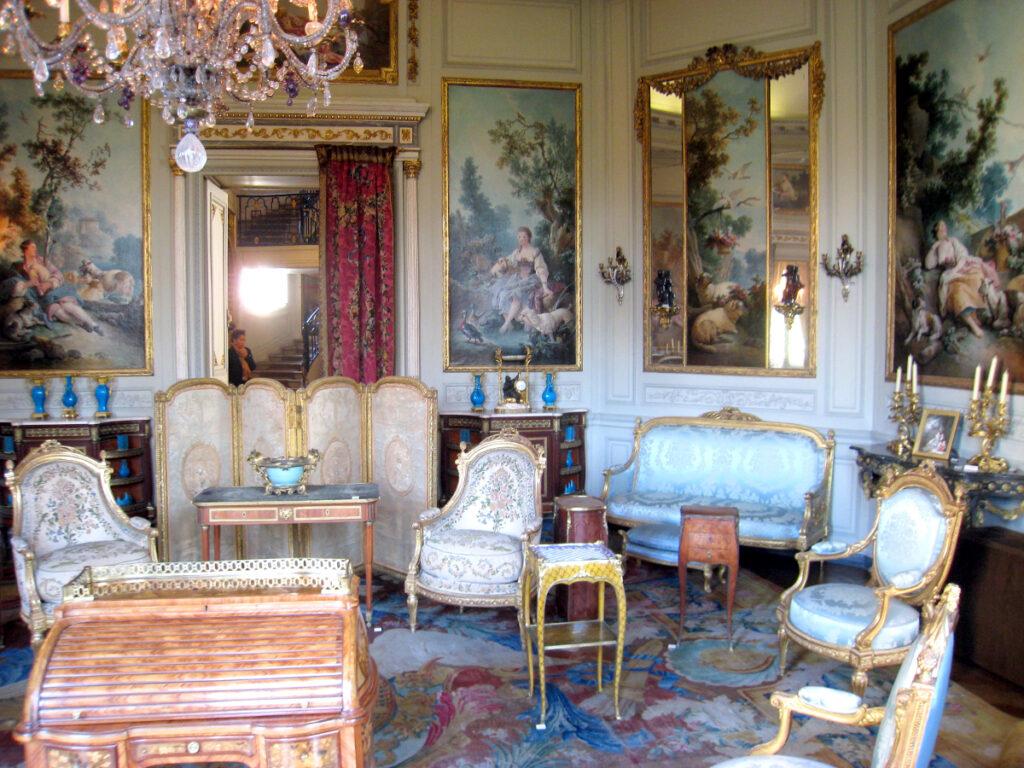
A room furnished in the Louis XV style. (Photo. FiveMinuteHistory.com)
Chinese Gallery at Her Majesty’s Palace at Brighton by John Nash, 1820. (Photo: FiveMinuteHistory.com)

Built in 1670 at Versailles as a pleasure house for King Louis XIV’s mistress, the Trianon de Porcelaine was considered to be the first major example of chinoiserie. It was replaced by the Grand Trianon 17 years later.
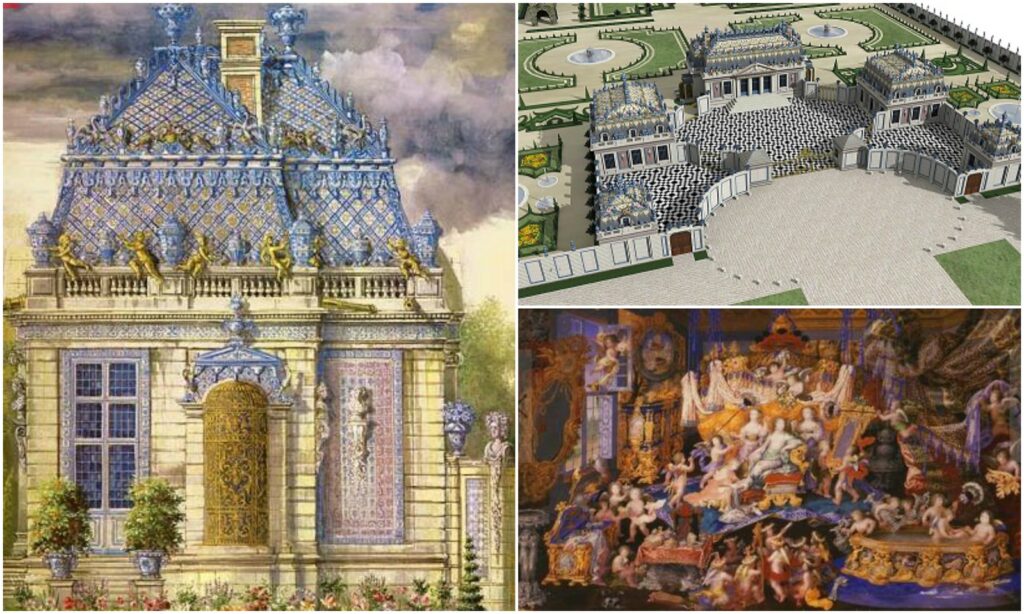
Trainon de Porcelaine. Credit Hervé GREGOIRE (top right image). (Photo: FiveMinuteHistory.com)

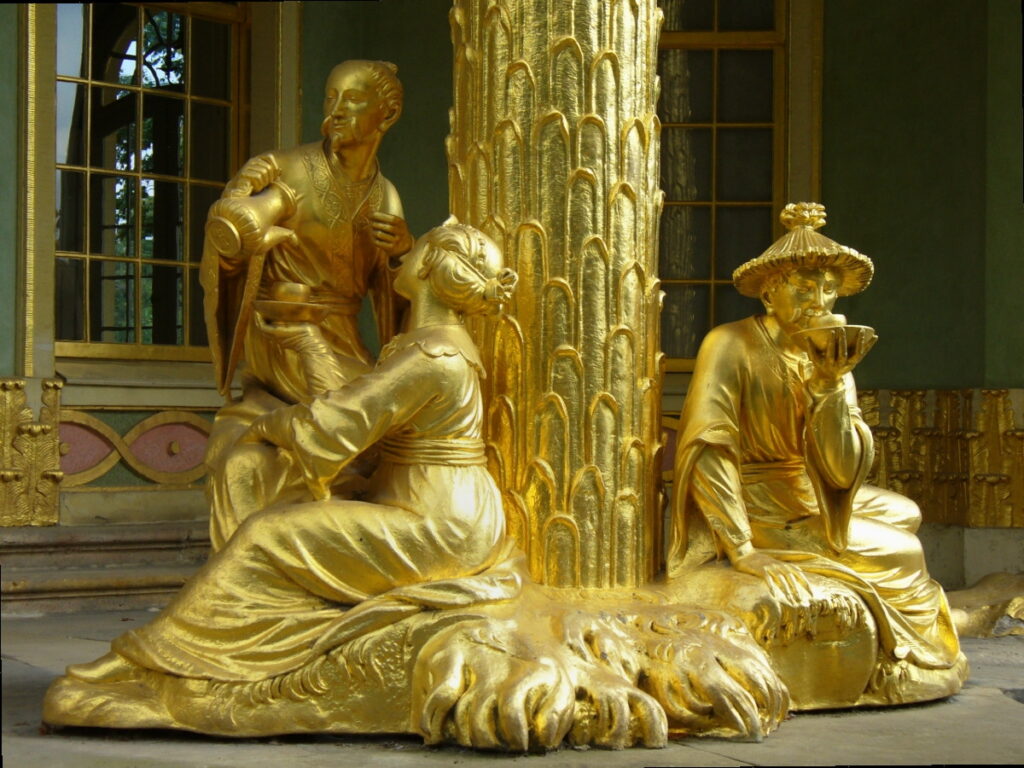
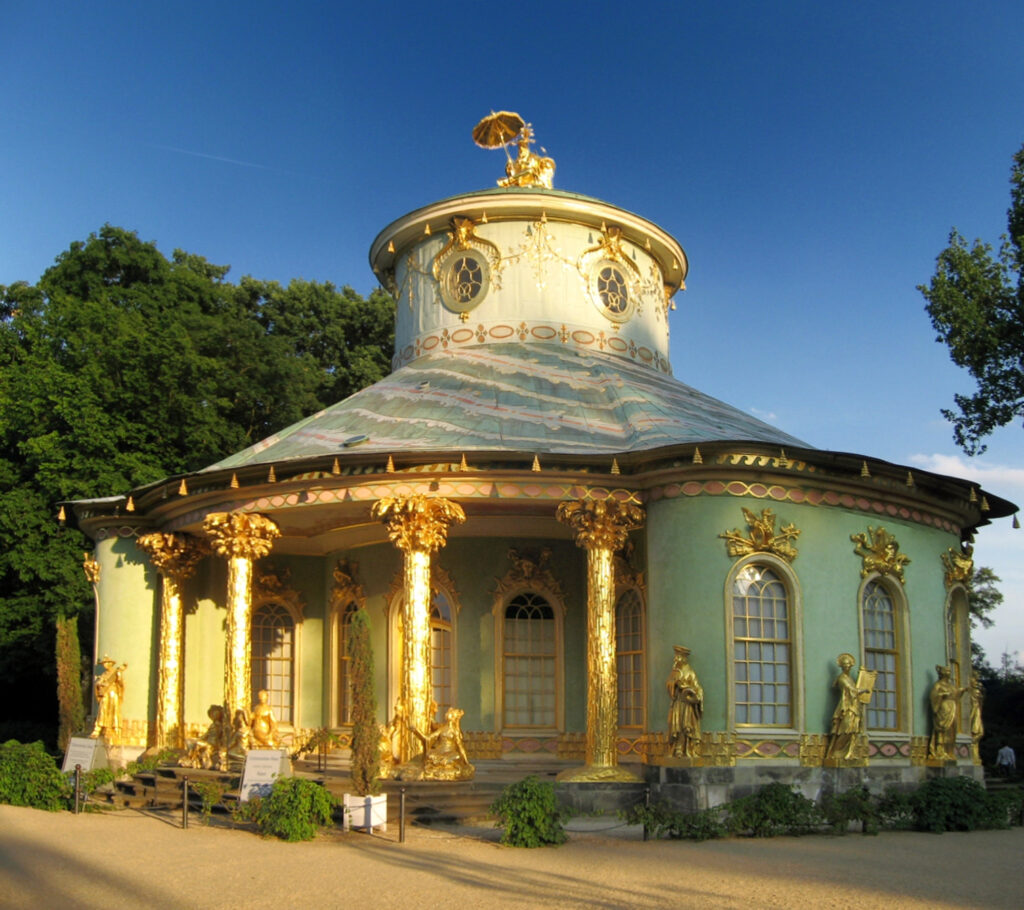
Frederick the Great, King of Prussia had a Chinese House built in the gardens of his summer palace Sanssouci in Potsdam, Germany.

Garden architect Johann Gottfried Büring designed the pavilion in the style of Chinoiserie by blending Chinese architectural elements with ornamental rococo.
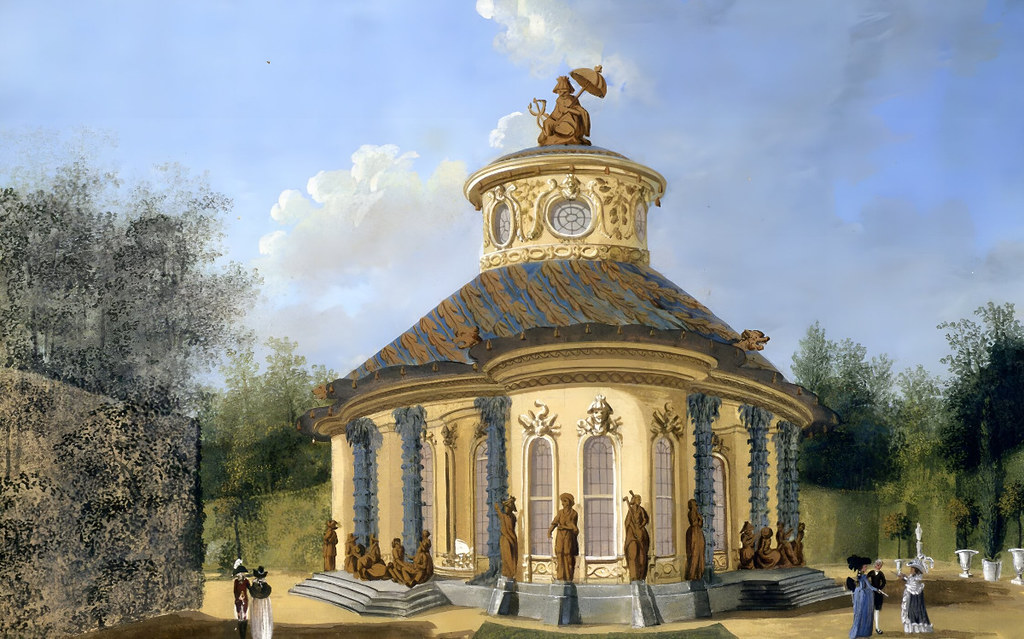
The Chinese House at Sanssouci, Johann Friedrich Nagel, 1790. (Photo: FiveMinuteHistory.com)
The Chinese House, designed by Johann Gottfried Büring between 1755 and 1764; a pavilion in the Chinoiserie style: a mixture of rococo elements coupled with Oriental architecture. (Photo: FiveMinuteHistory.com)
Group of tea drinking Chinese (Johann Gottlieb Heymüller) Chinese Tea House Chinese House Sanssouci. Credit Steffenheilfort. (Photo: FiveMinuteHistory.com)

7. Europeans manufactured imitations of Chinese lacquer furniture
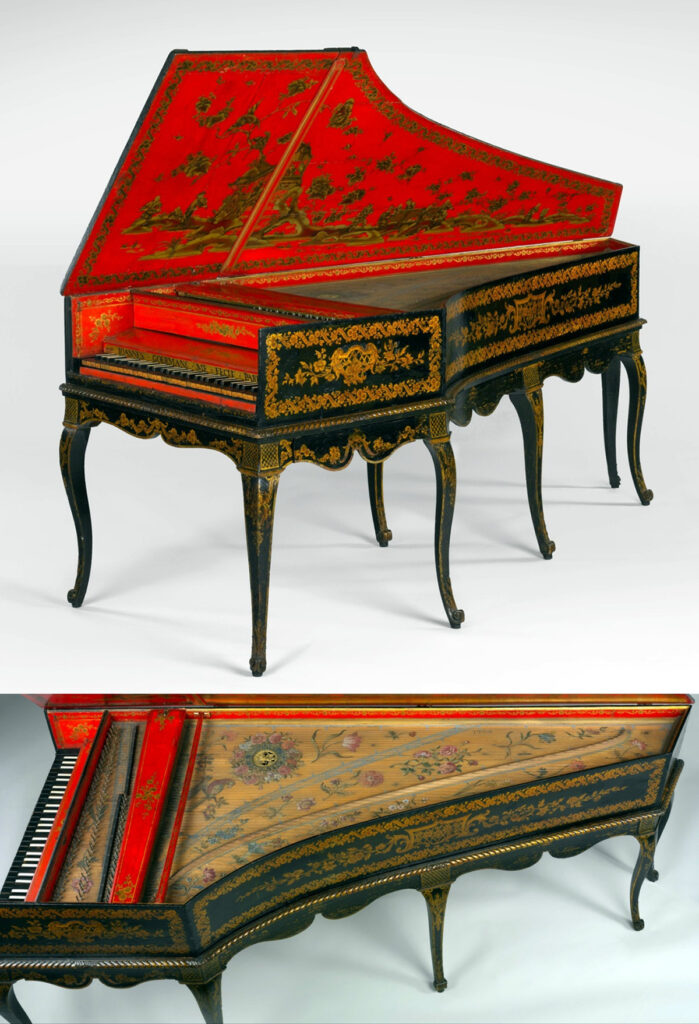
Frequently decorated with ebony and ivory or Chinese motifs of pagodas and dragons, Europeans such as Thomas Chippendale helped popularize Chinoiserie furniture.

Chippendale’s design book The Gentleman and Cabinet-maker’s Director: Being a large Collection of the Most Elegant and Useful Designs of Household Furniture, In the Most Fashionable Taste provided a guide for intricate chinoiserie furniture and its decoration.
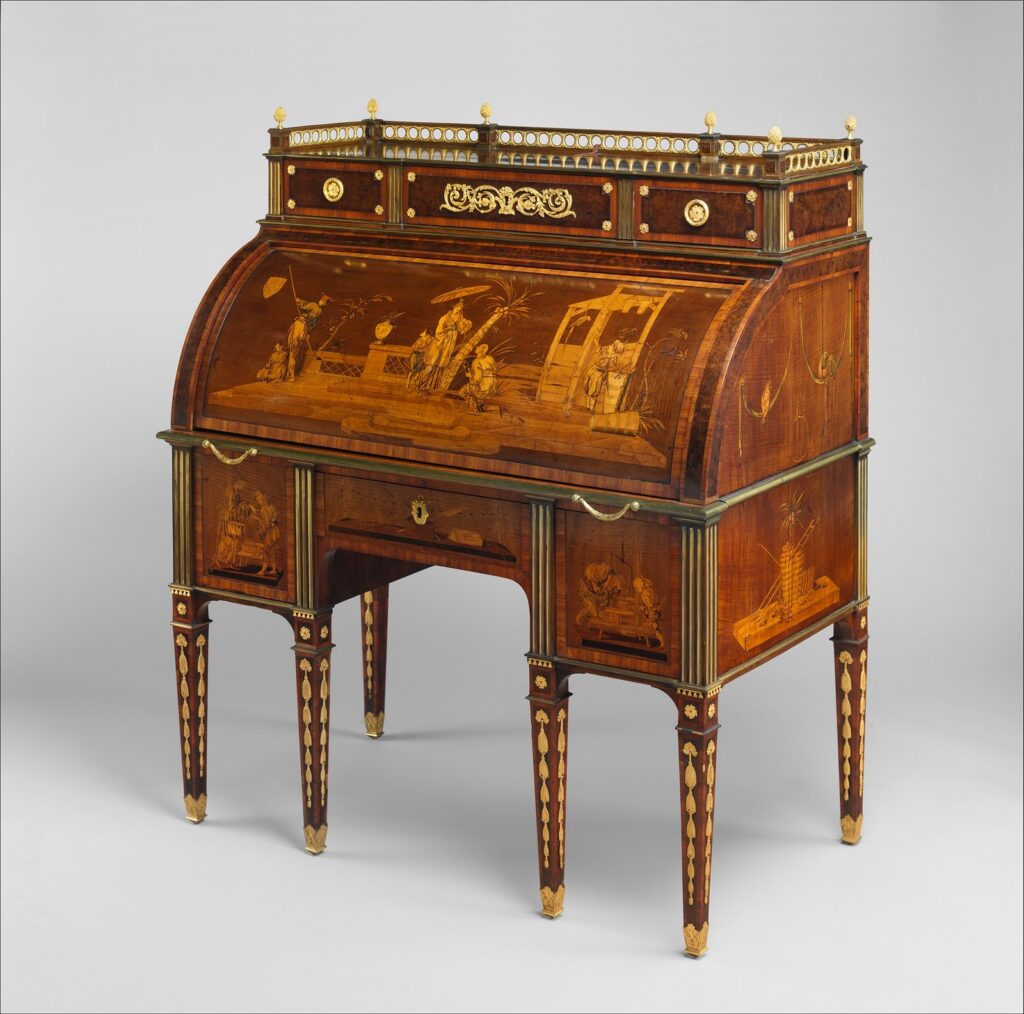
1776 Rolltop Desk. German. Oak, cherry, pine, mahogany, veneered with maple, burl woods, holly, hornbeam (all partially stained), tulipwood, mahogany, and other woods; mother-of-pearl; partially gilded and tooled leather; gilt bronze, iron, steel, brass, partially gold-lacquered brass. metmuseum. (Photo: FiveMinuteHistory.com)
1754 Harpsichord converted to a piano. French. Wood, paint, gilding, polychrome, gilded pewter, ebony, bone, felt. metmuseum. (Photo: FiveMinuteHistory.com)
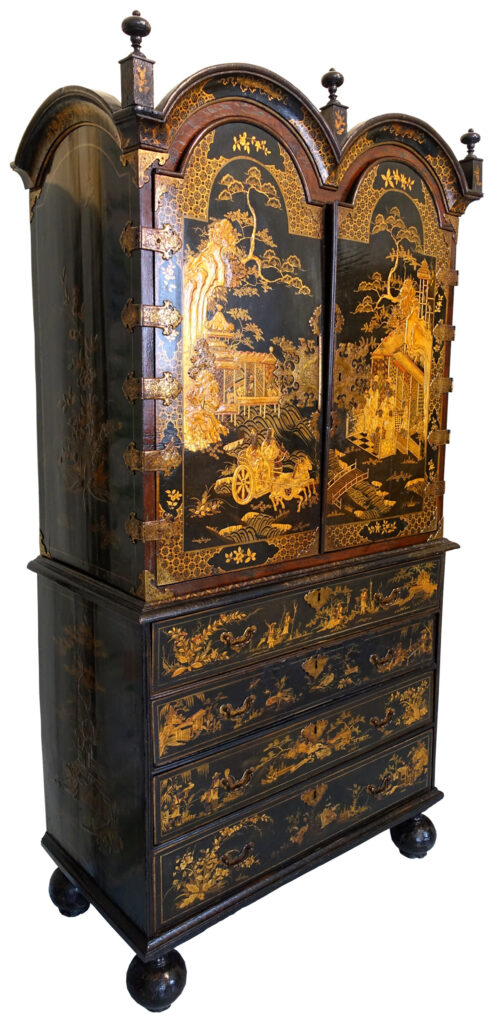
Chinoiserie cabinet. Museo Nacional de Artes Decorativas, Madrid, Spain. Credit Daderot. (Photo: FiveMinuteHistory.com)

8. Marco Polo was the first European to describe a Chinese garden
Marco Polo visited the summer palace of Kublai Khan at Xanadu in around 1275.

“There is at this place a very fine marble Palace, the rooms of which are all gilt and painted with figures of men and beasts and birds, and with a variety of trees and flowers, all executed with such exquisite art that you regard them with delight and astonishment.”
Marco Polo
Chinese Garden by François Boucher, 1742. (Photo: FiveMinuteHistory.com)

Hundreds of Chinese and Japanese Gardens were built around the world to celebrate the naturalistic, organic beauty of their asymmetric design.

“One admires the art with which this irregularity is carried out. Everything is in good taste, and so well arranged, that there is not a single view from which all the beauty can be seen; you have to see it piece by piece”
Jesuit priest Jean Denis Attiret, 1739
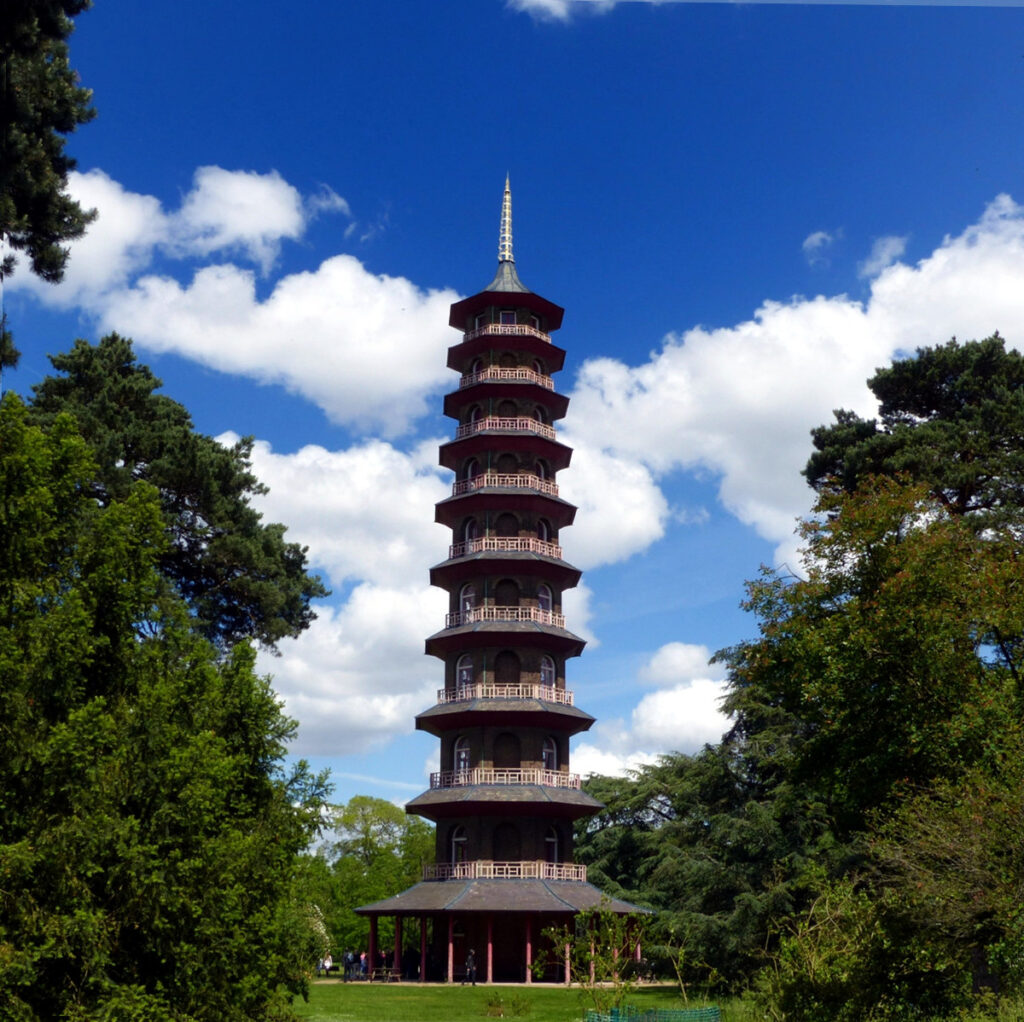
The Pagoda in Kew Gardens, London. Credit Marco Felhofer. (Photo: FiveMinuteHistory.com)


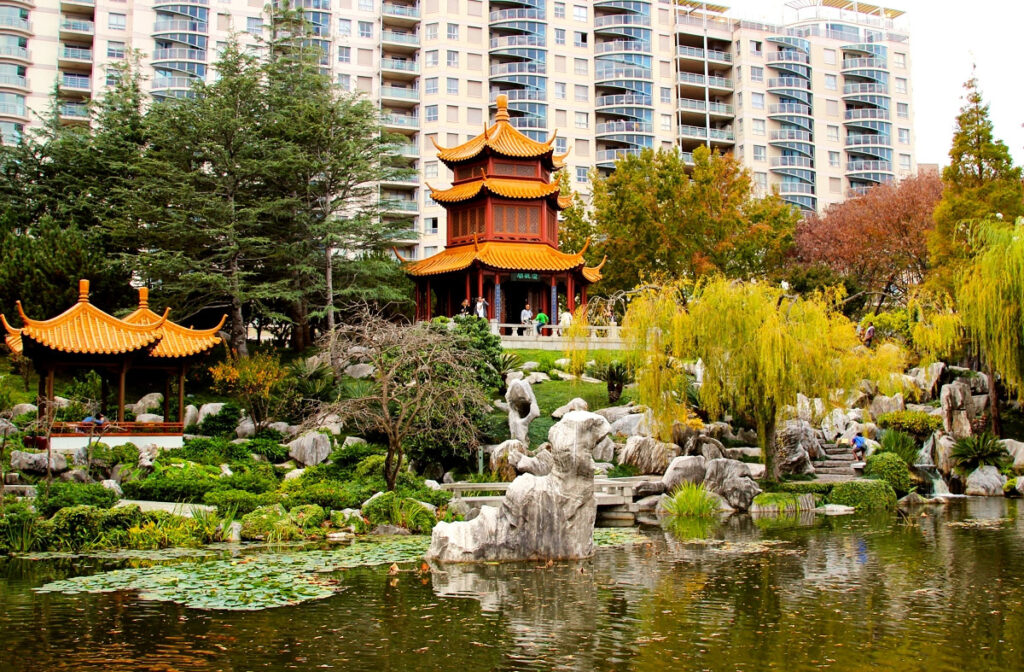
The Chinese Garden of Friendship, Sydney, Australia. Credit Wyncliffe. (Photo: FiveMinuteHistory.com)
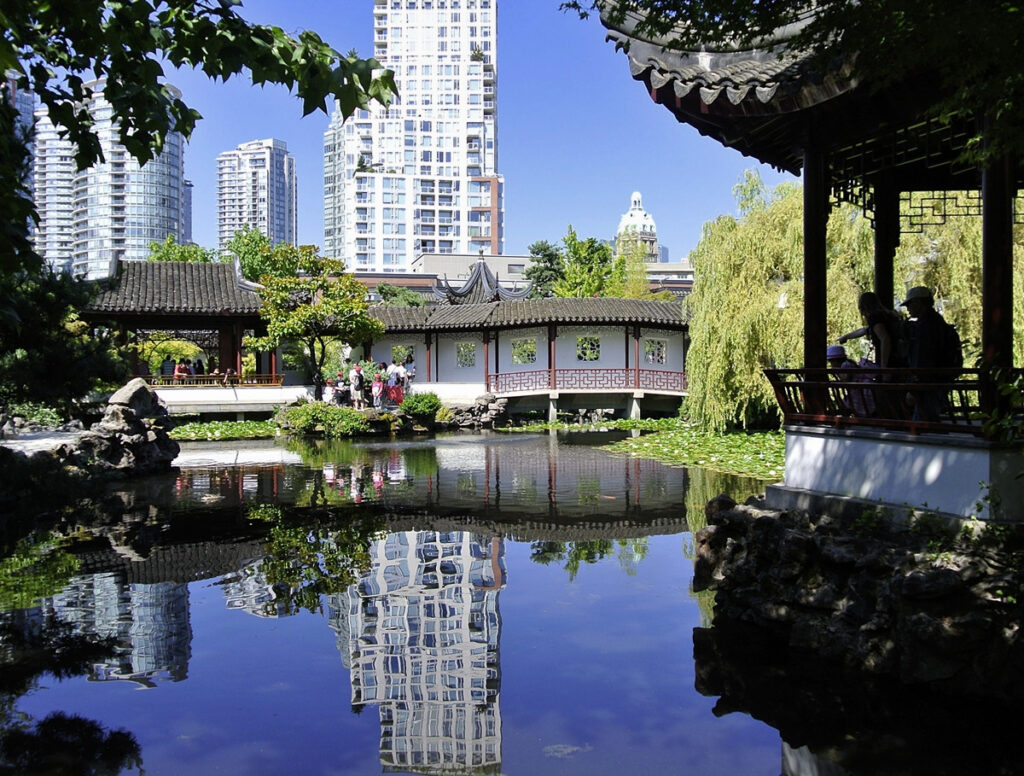
Dr. Sun Yat-Sen Garden, Vancouver, BC, Canada. Credit Damahevi. (Photo: FiveMinuteHistory.com)

9. Wealthy gentlemen preferred Banyans to formal clothing
Made from expensive silk brocades, damasks, and printed cottons, banyans were types of dressing gown with a kimono-like form and Eastern origin. Worn with a matching waistcoat and cap or turban, they were so popular among wealthy men of the late 18th century that they posed for portraits wearing the banyan instead of formal clothing.
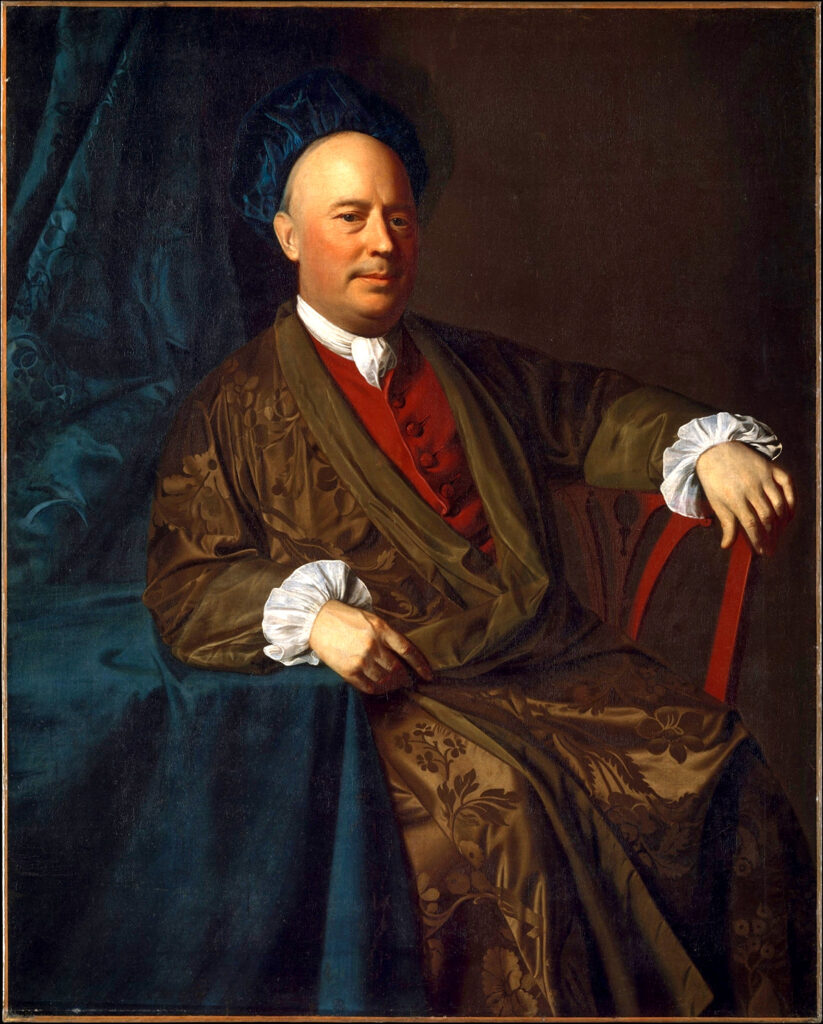
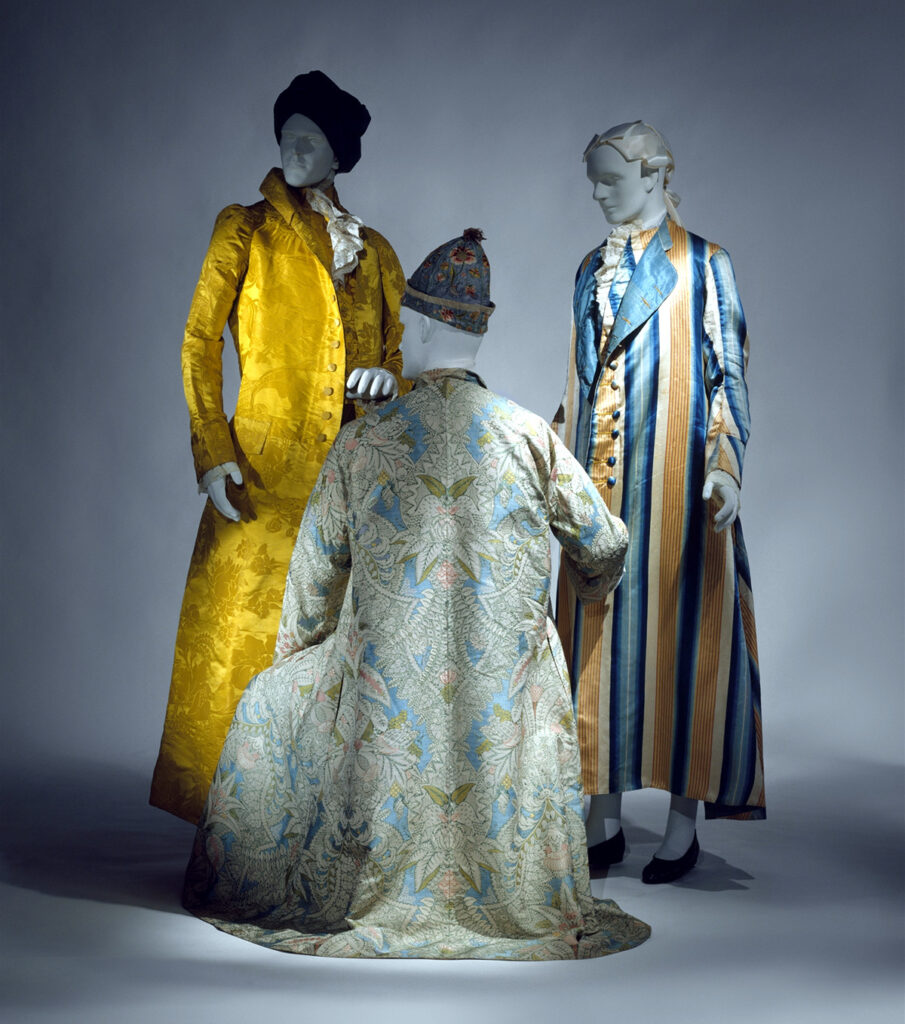
Joseph Sherburne (a wealthy Boston merchant wearing an elegant banyan) by John Singleton Copley, 1770. (Photo: FiveMinuteHistory.com)
Banyan. Second half of 18th century. Silk, wool, linen. metmusem. (Photo: FiveMinuteHistory.com)

10. Chinoiserie enjoyed a renaissance in the 1920s and 1930s

Intimating the most elaborate past of the Chinese court, the Chinoiserie roundels of this Lanvin robe de style alternately resemble embroidered Manchu court badge motifs or the glinting scales of Mongol armor interpreted in Western embroidery.
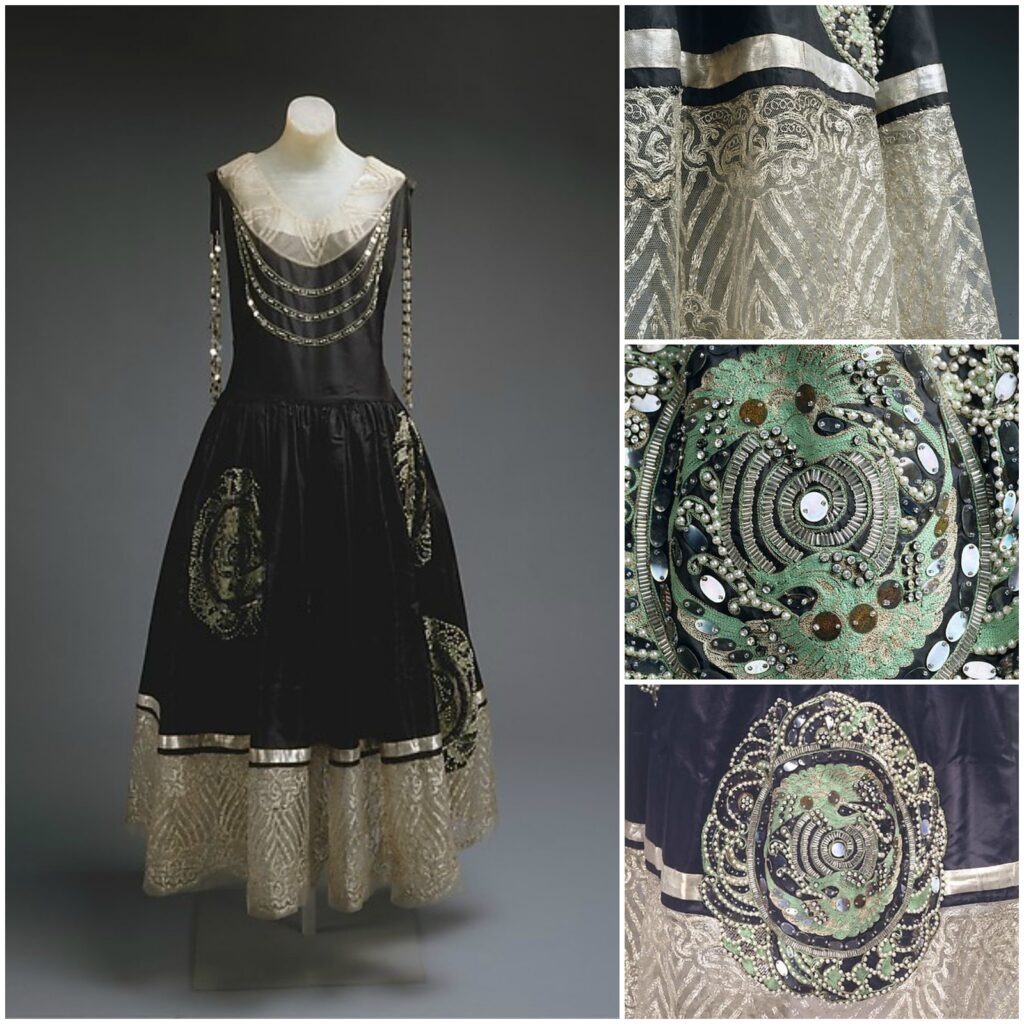
1924 Robe de Style. French. Lanvin. Silk, metallic thread, glass. metmuseum. (Photo: FiveMinuteHistory.com)

Stressing tubular simplicity, Callot Soeurs used the reductive rubric of Art Deco to combine Chinoiserie with other styles, resulting in an intoxicating fusion of exoticisms.
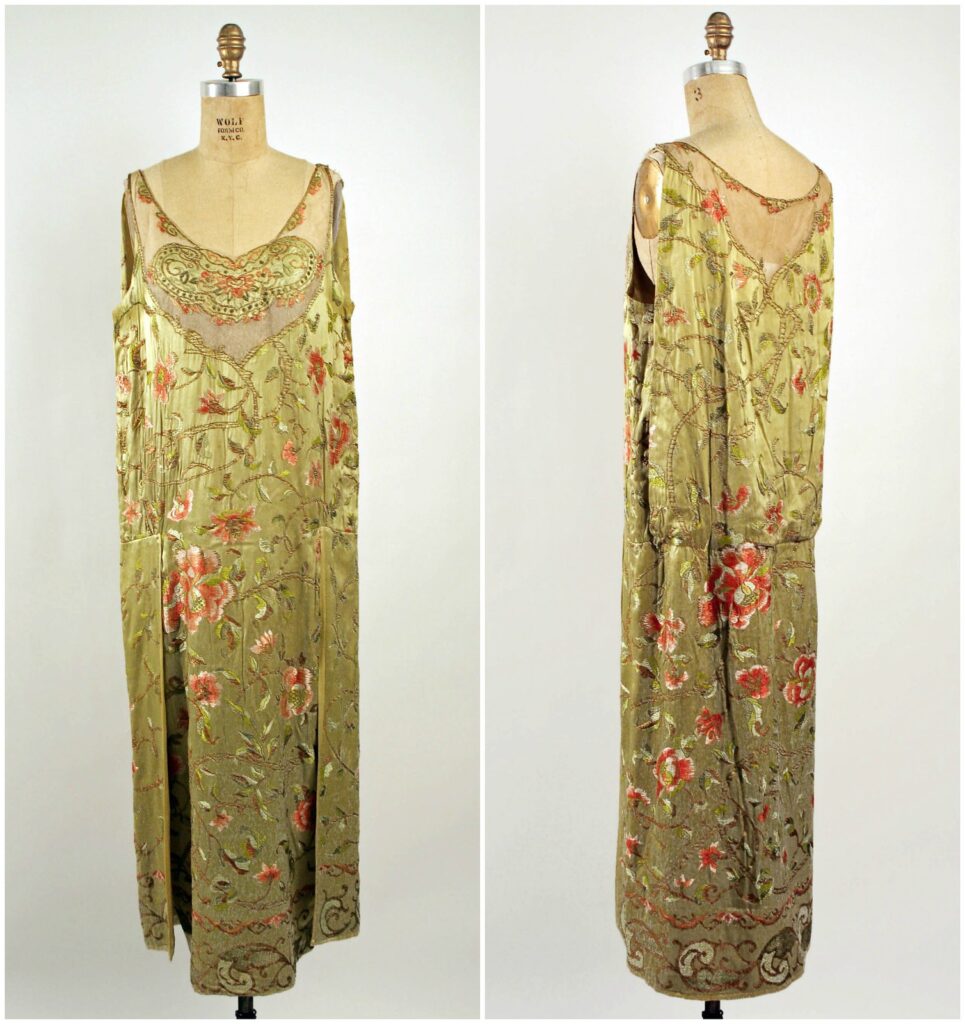
1924 Evening Dress. French. Callot Soeurs. Silk. metmuseum. (Photo: FiveMinuteHistory.com)

Known for their Chinoiserie, Callot Soeurs also featured the long fluid vestigial sleeves of Ottoman coats.
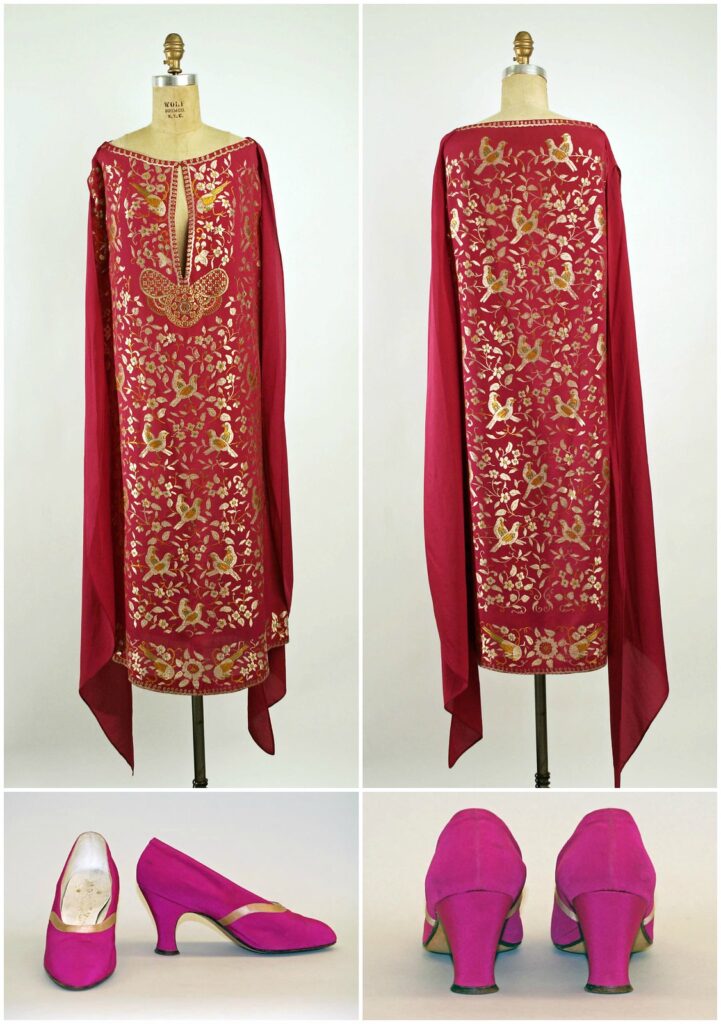
1926. Evening Ensemble. French. Callot Soeurs. Silk. metmuseum. (Photo: FiveMinuteHistory.com)


Source: 5 Minute History


Tag

SubscribeNewsletter@2x
Refreshing and Insights
at No Cost to You!

Cancel anytime

Leave a Reply

One of the most remarkable examples of medieval Chinese Buddhist art is

Back-to-back monster winters (1867 and 1868) paralyzed railroad construction over Donner Pass.

When a Speech Nearly Never Happened: The U.N. Session That Drew Unexpected

Margaret Thatcher (1925–2013), often remembered as the “Iron Lady,” remains one of

Art has the incredible power to evoke emotions, tell stories, and transport

“Painting has been my passion since childhood, and my parents were always

Curator Laura Llewellyn works with art handlers to arrange and hang a

A mother asks what she should say to her 9-year-old daughter who

Long before the rise of communism, photographers captured a China that few

Across the United States, some of the country’s most memorable destinations are

The Eiffel Tower in Paris. The Clock Tower of London. The Busy

Small old villages in United Kingdom are known for their historic charm,

From distant worlds at the edge of the Solar System to colossal

The Eiffel Tower in Paris. The Clock Tower of London. The Busy

The universe is far stranger — and more beautiful — than imagination

In what would have marked Queen Elizabeth II’s 100th birthday, King Charles

Did Ancient China Discover America Before Columbus?

A Former Flight Attendant Recounts Tiananmen Massacre in Beijing (Audio)

The Iron Lady’s Secret: Margaret Thatcher Leadership Advice

When Poetry Becomes a Cry of the Soul: The Meaning of “Un dì all’azzurro spazio” — and Franco Corelli’s Legendary Performance

What did a modern kitchen look like in the early 1950s? A

Let us take the three worst and most striking characteristics, patience, indifference

Psychology says the 1960s and 70s accidentally produced one of the most

I. Mellowness “CHARACTER” is a typically English word. Apart from the English,

In the dimly lit hall of the Stanton Center in Monterey, CA,

Margaret Thatcher (1925–2013), often remembered as the “Iron Lady,” remains one of

Few events of the late 20th century continue to provoke as much

[totalpoll id="62479"]
Cancel anytime

Contact us

The Middle Land

100 Wilshire Blvd., Suite 700 Santa Monica, CA 90401

Login Now

Sign in to your account

Don’t have an account? Sign Up

Don't have an account?

Sign up

Receive free monthly subscription & other benefits

Already have an account? Sign in

Already have an account?

To Editor

One of the most remarkable examples of medieval Chinese Buddhist art is

Back-to-back monster winters (1867 and 1868) paralyzed railroad construction over Donner Pass.

When a Speech Nearly Never Happened: The U.N. Session That Drew Unexpected

Margaret Thatcher (1925–2013), often remembered as the “Iron Lady,” remains one of

Art has the incredible power to evoke emotions, tell stories, and transport

“Painting has been my passion since childhood, and my parents were always

Curator Laura Llewellyn works with art handlers to arrange and hang a

A mother asks what she should say to her 9-year-old daughter who

Long before the rise of communism, photographers captured a China that few

Across the United States, some of the country’s most memorable destinations are

The Eiffel Tower in Paris. The Clock Tower of London. The Busy

Small old villages in United Kingdom are known for their historic charm,

From distant worlds at the edge of the Solar System to colossal

The Eiffel Tower in Paris. The Clock Tower of London. The Busy

The universe is far stranger — and more beautiful — than imagination

In what would have marked Queen Elizabeth II’s 100th birthday, King Charles

Did Ancient China Discover America Before Columbus?

A Former Flight Attendant Recounts Tiananmen Massacre in Beijing (Audio)

The Iron Lady’s Secret: Margaret Thatcher Leadership Advice

When Poetry Becomes a Cry of the Soul: The Meaning of “Un dì all’azzurro spazio” — and Franco Corelli’s Legendary Performance

What did a modern kitchen look like in the early 1950s? A

Let us take the three worst and most striking characteristics, patience, indifference

Psychology says the 1960s and 70s accidentally produced one of the most

I. Mellowness “CHARACTER” is a typically English word. Apart from the English,

In the dimly lit hall of the Stanton Center in Monterey, CA,

Margaret Thatcher (1925–2013), often remembered as the “Iron Lady,” remains one of

Few events of the late 20th century continue to provoke as much

Forget Password

Please enter your email id or user name to recover your password
[reset_password]

Login to Vote!

Thank you for your participation, please Log in or Sign up to Vote

Don’t have an account?

Login to Comment

Thank you for your participation, please Log in or Sign up to Comment
Forgot Password?

Don't have an account?

Leave a Reply

Thank you for your subscription!